Quantum Sandbox for Near-Term Applications Act of 2025
Summary
What This Bill Does
The Quantum Sandbox for Near-Term Applications Act adds a new section to the National Quantum Initiative Act. It directs the Secretary of Commerce, working through the Director of NIST, to establish a quantum sandbox public-private partnership for application development acceleration. The sandbox focuses on near-term use cases that can be developed and deployed in less than 24 months, including quantum computing, quantum communication, quantum sensing, and quantum-hybrid applications that combine quantum and classical hardware. Commerce and NIST must engage the Quantum Economic Development Consortium, National Laboratories, federally funded research and development centers, and the broader U.S. quantum ecosystem.
Who Benefits and How
Quantum application developers benefit from a federal sandbox that can lower barriers to testing demonstrations, proofs of concept, and pilot applications. University quantum researchers benefit because NIST engagement can connect academic, laboratory, and private-sector work to near-term use cases. National Laboratory staff benefit from a formal role in application-development acceleration under the National Quantum Initiative. U.S. business users of quantum tools benefit if the program turns cloud-accessible quantum systems into usable pilots within 24 months.
Who Bears the Burden and How
Commerce Department staff must establish the public-private partnership and coordinate the quantum sandbox program. NIST quantum staff must manage ecosystem engagement, technical coordination, and application-development support. Quantum Economic Development Consortium staff must devote time and technical input to sandbox demonstrations. Federal research center staff must coordinate with industry on near-term pilot applications rather than only basic research.
Key Provisions
- Establishes a Commerce and NIST quantum sandbox public-private partnership.
- Defines near-term use cases as quantum applications that can be developed and deployed in less than 24 months.
- Includes quantum computing, communication, sensing, and quantum-hybrid applications.
- Requires engagement with the Quantum Economic Development Consortium, National Laboratories, federally funded research centers, and the U.S. quantum ecosystem.
Evidence Chain:
This summary is generated from the full bill text using AI analysis. Expand "Detailed Analysis" below for identified beneficiaries/burden bearers with clause-level evidence links.
At a Glance
What This Bill Does
Creates a Commerce Department and NIST quantum sandbox public-private partnership to accelerate near-term quantum, quantum communication, quantum sensing, and quantum-hybrid applications that can be developed and deployed within 24 months.
Key Policy Areas
Science, Technology, Quantum
Primary Purpose
Creates a Commerce Department and NIST quantum sandbox public-private partnership to accelerate near-term quantum, quantum communication, quantum sensing, and quantum-hybrid applications that can be developed and deployed within 24 months.
Policy Domains
Resolution provisions
Identified Gains
- Quantum application developers
- University quantum researchers
- National Laboratory staff
- U.S. business users of quantum tools
Identified Costs
- Commerce Department staff
- NIST quantum staff
- Quantum Economic Development Consortium staff
- Federal research center staff
Sponsors
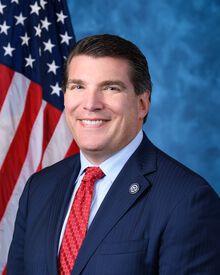
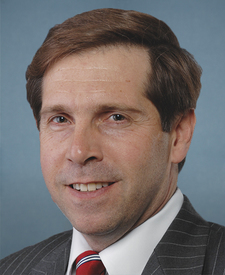



Legislative Progress
In CommitteeMr. Obernolte (for himself, Ms. Stevens, Mr. Weber of Texas, …
Referred to the House Committee on Science, Space, and Technology.
Introduced in House
Stakeholder Effects
cui bono?How this legislation distributes effects. Mention counts reflect frequency, not effect magnitude.
National Laboratory staff, University quantum researchers
Bill Structure & Actor Mappings
Who is "The Secretary" in each section?
We use a combination of our own taxonomy and classification in addition to large language models to assess meaning and potential beneficiaries. High confidence means strong textual evidence. Always verify with the original bill text.
Learn more about our methodology