HOME Act of 2025
Summary
What This Bill Does
The HOME Act is a broad housing-market enforcement bill. If HUD determines in the Federal Register that the United States is experiencing an affordable housing crisis, it becomes unlawful for a person to rent a dwelling or sell single-family housing at an unconscionably excessive price that exploits crisis conditions. HUD evaluates mortgage rates, the federal funds rate, refinance rates, median rent, median sale price, median household income, and disaster or emergency declarations; the prohibition can run for renewable 30-day periods and start up to one week before a foreseeable crisis. HUD enforces the rule with FTC Act-style powers, state attorneys general can sue with notice to HUD, penalties go to the Housing Trust Fund, and landlords or sellers can raise an affirmative defense for increased costs or risks. The bill also requires a HUD investigation of rental and single-family price manipulation, creates a Housing Monitoring and Enforcement Unit for market data and investor-owned housing analysis, directs HUD, FTC, and CFPB tenant-screening reports, requires FHFA renter-protection standards for Fannie Mae and Freddie Mac multifamily mortgage purchases, and orders DOJ and FTC to review anti-competitive behavior in housing markets.
Who Benefits and How
Renters benefit because HUD could attack crisis-period rents that grossly exceed prior or comparable market prices. Homebuyers benefit because the same price-gouging framework applies to single-family housing sales during an affordable housing crisis. Low-income families benefit because civil penalties deposited in the Housing Trust Fund can support extremely low-income and very low-income rental housing. State attorneys general benefit from federal authority to sue for injunctions, civil penalties, damages, restitution, and other compensation for residents.
Who Bears the Burden and How
Landlords must avoid unconscionably excessive crisis-period rents unless increases reflect actual added costs or risks. Single-family home sellers must avoid exploitative sale prices during a HUD-declared affordable housing crisis. Institutional housing investors face HUD data collection, market-manipulation review, concentration scrutiny, and DOJ/FTC competition review. HUD enforcement staff must issue crisis determinations, investigate price manipulation, run the monitoring unit, coordinate data sharing, and enforce penalties.
Key Provisions
- Prohibits unconscionably excessive rental and single-family sale prices during HUD-declared affordable housing crises.
- Creates HUD enforcement, state attorney general civil actions, affirmative defenses, and Housing Trust Fund deposits for penalties.
- Establishes a Housing Monitoring and Enforcement Unit to analyze rental, sale, investor-owned, and non-owner-occupied housing data.
- Requires tenant-screening oversight, FHFA multifamily renter-protection standards, and DOJ/FTC review of anti-competitive housing behavior.
Evidence Chain:
This summary is generated from the full bill text using AI analysis. Expand "Detailed Analysis" below for identified beneficiaries/burden bearers with clause-level evidence links.
At a Glance
What This Bill Does
Creates HUD affordable-housing-crisis price-gouging enforcement, a Housing Monitoring and Enforcement Unit, tenant-screening oversight, Fannie Mae and Freddie Mac multifamily renter-protection standards, and DOJ/FTC review of anti-competitive housing behavior.
Key Policy Areas
Housing, Consumer Protection, Competition
Primary Purpose
Creates HUD affordable-housing-crisis price-gouging enforcement, a Housing Monitoring and Enforcement Unit, tenant-screening oversight, Fannie Mae and Freddie Mac multifamily renter-protection standards, and DOJ/FTC review of anti-competitive housing behavior.
Policy Domains
Resolution provisions
Identified Gains
- Renters
- Homebuyers
- Low-income families
- State attorneys general
Identified Costs
- Landlords
- Single-family home sellers
- Institutional housing investors
- HUD enforcement staff
Sponsors
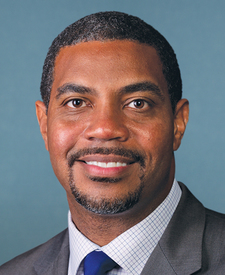




Legislative Progress
In CommitteeMr. Horsford (for himself, Ms. Titus, Ms. Lee of Nevada, …
Referred to the Committee on Financial Services, and in addition …
Introduced in House
Stakeholder Effects
cui bono?How this legislation distributes effects. Mention counts reflect frequency, not effect magnitude.
Fannie Mae multifamily staff, Homebuyers, Institutional housing investors
Positive-direction: Homebuyers, Low-income families, Renters
Negative-direction: Fannie Mae multifamily staff, Institutional housing investors, Landlords
DOJ antitrust attorneys, FTC competition staff, HUD enforcement staff
Bill Structure & Actor Mappings
Who is "The Secretary" in each section?
We use a combination of our own taxonomy and classification in addition to large language models to assess meaning and potential beneficiaries. High confidence means strong textual evidence. Always verify with the original bill text.
Learn more about our methodology