LAST ACRE Act of 2025
Summary
What This Bill Does
The LAST ACRE Act adds a new Rural Electrification Act program aimed at the farm field, not just the farmhouse. USDA must create the Last Acre Program within one year and award competitive grants and loans to covered broadband or wireless providers that deliver qualifying connectivity to unserved and underserved cropland, rangeland, pastureland, farm sites, livestock facilities, irrigation systems, drones, sensors, and other precision-agriculture uses. Qualifying service must be at least 100 Mbps downstream and 20 Mbps upstream; unserved land is below 25/3 and underserved land is below 100/20. Federal cost share is generally capped at 80 percent, but may rise to 90 percent for limited-resource farmers. The program includes provider registration, competing bids, 45-business-day challenges, 120-day bid windows, 4-year buildout milestones, cybersecurity configuration plans, annual reports, FCC map data sharing, and $20 million per year for fiscal years 2026 through 2030. NASS must also add farm broadband subscription, speed, and precision-agriculture use questions to its surveys and Census of Agriculture.
Who Benefits and How
Covered agricultural producers benefit because the program funds broadband and wireless connectivity for fields, equipment, sensors, irrigation systems, livestock facilities, and farm offices. Limited resource farmers benefit from a potential 90 percent federal cost share instead of the standard 80 percent cap. Broadband providers benefit from grants and loans to extend networks to agricultural land that is otherwise difficult to finance. Agricultural research centers benefit because USDA may reserve up to 10 percent of annual program assistance for covered Agricultural Research Service centers.
Who Bears the Burden and How
USDA Rural Utilities staff must run provider registration, bid notices, challenge adjudication, award selection, milestones, penalties, annual reports, and FCC data sharing. Broadband providers must document financial, managerial, technical, operational, legal, cybersecurity, and buildout capacity. FCC broadband maps staff must receive USDA data and reconcile farm-service information with federal broadband maps. National Agricultural Statistics Service staff must update surveys and the Census of Agriculture to collect farm broadband adoption, speed, and usage data.
Key Provisions
- Establishes the Last Acre Program for grants and loans to provide 100/20 Mbps qualifying connectivity to unserved and underserved agricultural land.
- Provides an 80 percent federal cost-share cap and a 90 percent cap for limited-resource farmers.
- Requires provider registration, competing bids, challenge adjudication, cybersecurity certification, 4-year buildout milestones, and standardized penalties.
- Authorizes $20 million annually for fiscal years 2026 through 2030 and directs NASS to collect farm broadband subscription, speed, and precision-agriculture use data.
Evidence Chain:
This summary is generated from the full bill text using AI analysis. Expand "Detailed Analysis" below for identified beneficiaries/burden bearers with clause-level evidence links.
At a Glance
What This Bill Does
Creates a USDA Last Acre Program to make grants and loans to broadband providers for 100/20 Mbps precision-agriculture connectivity on unserved and underserved agricultural land, with bid challenges, cybersecurity certifications, buildout penalties, and NASS broadband adoption data collection.
Key Policy Areas
Agriculture, Broadband, Rural Development
Primary Purpose
Creates a USDA Last Acre Program to make grants and loans to broadband providers for 100/20 Mbps precision-agriculture connectivity on unserved and underserved agricultural land, with bid challenges, cybersecurity certifications, buildout penalties, and NASS broadband adoption data collection.
Policy Domains
Resolution provisions
Identified Gains
- Covered agricultural producers
- Limited resource farmers
- Broadband providers
- Agricultural research centers
Identified Costs
- USDA Rural Utilities staff
- Broadband providers
- FCC broadband maps staff
- National Agricultural Statistics Service staff
Sponsors
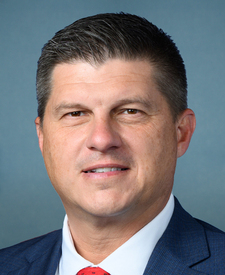
Brad Finstad
R-MN | Primary Sponsor
Legislative Progress
In CommitteeMr. Finstad (for himself and Mr. Costa) introduced the following …
Referred to the Committee on Agriculture, and in addition to …
Introduced in House
Stakeholder Effects
cui bono?How this legislation distributes effects. Mention counts reflect frequency, not effect magnitude.
FCC broadband maps staff, National Agricultural Statistics Service staff, USDA Rural Utilities staff
Covered agricultural producers, Limited resource farmers
Bill Structure & Actor Mappings
Who is "The Secretary" in each section?
We use a combination of our own taxonomy and classification in addition to large language models to assess meaning and potential beneficiaries. High confidence means strong textual evidence. Always verify with the original bill text.
Learn more about our methodology