Fortifying U.S. Markets From Chinese Military Aggression Act
Summary
What This Bill Does
The Fortifying U.S. Markets From Chinese Military Aggression Act amends the Financial Stability Act to create the Financial Stability Oversight Council Advisory Committee on Economic Fallout From Chinese Military Aggression Towards Taiwan. The committee must study market implications and vulnerabilities related to Chinese military aggression toward Taiwan and create communication channels among policymakers, government agencies, and capital market constituents to prepare for a response and mitigate economic strain and market volatility. Membership includes an SEC designee, a CFTC designee, and ten FSOC-appointed members who are capital markets participants such as market makers, asset managers, exchanges, and institutional investors, or experts on geopolitical risk related to China. A market maker chairs the committee. It must meet in person at least twice per year, conduct an annual study, develop recommendations and supporting analysis, and present those recommendations to FSOC publicly, with national security portions in closed session. The advisory committee is exempt from normal termination. FSOC must issue an annual public report on banking and financial system safety and soundness, U.S. and global market losses, market capacity to handle extreme volatility through trading halts and circuit breakers, Chinese and Taiwanese U.S. listings, China's Treasury holdings, estimated U.S. economic costs, regulator action items, blockade or invasion response options, potential Chinese retaliation, market-wide circuit-breaker testing, and further engagement with market participants.
Who Benefits and How
Financial regulators benefit from a standing forum focused on Taiwan-related market shock planning. Market makers and exchanges benefit from structured engagement on trading halts, circuit breakers, and liquidity tools. Asset managers and institutional investors benefit from public reporting on Chinese aggression scenarios and U.S. market vulnerabilities. U.S. banking system supervisors benefit from analysis of safety and soundness risks tied to Taiwan conflict scenarios. Taiwan-risk policy analysts benefit from a formal channel into FSOC's financial stability planning.
Who Bears the Burden and How
FSOC staff must appoint members, support meetings, analyze recommendations, and publish annual reports. SEC and CFTC designees must participate in the committee's studies and recommendations. Capital markets participants serving on the committee must attend meetings and develop analysis. Chinese and Taiwanese issuers listed in the United States face scrutiny in annual market vulnerability reporting. Treasury market analysts must evaluate China's potential reduction or elimination of U.S. Treasury holdings.
Key Provisions
- Establishes an FSOC Advisory Committee on Economic Fallout From Chinese Military Aggression Towards Taiwan.
- Requires SEC, CFTC, market participant, and China geopolitical risk expert membership.
- Requires at least two in-person meetings per year and annual studies, recommendations, and public presentations.
- Exempts the advisory committee from normal termination rules.
- Requires FSOC annual reports on market vulnerabilities, banking safety, trading halts, listings, Treasury holdings, economic costs, retaliation, and regulator action items.
Evidence Chain:
This summary is generated from the full bill text using AI analysis. Expand "Detailed Analysis" below for identified beneficiaries/burden bearers with clause-level evidence links.
At a Glance
What This Bill Does
Creates a permanent FSOC advisory committee of SEC, CFTC, market, and China-risk experts to study and report annually on U.S. market vulnerabilities from Chinese military aggression toward Taiwan and regulatory responses to market shocks.
Key Policy Areas
Financial Stability, China, Taiwan
Primary Purpose
Creates a permanent FSOC advisory committee of SEC, CFTC, market, and China-risk experts to study and report annually on U.S. market vulnerabilities from Chinese military aggression toward Taiwan and regulatory responses to market shocks.
Policy Domains
Resolution provisions
Identified Gains
- Financial regulators
- Market makers
- Asset managers
- U.S. banking supervisors
- Taiwan-risk analysts
Identified Costs
- FSOC staff
- SEC designees
- CFTC designees
- Capital markets participants
- Chinese issuers
Sponsors

Legislative Progress
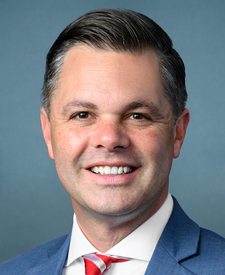
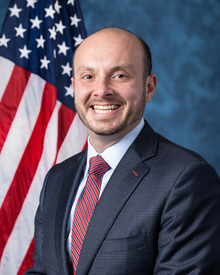
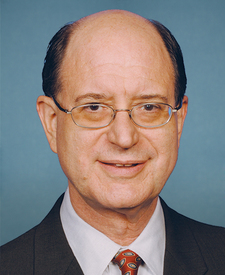
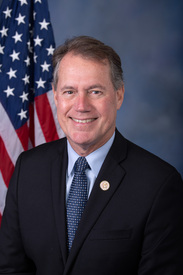
In CommitteeMr. Nunn of Iowa (for himself, Mr. Torres of New …
Referred to the House Committee on Financial Services.
Introduced in House
Stakeholder Effects
cui bono?How this legislation distributes effects. Mention counts reflect frequency, not effect magnitude.
Asset managers, Capital markets participants, Chinese issuers
Financial regulators, U.S. banking supervisors
Bill Structure & Actor Mappings
Who is "The Secretary" in each section?
We use a combination of our own taxonomy and classification in addition to large language models to assess meaning and potential beneficiaries. High confidence means strong textual evidence. Always verify with the original bill text.
Learn more about our methodology