Improving Helicopter Safety Act of 2025
Summary
What This Bill Does
The Improving Helicopter Safety Act adds a new 49 U.S.C. section 44749. Within 60 days after enactment, no person may operate a civil helicopter in covered airspace, defined as the airspace within a 20-mile radius of the Statue of Liberty National Monument, unless an exception applies. Exceptions cover public health and safety flights, including law enforcement, emergency response, disaster response, medical services, and other services for the public benefit such as research or official news organization flights. A separate exception covers heavy-lift operations supporting construction and infrastructure maintenance. The FAA Administrator must issue or update regulations within 90 days to implement the prohibition and exceptions. The bill targets sightseeing and other nonessential helicopter flights around the Statue of Liberty while preserving emergency, public-service, news, research, and infrastructure uses.
Who Benefits and How
Residents near New York Harbor benefit from reduced civil helicopter noise and crash-risk exposure around the Statue of Liberty. Visitors to Statue of Liberty National Monument benefit from fewer nonessential helicopter overflights. Emergency medical flight operators benefit because public health and safety flights are exempt. Law enforcement and disaster response agencies benefit from explicit exceptions for public safety flights.
Who Bears the Burden and How
Helicopter tour operators must stop civil flights within the 20-mile covered airspace unless an exception applies. FAA airspace staff must issue or update regulations within 90 days and enforce the new restrictions. News organizations must ensure official-purpose flights fit the public-benefit exception. Construction contractors using heavy-lift helicopters must fit within the infrastructure maintenance exception.
Key Provisions
- Prohibits civil helicopter operations within a 20-mile radius of the Statue of Liberty National Monument after 60 days.
- Provides exceptions for law enforcement, emergency response, disaster response, medical services, research, and official news organization flights.
- Provides an exception for heavy-lift construction and infrastructure maintenance operations.
- Requires the FAA Administrator to issue or update implementing regulations within 90 days.
Evidence Chain:
This summary is generated from the full bill text using AI analysis. Expand "Detailed Analysis" below for identified beneficiaries/burden bearers with clause-level evidence links.
At a Glance
What This Bill Does
Prohibits civil helicopter flights within 20 miles of the Statue of Liberty National Monument after 60 days, except for public health, safety, official news, research, and heavy-lift construction or infrastructure maintenance flights, and directs FAA regulations within 90 days.
Key Policy Areas
Aviation, Public Safety, Noise
Primary Purpose
Prohibits civil helicopter flights within 20 miles of the Statue of Liberty National Monument after 60 days, except for public health, safety, official news, research, and heavy-lift construction or infrastructure maintenance flights, and directs FAA regulations within 90 days.
Policy Domains
Resolution provisions
Identified Gains
- New York Harbor residents
- Statue of Liberty visitors
- Emergency medical flight operators
- Law enforcement agencies
Identified Costs
- Helicopter tour operators
- FAA airspace staff
- News organizations
- Construction contractors
Sponsors




Legislative Progress
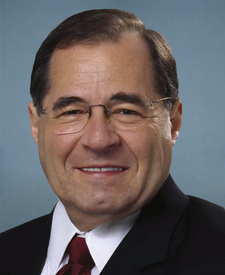
In CommitteeMr. Nadler (for himself, Mr. Menendez, Ms. Malliotakis, Ms. Meng, …
Referred to the Subcommittee on Aviation.
Referred to the House Committee on Transportation and Infrastructure.
Introduced in House
Stakeholder Effects
cui bono?How this legislation distributes effects. Mention counts reflect frequency, not effect magnitude.
Helicopter tour operators, New York Harbor residents
Positive-direction: New York Harbor residents
Negative-direction: Helicopter tour operators
Bill Structure & Actor Mappings
Who is "The Secretary" in each section?
We use a combination of our own taxonomy and classification in addition to large language models to assess meaning and potential beneficiaries. High confidence means strong textual evidence. Always verify with the original bill text.
Learn more about our methodology