Taiwan Representative Office Act
Summary
What This Bill Does
The Taiwan Representative Office Act is a diplomatic naming and recognition measure. It declares U.S. policy, consistent with the Taiwan Relations Act and the Six Assurances, to provide the people of Taiwan de facto diplomatic treatment equivalent to foreign countries, nations, states, governments, or similar entities. It directs the Secretary of State to seek negotiations with the Taipei Economic and Cultural Representative Office to rename its District of Columbia office as the Taiwan Representative Office. If that rename occurs, every U.S. law, map, regulation, document, paper, or other government record that references the Taipei Economic and Cultural Representative Office is deemed to refer to the Taiwan Representative Office for official U.S. government, court, and proceeding purposes. The bill expressly says it does not restore diplomatic relations with the Republic of China (Taiwan) and does not alter the U.S. position on Taiwan's international status.
Who Benefits and How
Taiwan's representative office benefits from a name that more directly signals representation of Taiwan rather than Taipei alone. Taiwanese diplomats in Washington benefit from stronger de facto diplomatic treatment in U.S. policy language. U.S.-Taiwan policy advocates benefit from a statutory renaming mechanism tied to the Taiwan Relations Act and Six Assurances. U.S. government record managers benefit from a clear rule deeming existing TECRO references to mean the Taiwan Representative Office after renaming.
Who Bears the Burden and How
The State Department must seek negotiations with TECRO over the office rename. Federal agencies must treat old TECRO references in laws, maps, regulations, documents, and records as references to the Taiwan Representative Office. U.S. courts must apply the renamed-office reference rule in proceedings. China-focused diplomatic staff may face increased diplomatic friction because the bill elevates Taiwan's office name while disclaiming formal recognition.
Key Provisions
- Provides U.S. policy favoring de facto diplomatic treatment for Taiwan's people consistent with the Taiwan Relations Act and Six Assurances.
- Directs the Secretary of State to seek negotiations to rename TECRO as the Taiwan Representative Office.
- Provides that U.S. legal and government references to TECRO are deemed references to the Taiwan Representative Office after renaming.
- Limits the bill so it does not restore formal diplomatic relations with Taiwan or alter the U.S. position on Taiwan's international status.
Evidence Chain:
This summary is generated from the full bill text using AI analysis. Expand "Detailed Analysis" below for identified beneficiaries/burden bearers.
At a Glance
What This Bill Does
Makes it U.S. policy to give Taiwan's people de facto diplomatic treatment consistent with the Taiwan Relations Act and Six Assurances, directs State Department negotiations to rename TECRO as the Taiwan Representative Office, and updates U.S. legal references without restoring formal diplomatic relations.
Key Policy Areas
Foreign Affairs, Taiwan, Diplomacy
Primary Purpose
Makes it U.S. policy to give Taiwan's people de facto diplomatic treatment consistent with the Taiwan Relations Act and Six Assurances, directs State Department negotiations to rename TECRO as the Taiwan Representative Office, and updates U.S. legal references without restoring formal diplomatic relations.
Policy Domains
Resolution provisions
Identified Gains
Contextual inference, no direct clause citation- Taiwan representative office staff
- Taiwanese diplomats
- U.S.-Taiwan policy advocates
- U.S. government record managers
Contextual inference, no direct clause citation
Identified Costs
Contextual inference, no direct clause citation- State Department officials
- Federal agency records staff
- U.S. courts
- China policy diplomats
Contextual inference, no direct clause citation
Sponsors

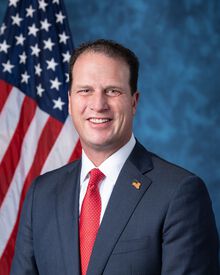



Legislative Progress
In CommitteeMr. Bacon (for himself and Mr. Pappas) introduced the following …
Referred to the House Committee on Foreign Affairs.
Introduced in House
Bill Structure & Actor Mappings
Who is "The Secretary" in each section?
We use a combination of our own taxonomy and classification in addition to large language models to assess meaning and potential beneficiaries. High confidence means strong textual evidence. Always verify with the original bill text.
Learn more about our methodology