Save Healthcare Workers Act
Summary
What This Bill Does
The Save Healthcare Workers Act treats violence against hospital personnel as both a federal criminal and grant-policy issue. It creates a new 18 U.S.C. section 120 making it a federal crime to knowingly assault an individual employed by a hospital, or by an entity contracting with a hospital or other medical facility, while that person is performing duties and the assault interferes with or limits those duties. The baseline penalty is a fine, up to 10 years in prison, or both; the penalty rises to up to 20 years when a deadly or dangerous weapon is used, bodily injury is inflicted, or the assault occurs during a declared public emergency. The bill includes an affirmative defense when the defendant has a physical, mental, or intellectual disability and the conduct was a clear and direct manifestation of that disability. It defines hospitals to include acute, long-term care, rehabilitation, cancer, children's, critical access, and rural emergency hospitals. It also creates a DOJ grant program for hospital workforce safety and security, funding de-escalation and mental-health-crisis training, coordination with state and local law enforcement, access controls, video surveillance, metal detection, panic buttons, alert systems, restricted access, safe patient and staff rooms, and other Attorney General-approved measures. Grant applications require intended use explanations, data and record assurances, certifications, guidelines within 90 days, annual congressional reports, grant accountability, and a 25 million dollar annual authorization for fiscal years 2025 through 2034.
Who Benefits and How
Hospital employees benefit from federal assault penalties and grant-funded security measures aimed at reducing workplace violence. Nurses and bedside care workers benefit from de-escalation training, panic buttons, safe rooms, and access control technologies. Hospitals with demonstrated security and financial need benefit from DOJ grants for violence-prevention programs. Patients benefit if reduced staff assaults and intimidation lower absenteeism, turnover, and care disruptions. State and local law enforcement agencies benefit from formal coordination with hospitals and federal partners.
Who Bears the Burden and How
Assault defendants face new federal prosecution exposure and up to 10 or 20 years of imprisonment depending on aggravating factors. Hospital chief executives must submit applications, certify compliance, maintain programmatic and financial records, and report grant data. DOJ grant administrators must issue guidelines, score hospital applications, monitor accountability, and report annually to Congress. Federal courts and prosecutors must apply the new offense, enhanced penalties, and disability-related affirmative defense. Federal appropriators bear the 25 million dollar annual authorization through fiscal year 2034.
Key Provisions
- Creates a federal crime for knowingly assaulting hospital personnel while they perform duties.
- Increases penalties to 20 years for deadly weapons, bodily injury, or emergency-declaration assaults.
- Provides an affirmative defense for conduct that is a clear and direct manifestation of certain disabilities.
- Authorizes DOJ grants for de-escalation training, law-enforcement coordination, access control, surveillance, metal detection, panic buttons, alert systems, and safe rooms.
- Requires applications, guidelines, annual congressional reporting, grant accountability, and 25 million dollars per year through fiscal year 2034.
Evidence Chain:
This summary is generated from the full bill text using AI analysis. Expand "Detailed Analysis" below for identified beneficiaries/burden bearers with clause-level evidence links.
At a Glance
What This Bill Does
Creates federal criminal penalties for assaulting hospital personnel and authorizes 25 million dollars per year from fiscal years 2025 through 2034 for DOJ hospital workplace safety and security grants.
Key Policy Areas
Health Care, Public Safety, Criminal Justice
Primary Purpose
Creates federal criminal penalties for assaulting hospital personnel and authorizes 25 million dollars per year from fiscal years 2025 through 2034 for DOJ hospital workplace safety and security grants.
Policy Domains
Resolution provisions
Identified Gains
- Hospital employees
- Nurses
- Hospitals with security needs
- Patients
- Local law enforcement agencies
Identified Costs
- Assault defendants
- Hospital chief executives
- DOJ grant administrators
- Federal prosecutors
- Federal appropriators
Sponsors
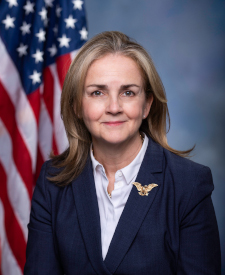
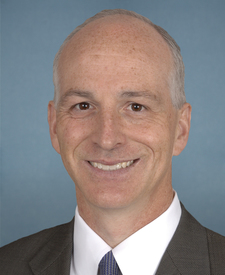
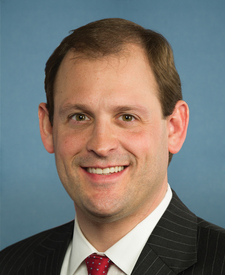
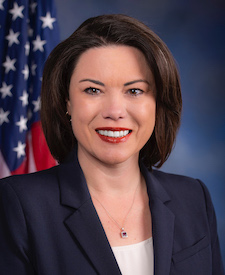

Legislative Progress
In CommitteeMs. Dean of Pennsylvania (for herself and Mrs. Miller-Meeks) introduced …
Referred to the House Committee on the Judiciary.
Introduced in House
Stakeholder Effects
cui bono?How this legislation distributes effects. Mention counts reflect frequency, not effect magnitude.
Hospital chief executives, Hospital employees, Hospitals with security needs
Positive-direction: Hospital employees, Hospitals with security needs, Nurses, Patients
Negative-direction: Hospital chief executives
Assault defendants, Local law enforcement agencies
Bill Structure & Actor Mappings
Who is "The Secretary" in each section?
We use a combination of our own taxonomy and classification in addition to large language models to assess meaning and potential beneficiaries. High confidence means strong textual evidence. Always verify with the original bill text.
Learn more about our methodology