Improving Access to Workers’ Compensation for Injured Federal Workers Act of 2025
Summary
What This Bill Does
The Improving Access to Workers' Compensation for Injured Federal Workers Act expands which clinicians can serve injured Federal employees under the Federal Employees' Compensation Act. It amends title 5 to define other eligible provider as a nurse practitioner or physician assistant acting within the scope of practice defined by State law. It inserts other eligible providers alongside physicians in sections governing medical services, the employee's choice of provider, medical examinations, and related FECA procedures. The Secretary of Labor must finalize implementing rules within six months after enactment. The practical effect is to let injured Federal workers use nurse practitioners and physician assistants for FECA treatment and examinations where State scope-of-practice law allows it.
Who Benefits and How
Injured Federal workers benefit from more provider options and potentially faster access to care, especially in areas with physician shortages. Nurse practitioners benefit from new FECA-recognized work within State scope of practice. Physician assistants benefit from the same expanded role in Federal workers' compensation cases. Rural Federal employees benefit if local nonphysician clinicians can handle treatment or examination duties. Federal employing agencies benefit if faster care reduces delays in injury recovery and return-to-work decisions.
Who Bears the Burden and How
The Department of Labor must write and finalize implementing rules within six months. Office of Workers' Compensation Programs claims offices must update forms, guidance, medical-review processes, and provider recognition workflows. Physicians may lose some FECA treatment or examination volume to nurse practitioners and physician assistants. Nurse practitioners and physician assistants must stay within State scope-of-practice limits and FECA documentation rules. Federal agencies must adapt injury-management processes to accept records from the newly covered providers.
Key Provisions
- Defines other eligible provider as a nurse practitioner or physician assistant acting within State scope of practice.
- Amends FECA medical-service provisions to include other eligible providers alongside physicians.
- Expands employee choice and examination provisions to include other eligible providers.
- Requires the Secretary of Labor to finalize implementing rules within six months.
- Provides broader workers' compensation care access for injured Federal employees.
Evidence Chain:
This summary is generated from the full bill text using AI analysis. Expand "Detailed Analysis" below for identified beneficiaries/burden bearers with clause-level evidence links.
At a Glance
What This Bill Does
Adds nurse practitioners and physician assistants as other eligible providers under the Federal Employees' Compensation Act, lets injured Federal workers use those providers for treatment and medical examinations within State scope of practice, and requires Labor Department rules within six months.
Key Policy Areas
Federal Workforce, Workers Compensation, Health Care
Primary Purpose
Adds nurse practitioners and physician assistants as other eligible providers under the Federal Employees' Compensation Act, lets injured Federal workers use those providers for treatment and medical examinations within State scope of practice, and requires Labor Department rules within six months.
Policy Domains
House resolution provisions
Identified Gains
- Injured Federal workers
- Nurse practitioners
- Physician assistants
- Rural Federal employees
- Federal employing agencies
Identified Costs
- Department of Labor
- Office of Workers' Compensation Programs
- Physicians
- Nurse practitioners
- Federal agency injury offices
Sponsors

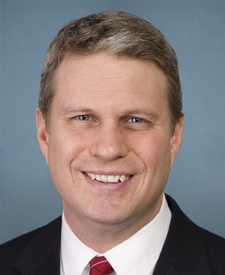
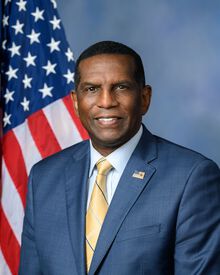
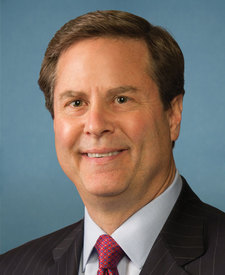

Legislative Progress
ReportedAdditional sponsors: Mr. Kennedy of New York, Mr. Messmer, Mr. …
Reported with an amendment, committed to the Committee of the …
Placed on the Union Calendar, Calendar No. 343.
Reported (Amended) by the Committee on Education and Workforce. H. …
Ordered to be Reported (Amended) by the Yeas and Nays: …
Committee Consideration and Mark-up Session Held
Mr. Walberg (for himself and Mr. Courtney) introduced the following …
Referred to the House Committee on Education and Workforce.
Introduced in House
Stakeholder Effects
cui bono?How this legislation distributes effects. Mention counts reflect frequency, not effect magnitude.
Nurse practitioners, Physician assistants, Physicians
Positive-direction: Nurse practitioners, Physician assistants
Negative-direction: Physicians
Department of Labor, Office of Workers' Compensation Programs
Bill Structure & Actor Mappings
Who is "The Secretary" in each section?
- "owcp"
- → Office of Workers' Compensation Programs
- "secretary_labor"
- → Secretary of Labor
We use a combination of our own taxonomy and classification in addition to large language models to assess meaning and potential beneficiaries. High confidence means strong textual evidence. Always verify with the original bill text.
Learn more about our methodology