National Earthquake Hazards Reduction Program Reauthorization Act of 2025
Summary
What This Bill Does
The bill requires modernization and expansion of the National Earthquake Hazards Reduction Program, including Tribal government inclusion, earthquake early warning system expansion, FCC coordination for emergency alerts, tsunami and provides authorization of $83,403,000 per year in appropriations for USGS earthquake programs for fiscal years 2026-2030, with at least $30,000,000 annually earmarked for completion of the Advanced National Seismic. It relies on compliance mandates, definition changes, and appropriations. The main policy areas are Criminal Justice, Technology, Housing, and Science & Space.
Who Benefits and How
USGS Advanced National Seismic System could gain revenue opportunities, USGS earthquake early warning program could gain revenue opportunities, and Tribal governments in seismic hazard zones could face fewer barriers.
Who Bears the Burden and How
Federal Communications Commission would take on compliance duties and Federal taxpayers could face higher costs.
Key Provisions
- Requires modernization and expansion of the National Earthquake Hazards Reduction Program, including Tribal government inclusion, earthquake early warning system expansion, FCC coordination for emergency alerts, tsunami...
- Provides authorization of $83,403,000 per year in appropriations for USGS earthquake programs for fiscal years 2026-2030, with at least $30,000,000 annually earmarked for completion of the Advanced National Seismic...
Evidence Chain:
This summary is generated from the full bill text using AI analysis. Expand "Detailed Analysis" below for identified beneficiaries/burden bearers with clause-level evidence links.
At a Glance
What This Bill Does
The bill requires modernization and expansion of the National Earthquake Hazards Reduction Program, including Tribal government inclusion, earthquake early warning system expansion, FCC coordination for emergency alerts, tsunami and provides authorization of $83,403,000 per year in appropriations for USGS earthquake programs for fiscal years 2026-2030, with at least $30,000,000 annually earmarked for completion of the Advanced National Seismic.
Key Policy Areas
Criminal Justice, Technology, Housing, Science & Space
Primary Purpose
The bill requires modernization and expansion of the National Earthquake Hazards Reduction Program, including Tribal government inclusion, earthquake early warning system expansion, FCC coordination for emergency alerts, tsunami and provides authorization of $83,403,000 per year in appropriations for USGS earthquake programs for fiscal years 2026-2030, with at least $30,000,000 annually earmarked for completion of the Advanced National Seismic.
Policy Domains
Whole bill
Identified Gains
- USGS Advanced National Seismic System
- USGS earthquake early warning program
- Tribal governments in seismic hazard zones
- Communities in earthquake-prone areas
- Seismological monitoring equipment manufacturers and contractors
Identified Costs
- Federal Communications Commission
- Federal taxpayers
Sponsors
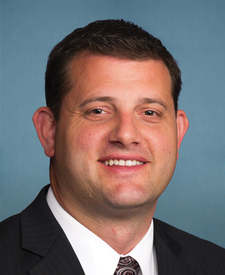


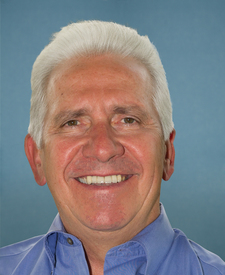

Legislative Progress
ReportedOrdered to be Reported in the Nature of a Substitute …
Committee Consideration and Mark-up Session Held
Reported by the Committee on Natural Resources. H. Rept. 119-438, …
Ordered to be Reported by Unanimous Consent.
Committee Consideration and Mark-up Session Held
Subcommittee on Energy and Mineral Resources Discharged
Subcommittee Hearings Held
Referred to the Subcommittee on Energy and Mineral Resources.
Mr. Valadao (for himself and Mr. Costa) introduced the following …
Referred to the Subcommittee on Economic Development, Public Buildings, and …
Stakeholder Effects
cui bono?How this legislation distributes effects. Mention counts reflect frequency, not effect magnitude.
Federal Communications Commission, Tribal governments in seismic hazard zones, USGS Advanced National Seismic System
Positive-direction: Tribal governments in seismic hazard zones, USGS Advanced National Seismic System, USGS earthquake early warning program
Negative-direction: Federal Communications Commission
Seismological monitoring equipment manufacturers and contractors
Bill Structure & Actor Mappings
Who is "The Secretary" in each section?
We use a combination of our own taxonomy and classification in addition to large language models to assess meaning and potential beneficiaries. High confidence means strong textual evidence. Always verify with the original bill text.
Learn more about our methodology