ReConnecting Rural America Act of 2025
Summary
What This Bill Does
The ReConnecting Rural America Act substantially rebuilds section 601 of the Rural Electrification Act. USDA Rural Utilities Service would provide grants, loans, and grant-loan combinations for construction, improvement, and acquisition of rural broadband facilities and equipment. Projects generally must deliver at least 100 Mbps downstream and 100 Mbps upstream service and serve territories where at least 75 percent of households lack 100/20 Mbps service, with priority for areas where at least 90 percent lack that service. The bill adds priority factors for very small communities, outmigration areas with strategic community investment plans, low-income or isolated territories, prevailing-wage construction, precision agriculture deployment on cropland and ranchland, and applicants with at least five years of broadband or utility service in the state. Grant-only eligibility is preserved for Tribal organizations, colonias, persistent-poverty counties, socially vulnerable communities, or 90-percent unserved territories. Applicants must complete buildout within five years and participate in the Affordable Connectivity Program, Lifeline, or a successor internet affordability program. Large broadband providers and states face 15 percent annual funding caps, overlapping federally funded service areas are restricted, cost shares may reach 25 percent unless waived, 3 to 5 percent of annual funds must support technical assistance and training, broadband standards are reviewed at least every two years, and the program is authorized at 650 million dollars per year for grants and combinations plus 350 million dollars per year for direct loans for fiscal years 2026 through 2030.
Who Benefits and How
Rural households without 100/20 Mbps service benefit because grants and loans are targeted toward territories with substantial unmet broadband access. Tribal organizations, colonias, persistent-poverty counties, and socially vulnerable communities benefit from grant-only eligibility and possible cost-share waivers. Rural broadband cooperatives and utility providers benefit from multiyear USDA financing for network construction and equipment. Precision agriculture users benefit because cropland and ranchland mobile and fixed broadband deployment is a priority factor. Low-income rural subscribers benefit because funded providers must participate in federal internet affordability programs.
Who Bears the Burden and How
USDA Rural Utilities Service staff must score applications, enforce eligibility, monitor buildout, run technical assistance, and update broadband standards. Broadband grant and loan recipients must meet 100/100 Mbps buildout obligations, complete projects within five years, document service territories, and participate in affordability programs. Large broadband providers and state applicants are limited by 15 percent annual funding caps. Construction contractors on prioritized projects may need to pay prevailing wages for broadband construction work. Federal appropriators face 1 billion dollars in annual authorizations across grants, combinations, and direct loans through fiscal year 2030.
Key Provisions
- Rewrites USDA rural broadband assistance as grants, loans, and grant-loan combinations for facilities and equipment.
- Requires funded projects to provide at least 100 Mbps downstream and 100 Mbps upstream service.
- Prioritizes territories where at least 90 percent of households lack 100/20 Mbps service and gives priority to small, isolated, low-income, outmigration, precision-agriculture, and experienced-provider projects.
- Requires applicants to complete buildout within five years and participate in Affordable Connectivity, Lifeline, or successor affordability programs.
- Authorizes 650 million dollars per year for rural broadband assistance and 350 million dollars per year for direct loans for fiscal years 2026 through 2030.
Evidence Chain:
This summary is generated from the full bill text using AI analysis. Expand "Detailed Analysis" below for identified beneficiaries/burden bearers with clause-level evidence links.
At a Glance
What This Bill Does
Rewrites USDA rural broadband assistance to fund 100/100 Mbps broadband grants and loans, prioritize deeply unserved rural territories, require affordability-program participation, and authorize 650 million dollars plus 350 million dollars annually through fiscal year 2030.
Key Policy Areas
Rural Broadband, Agriculture, Telecommunications
Primary Purpose
Rewrites USDA rural broadband assistance to fund 100/100 Mbps broadband grants and loans, prioritize deeply unserved rural territories, require affordability-program participation, and authorize 650 million dollars plus 350 million dollars annually through fiscal year 2030.
Policy Domains
Resolution provisions
Identified Gains
- Rural households without broadband
- Tribal organizations
- Rural broadband cooperatives
- Precision agriculture users
- Low-income rural subscribers
Identified Costs
- USDA Rural Utilities Service staff
- Broadband grant recipients
- Large broadband providers
- Construction contractors
- Federal appropriators
Sponsors
Legislative Progress
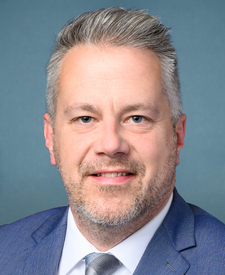
In CommitteeMr. Nunn of Iowa (for himself, Mr. Vasquez, Mr. Sorensen, …
Referred to the Committee on Agriculture, and in addition to …
Introduced in House
Stakeholder Effects
cui bono?How this legislation distributes effects. Mention counts reflect frequency, not effect magnitude.
Broadband grant recipients, Large broadband providers, Rural broadband cooperatives
Positive-direction: Rural broadband cooperatives
Negative-direction: Broadband grant recipients, Large broadband providers
Tribal organizations, USDA Rural Utilities Service staff
Positive-direction: Tribal organizations
Negative-direction: USDA Rural Utilities Service staff
Bill Structure & Actor Mappings
Who is "The Secretary" in each section?
We use a combination of our own taxonomy and classification in addition to large language models to assess meaning and potential beneficiaries. High confidence means strong textual evidence. Always verify with the original bill text.
Learn more about our methodology