Promotion and Expansion of Private Employee Ownership Act of 2025
Summary
What This Bill Does
The Promotion and Expansion of Private Employee Ownership Act encourages employee stock ownership plans, especially S corporation ESOPs. The findings say ESOP-owned S corporations have created ownership interests for several million workers, support retirement savings for employee-owners, and may promote job stability, while Small Business Act rules can deny small-business treatment after an ESOP owns more than 49 percent of a business. The bill accelerates and expands SECURE 2.0 section 114 so sales of employer stock to S corporation ESOPs can receive full section 1042 tax deferral after enactment, rather than waiting until December 31, 2027, and removes a limiting subsection. Treasury must create an S Corporation Employee Ownership Assistance Office within 90 days to educate companies and individuals and provide technical assistance to S corporations sponsoring ESOPs. The Small Business Act is amended so an ESOP business concern that was eligible for SBA loans, preferences, or programs before an ESOP acquired more than 49 percent can continue to qualify by treating each ESOP participant as directly owning a proportionate share. ERISA is amended to create an Advocate for Employee Ownership inside the Employee Ownership Initiative, paid at Executive Schedule level V, to liaise among DOL, employee ownership advocates, employers, workers, ESOP sponsors, fiduciaries, participants, Treasury, SBA, Commerce, and state or local governments; assist with DOL disputes; recommend legislative and administrative changes; advise on ESOP rules; and issue annual public reports to House and Senate labor committees.
Who Benefits and How
S corporation ESOP companies benefit from immediate full tax deferral for qualifying employer-stock sales to ESOPs. Employee owners benefit from policies intended to expand ESOP ownership and retirement savings opportunities. Business owners selling to ESOPs benefit from expanded section 1042 deferral treatment. ESOP business concerns benefit from continued Small Business Act eligibility after majority ESOP ownership. ESOP sponsors, fiduciaries, and participants benefit from a Labor Department advocate who can help resolve disputes and recommend policy changes. Workers interested in employee ownership benefit from Treasury education, technical assistance, and federal outreach.
Who Bears the Burden and How
Treasury must establish and operate the S Corporation Employee Ownership Assistance Office within 90 days. SBA must apply a new ownership attribution rule for ESOP business concerns seeking loans, preferences, or programs. DOL must appoint, compensate, consult, and support the Advocate for Employee Ownership. The Advocate for Employee Ownership must submit annual public reports with assistance requests, problems, recommendations, and progress. Federal tax administrators must apply expanded section 1042 S corporation ESOP deferral rules.
Key Provisions
- Expands full section 1042 tax deferral for qualifying sales of employer stock to S corporation ESOPs.
- Creates a Treasury S Corporation Employee Ownership Assistance Office within 90 days.
- Preserves Small Business Act eligibility for qualifying ESOP business concerns by attributing ESOP stock to participants.
- Establishes a Labor Department Advocate for Employee Ownership inside the Employee Ownership Initiative.
- Requires annual public reports on employee ownership assistance, problems, recommendations, and progress.
Evidence Chain:
This summary is generated from the full bill text using AI analysis. Expand "Detailed Analysis" below for identified beneficiaries/burden bearers with clause-level evidence links.
At a Glance
What This Bill Does
Expands S corporation ESOP tax deferral, creates a Treasury employee-ownership assistance office, preserves small-business eligibility after majority ESOP ownership, and establishes a Labor Department Advocate for Employee Ownership with annual reports.
Key Policy Areas
Tax, Employee Ownership, Small Business
Primary Purpose
Expands S corporation ESOP tax deferral, creates a Treasury employee-ownership assistance office, preserves small-business eligibility after majority ESOP ownership, and establishes a Labor Department Advocate for Employee Ownership with annual reports.
Policy Domains
Resolution provisions
Identified Gains
- S corporation ESOP companies
- Employee owners
- Business owners selling to ESOPs
- ESOP business concerns
- ESOP sponsors
- ESOP participants
- Workers interested in employee ownership
Identified Costs
- Treasury Department
- SBA
- DOL
- Advocate for Employee Ownership
- Federal tax administrators
Sponsors



Legislative Progress
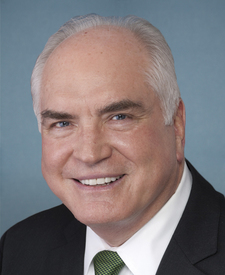
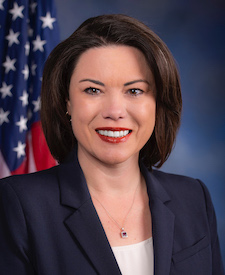
In CommitteeMr. Kelly of Pennsylvania (for himself, Mr. Panetta, Mr. Estes, …
Referred to the Committee on Ways and Means, and in …
Introduced in House
Stakeholder Effects
cui bono?How this legislation distributes effects. Mention counts reflect frequency, not effect magnitude.
Business owners selling to ESOPs, ESOP business concerns
Bill Structure & Actor Mappings
Who is "The Secretary" in each section?
We use a combination of our own taxonomy and classification in addition to large language models to assess meaning and potential beneficiaries. High confidence means strong textual evidence. Always verify with the original bill text.
Learn more about our methodology