Increasing Penalties for Offshore Polluters Act
Summary
What This Bill Does
The Increasing Penalties for Offshore Polluters Act increases penalty exposure under the Federal Water Pollution Control Act. For oil spill civil penalties in section 311(b)(7), it changes language from amounts up to specified levels to amounts that are at least those levels, and changes one category from not more than to at least. For negligent criminal violations under section 309(c)(1), it raises the fine range from 2,500 to 25,000 dollars per day to 5,000 to 50,000 dollars per day, increases imprisonment from up to one year to up to two years, and doubles the maximum punishment for repeat violations. For knowing violations under section 309(c)(2), it raises the fine range from 5,000 to 50,000 dollars per day to 10,000 to 100,000 dollars per day, increases imprisonment from up to three years to up to six years, and doubles repeat-violation maximums. For knowing endangerment under section 309(c)(3), it raises individual fines from 250,000 to 500,000 dollars, imprisonment from up to 15 years to up to 30 years, and organizational fines from 1 million to 2 million dollars.
Who Benefits and How
Coastal communities benefit from stronger deterrence against oil spills and water-pollution violations. Commercial fisheries benefit if higher penalties reduce spill risks that can close fishing grounds or damage stocks. Environmental enforcement agencies benefit from larger statutory penalty tools for civil and criminal oil pollution cases. Workers and residents exposed to knowing endangerment benefit from higher penalties for conduct that places people at risk of death or serious injury.
Who Bears the Burden and How
Offshore oil operators face higher civil penalty floors and criminal penalty maximums for spill-related violations. Corporate officers responsible for knowing endangerment face fines up to 500,000 dollars and imprisonment up to 30 years. Oil companies face organizational knowing-endangerment fines up to 2 million dollars. Repeat Clean Water Act violators face doubled maximum fines and imprisonment terms. DOJ prosecutors and EPA enforcement staff must apply the revised penalty structure in cases after enactment.
Key Provisions
- Amends oil spill civil penalties so listed amounts become minimum penalty levels.
- Doubles negligent-violation fine ranges and raises imprisonment to two years.
- Doubles knowing-violation fine ranges and raises imprisonment to six years.
- Increases knowing-endangerment penalties to 500,000 dollars for individuals, 2 million dollars for organizations, and 30 years imprisonment.
- Provides doubled maximum punishment for repeat negligent or knowing criminal violations.
Evidence Chain:
This summary is generated from the full bill text using AI analysis. Expand "Detailed Analysis" below for identified beneficiaries/burden bearers with clause-level evidence links.
At a Glance
What This Bill Does
Raises Clean Water Act civil and criminal penalty floors and maximums for oil spills, including doubled fines and imprisonment terms for repeat negligent or knowing violations and higher penalties for knowing endangerment.
Key Policy Areas
Environment, Oil and Gas, Criminal Justice
Primary Purpose
Raises Clean Water Act civil and criminal penalty floors and maximums for oil spills, including doubled fines and imprisonment terms for repeat negligent or knowing violations and higher penalties for knowing endangerment.
Policy Domains
Resolution provisions
Identified Gains
- Coastal communities
- Commercial fisheries
- Environmental enforcement agencies
- Workers exposed to oil spill risks
Identified Costs
- Offshore oil operators
- Corporate officers
- Oil companies
- Repeat Clean Water Act violators
- DOJ prosecutors
- EPA enforcement staff
Sponsors



Legislative Progress
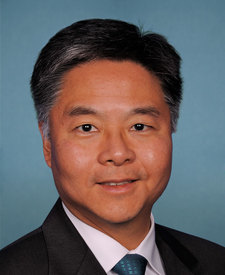
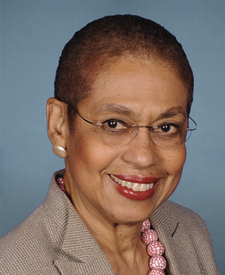
In CommitteeMr. Lieu (for himself, Ms. Brownley, and Ms. Barragán) introduced …
Referred to the Subcommittee on Water Resources and Environment.
Referred to the Subcommittee on Coast Guard and Maritime Transportation.
Referred to the House Committee on Transportation and Infrastructure.
Introduced in House
Stakeholder Effects
cui bono?How this legislation distributes effects. Mention counts reflect frequency, not effect magnitude.
DOJ prosecutors, EPA enforcement staff, Environmental enforcement agencies
Positive-direction: Environmental enforcement agencies
Negative-direction: DOJ prosecutors, EPA enforcement staff
Corporate officers, Offshore oil operators, Oil companies
Bill Structure & Actor Mappings
Who is "The Secretary" in each section?
We use a combination of our own taxonomy and classification in addition to large language models to assess meaning and potential beneficiaries. High confidence means strong textual evidence. Always verify with the original bill text.
Learn more about our methodology