Canadian Snowbird Act
Summary
What This Bill Does
The Canadian Snowbird Act creates a special visitor admission rule for Canadian retirees. DHS may admit a Canadian citizen as a B visitor if the person is at least 50, maintains a Canadian residence, owns a U.S. residence or has a rental agreement for the stay, is not inadmissible or deportable, will not work in the United States except for a non-U.S.-based employer or client connected to prior Canadian work, and will not seek covered federal public assistance. A spouse may be admitted on the same terms without separately needing to own or rent the U.S. residence. Maintaining a U.S. residence cannot be treated as evidence that the person intends to abandon Canadian residence. The visitor period can last up to 240 days in a single 365-day period, and time outside the United States during that admission does not count toward the termination date. The bill also amends the Internal Revenue Code so a Canadian citizen admitted under the new rule is not treated as a U.S. resident under the substantial-presence test for nonresident alien tax status.
Who Benefits and How
Canadian citizens age 50 or older benefit from a longer, clearer visitor pathway for seasonal stays in the United States. Canadian spouses benefit because they can be admitted on the same terms without separately satisfying the U.S. residence or rental condition. U.S. tourism businesses benefit from longer seasonal stays by Canadian retirees. U.S. housing owners and rental markets benefit when Canadian snowbirds buy or rent accommodations for extended stays. Canadian retirees with remote Canadian work benefit from a narrow ability to keep working for non-U.S.-based employers or clients.
Who Bears the Burden and How
DHS admission officers must verify age, citizenship, Canadian residence, U.S. residence or rental arrangements, admissibility, work limits, and public-benefit restrictions. IRS administrators must apply the nonresident alien tax rule for qualifying Canadian snowbirds. U.S. public benefit administrators benefit from a statutory bar on covered assistance but may need to verify eligibility if questions arise. Canadian visitors who want U.S.-based employment remain barred from labor for hire in the United States.
Key Provisions
- Creates a B visitor admission rule for qualifying Canadian citizens age 50 or older.
- Allows admission for up to 240 days in a single 365-day period.
- Allows qualifying spouses to be admitted on the same terms.
- Bars U.S.-based employment and covered public assistance during the stay.
- Provides nonresident alien tax treatment notwithstanding the substantial-presence test.
Evidence Chain:
This summary is generated from the full bill text using AI analysis. Expand "Detailed Analysis" below for identified beneficiaries/burden bearers with clause-level evidence links.
At a Glance
What This Bill Does
Allows qualifying Canadian citizens age 50 or older to visit the United States for up to 240 days in a 365-day period without being treated as abandoning Canadian residence or becoming residents for U.S. tax purposes solely under the substantial-presence rule.
Key Policy Areas
Immigration, Tax, Tourism
Primary Purpose
Allows qualifying Canadian citizens age 50 or older to visit the United States for up to 240 days in a 365-day period without being treated as abandoning Canadian residence or becoming residents for U.S. tax purposes solely under the substantial-presence rule.
Policy Domains
Resolution provisions
Identified Gains
- Canadian citizens age 50 or older
- Canadian spouses
- U.S. tourism businesses
- U.S. housing rental markets
- Canadian retirees with remote Canadian work
Identified Costs
- DHS admission officers
- IRS administrators
- U.S. public benefit administrators
- Canadian visitors seeking U.S. jobs
Sponsors



Legislative Progress
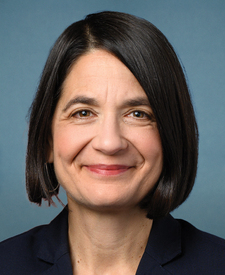
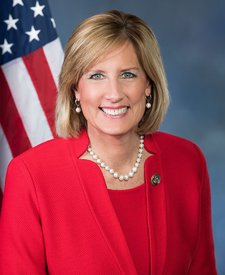
In CommitteeMs. Lee of Florida (for herself, Ms. Stefanik, Mr. Stanton, …
Referred to the Committee on the Judiciary, and in addition …
Introduced in House
Stakeholder Effects
cui bono?How this legislation distributes effects. Mention counts reflect frequency, not effect magnitude.
Canadian citizens age 50 or older, Canadian spouses, U.S. tourism businesses
Bill Structure & Actor Mappings
Who is "The Secretary" in each section?
We use a combination of our own taxonomy and classification in addition to large language models to assess meaning and potential beneficiaries. High confidence means strong textual evidence. Always verify with the original bill text.
Learn more about our methodology