ESCRA Act
Summary
What This Bill Does
The Ending Scam Credit Repair Act rewrites several Credit Repair Organizations Act rules to target abusive credit repair practices. It narrows the attorney exemption so bankruptcy or title 15 legal work connected to a filed or soon-to-be-filed case can remain outside the credit repair organization definition, but organizations that employ attorneys remain covered unless they fit that exception. It makes false-statement prohibitions cover knowing statements to consumer reporting agencies, data furnishers, CFPB, FTC, and federal, state, local, or Tribal law enforcement portals. Credit repair organizations cannot take payment for services represented to remove derogatory or inaccurate information or improve credit until they give the consumer a consumer report issued at least six months after the service showing the promised result. Repeated dispute submissions are limited unless prior investigations have run their Fair Credit Reporting Act time, results have been returned, or material changes exist, and resubmissions must describe the inaccurate information. Disclosures must tell consumers that credit repair organizations do not provide anything consumers cannot do themselves for free, add CFPB contact information, and require retention of consumer statements and phone recordings for five years. Contracts must include copies of communications sent on the consumer's behalf. Beginning January 1, 2026, no one may act as a credit repair organization without a state license. New section 408A requires disputes sent to data furnishers to identify the organization, state license number if any, the consumer, material changes in follow-up communications, blank-form seller information, a 15-business-day response to clarifying inquiries, attorney certification of reliability, and a disclosure that the letter came from a credit repair organization. Civil liability is expanded for violations.
Who Benefits and How
Consumers seeking credit repair benefit because organizations cannot charge until a six-month-later consumer report documents the promised improvement. Consumers targeted by scam credit repair benefit from clearer disclosures saying they can do the same services themselves for free. Consumer reporting agencies benefit from restrictions on repeated dispute submissions that lack investigation results or material changes. Data furnishers benefit from required organization names, license numbers, consumer names, material-change explanations, and 15-business-day responses. CFPB and FTC enforcement staff benefit from explicit inclusion in false-statement and disclosure provisions. State licensing regulators benefit because state licensure becomes a prerequisite for acting as a credit repair organization after January 1, 2026.
Who Bears the Burden and How
Credit repair organizations must delay fees, keep records longer, provide more disclosures, include communications in contracts, and label disputes. Attorneys working inside credit repair organizations remain covered unless their legal services fit the bankruptcy or title 15 litigation exception. Credit repair organizations that resubmit disputes must wait for investigations or identify material changes and specific inaccuracies. Blank dispute form sellers must disclose their name, address, and state license number if applicable. Unlicensed credit repair organizations lose the ability to operate after January 1, 2026.
Key Provisions
- Amends the credit repair organization definition and narrows the attorney exemption.
- Prohibits advance fees until a six-month-later consumer report proves the represented result.
- Requires disclosures that credit repair services can be done by consumers for free and adds CFPB contact information.
- Requires state licensing for credit repair organizations after January 1, 2026.
- Creates section 408A dispute-identification, license-number, response, attorney-certification, and credit-repair-disclosure rules.
- Expands civil liability for noncompliance.
Evidence Chain:
This summary is generated from the full bill text using AI analysis. Expand "Detailed Analysis" below for identified beneficiaries/burden bearers with clause-level evidence links.
At a Glance
What This Bill Does
Tightens the Credit Repair Organizations Act by redefining covered organizations, delaying fees until results are documented after six months, limiting repeated disputes, requiring state licensing after January 1, 2026, and adding detailed dispute disclosures to data furnishers.
Key Policy Areas
Consumer Protection, Credit Reporting, Financial Services
Primary Purpose
Tightens the Credit Repair Organizations Act by redefining covered organizations, delaying fees until results are documented after six months, limiting repeated disputes, requiring state licensing after January 1, 2026, and adding detailed dispute disclosures to data furnishers.
Policy Domains
Resolution provisions
Identified Gains
- Consumers seeking credit repair
- Consumers targeted by scam credit repair
- Consumer reporting agencies
- Data furnishers
- CFPB enforcement staff
- FTC enforcement staff
- State licensing regulators
Identified Costs
- Credit repair organizations
- Attorneys inside credit repair organizations
- Blank dispute form sellers
- Unlicensed credit repair organizations
Sponsors

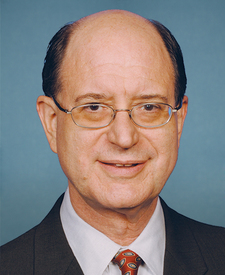


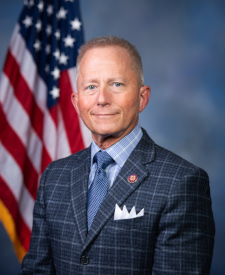
Legislative Progress
In CommitteeMs. McBride (for herself and Mrs. Kim) introduced the following …
Referred to the House Committee on Financial Services.
Introduced in House
Stakeholder Effects
cui bono?How this legislation distributes effects. Mention counts reflect frequency, not effect magnitude.
Consumers seeking credit repair, Consumers targeted by scam credit repair, Credit repair organizations
Positive-direction: Consumers seeking credit repair, Consumers targeted by scam credit repair
Negative-direction: Credit repair organizations, Unlicensed credit repair organizations
Consumer reporting agencies, Data furnishers
Attorneys inside credit repair organizations
Bill Structure & Actor Mappings
Who is "The Secretary" in each section?
We use a combination of our own taxonomy and classification in addition to large language models to assess meaning and potential beneficiaries. High confidence means strong textual evidence. Always verify with the original bill text.
Learn more about our methodology