Agent Orange Relief Act of 2025
Summary
What This Bill Does
The Agent Orange Relief Act of 2025 focuses on Agent Orange effects among veterans' descendants and Vietnamese Americans. Its findings describe 19 million gallons of herbicides sprayed from 1961 to 1971, including 13 million gallons of Agent Orange, dioxin and arsenic exposure, nearly 20,000 spraying missions over about 1.7 million hectares, exposure of 2.1 million to 4.8 million Vietnamese, Lao, and Cambodian people plus tens of thousands of Americans, VA recognition of 19 diseases for U.S. Vietnam veterans, and a gap between benefits available to children of women Vietnam veterans and children of male Vietnam veterans. The bill amends title 38 chapter 18 by replacing women Vietnam veteran language with Vietnam veteran language, so children of male Vietnam veterans with covered birth defects can qualify for the same subchapter benefits. It requires contracted health providers to give VA access to medical records for research into intergenerational effects of Agent Orange. VA must support public research on Agent Orange-related health issues, including work based on Institute of Medicine Veterans and Agent Orange updates and research with schools of public health and medicine in the United States, Vietnam, and other countries. VA must survey children of exposed veterans receiving chapter 18 care and recommend remedies for inadequate treatment. HHS must fund public health and Vietnamese American organizations for broad health assessments and establish U.S. centers for assessment, counseling, and treatment. VA and HHS must complete implementation plans within 180 days, implement within 18 months, and report quarterly to Congress.
Who Benefits and How
Children of male Vietnam veterans with covered birth defects benefit because title 38 subchapter II eligibility would no longer be limited to children of women Vietnam veterans. Vietnam veterans' families benefit from VA-supported research into intergenerational Agent Orange effects and surveys of care adequacy. Vietnamese Americans exposed to Agent Orange benefit from HHS-funded health assessments and treatment centers. Public health researchers benefit from VA support for Agent Orange studies involving U.S., Vietnamese, and other interested-country schools of public health and medicine. Children receiving chapter 18 health care benefit because contracted providers must share records with VA for research and support. Congress benefits from quarterly implementation reports by VA and HHS.
Who Bears the Burden and How
VA must expand benefit administration, require provider record access, support research, conduct surveys, recommend remedies, and report quarterly. Contracted health care providers must provide medical-record access for Agent Orange research and support. HHS must fund Vietnamese American health assessments, establish treatment centers, and complete implementation planning. Public health organizations receiving grants must assess exposure-related health effects among Vietnamese Americans and descendants. Federal agencies must implement applicable provisions within 18 months and maintain quarterly reporting.
Key Provisions
- Amends title 38 to extend covered birth-defect benefits to children of male Vietnam veterans.
- Requires VA-contracted providers to share medical records for intergenerational Agent Orange research.
- Directs VA to support public research and survey affected children receiving chapter 18 care.
- Requires HHS grants and centers for Vietnamese American Agent Orange assessment, counseling, and treatment.
- Requires VA and HHS implementation plans within 180 days, implementation within 18 months, and quarterly reports.
Evidence Chain:
This summary is generated from the full bill text using AI analysis. Expand "Detailed Analysis" below for identified beneficiaries/burden bearers with clause-level evidence links.
At a Glance
What This Bill Does
Expands VA birth-defect benefits to children of male Vietnam veterans, requires Agent Orange intergenerational research support, directs HHS Vietnamese American health grants and centers, and mandates VA and HHS implementation plans and quarterly reports.
Key Policy Areas
Veterans, Healthcare, Research
Primary Purpose
Expands VA birth-defect benefits to children of male Vietnam veterans, requires Agent Orange intergenerational research support, directs HHS Vietnamese American health grants and centers, and mandates VA and HHS implementation plans and quarterly reports.
Policy Domains
Resolution provisions
Identified Gains
- Children of male Vietnam veterans with birth defects
- Vietnam veterans' families
- Vietnamese Americans exposed to Agent Orange
- Public health researchers
- Children receiving chapter 18 health care
- Congress
Identified Costs
- VA
- Contracted health care providers
- HHS
- Public health organizations receiving grants
- Federal agencies
Sponsors


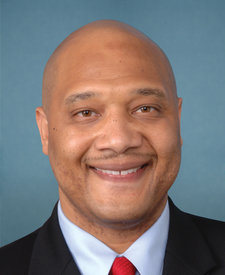

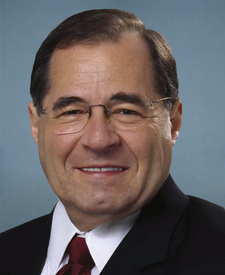
Legislative Progress
In CommitteeSponsor introductory remarks on measure. (CR H1764)
Ms. Tlaib (for herself, Ms. Simon, Mr. Nadler, Mr. Thanedar, …
Referred to the Committee on Veterans' Affairs, and in addition …
Introduced in House
Stakeholder Effects
cui bono?How this legislation distributes effects. Mention counts reflect frequency, not effect magnitude.
Contracted health care providers, Public health organizations receiving grants, Vietnamese Americans exposed to Agent Orange
Positive-direction: Vietnamese Americans exposed to Agent Orange
Negative-direction: Contracted health care providers, Public health organizations receiving grants
Children of male Vietnam veterans with birth defects, Vietnam veterans' families
Bill Structure & Actor Mappings
Who is "The Secretary" in each section?
We use a combination of our own taxonomy and classification in addition to large language models to assess meaning and potential beneficiaries. High confidence means strong textual evidence. Always verify with the original bill text.
Learn more about our methodology