Water Rights Protection Act
Summary
What This Bill Does
The Water Rights Protection Act of 2025 limits how the Departments of the Interior and Agriculture may use Federal land permits, leases, allotments, easements, rights-of-way, and similar occupancy agreements. When developing rules or management plans for those agreements, the Secretary must recognize State authority over water use, coordinate with States, avoid restrictions beyond State water law, and avoid asserting surface-water and groundwater connections that State law does not recognize. The bill then bars the Secretary from requiring a water user, including a federally recognized Indian Tribe, to transfer a water right to the United States, take title impairment, apply for a State-law water right in the name of the United States, or accept limits on diversion timing, quantity, location, pumping, storage, beneficial use, or ownership as a condition of a Federal land-use agreement.
Who Benefits and How
State water agencies benefit because the bill reinforces State authority to evaluate, protect, allocate, permit, regulate, and adjudicate water use. Ranchers, farmers, irrigation districts, and other Federal land permittees benefit because Federal agencies could not use grazing permits, allotments, leases, or rights-of-way to pressure them into transferring or restricting water rights. State water right holders benefit from reduced risk that Federal land managers will impair title or beneficial-use terms recognized under State law, court decrees, or interstate compacts. Federally recognized Indian Tribes benefit from explicit preservation of existing and future reserved water rights and treaty rights. Bureau of Reclamation contractors benefit because existing and future reclamation contracts remain unaffected.
Who Bears the Burden and How
The Department of the Interior, Department of Agriculture, U.S. Forest Service, Bureau of Land Management, and other Federal land management agencies lose leverage to acquire or shape water rights through permit conditions. Federal land managers must coordinate policies with State water law and avoid imposing greater restrictions than State law allows. Environmental advocacy organizations and Federal habitat managers may lose one tool for securing instream flows or water-management conditions through Federal land permits, although the bill preserves the Endangered Species Act and Federal reserved rights. Agencies administering hydropower, reclamation, compact, or Tribal water matters must check the savings clauses before applying the prohibition.
Key Provisions
- Requires Federal land-use rules and management plans to recognize State authority over water allocation, permitting, and adjudication.
- Prohibits the Secretary from conditioning Federal permits, leases, allotments, easements, rights-of-way, or occupancy agreements on transferring water rights to the United States.
- Bars the Secretary from requiring water users to acquire State-law water rights in the name of the United States.
- Prohibits Federal permit conditions that limit diversion timing, quantity, pumping location, storage, beneficial use, title, or water-right ownership beyond State law.
- Preserves Bureau of Reclamation contracts, Endangered Species Act implementation, Federal reserved rights, hydropower authorities, Tribal reserved and treaty rights, interstate compacts, and Supreme Court decrees.
Evidence Chain:
This summary is generated from the full bill text using AI analysis. Expand "Detailed Analysis" below for identified beneficiaries/burden bearers with clause-level evidence links.
At a Glance
What This Bill Does
Prohibits the Secretaries of the Interior and Agriculture from conditioning Federal land-use permits, leases, easements, rights-of-way, or similar agreements on transferring, impairing, or limiting State-recognized water rights, while preserving State water-law authority, Tribal rights, Bureau of Reclamation contracts, the Endangered Species Act, Federal reserved rights, hydropower authorities, and interstate compact obligations.
Key Policy Areas
Water Resources, Public Lands, Agriculture, Federal-State Relations
Primary Purpose
Prohibits the Secretaries of the Interior and Agriculture from conditioning Federal land-use permits, leases, easements, rights-of-way, or similar agreements on transferring, impairing, or limiting State-recognized water rights, while preserving State water-law authority, Tribal rights, Bureau of Reclamation contracts, the Endangered Species Act, Federal reserved rights, hydropower authorities, and interstate compact obligations.
Policy Domains
House resolution provisions
Identified Gains
- State water agencies
- Rancher permittees
- Farmer permittees
- Irrigation district water users
- State water right holders
- Federally recognized Indian Tribes
Identified Costs
- Department of the Interior
- Department of Agriculture
- U.S. Forest Service
- Bureau of Land Management
- Federal habitat managers
- Environmental advocacy organizations
Sponsors



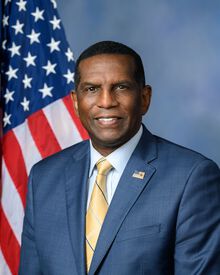

Legislative Progress
ReportedAdditional sponsors: Mr. Owens and Mr. Kennedy of Utah
Reported from the Committee on Natural Resources with an amendment
Committee on Agriculture discharged; committed to the Committee of the …
Placed on the Union Calendar, Calendar No. 334.
Committee on Agriculture discharged.
Reported (Amended) by the Committee on Natural Resources. H. Rept. …
Referred to the Subcommittee on Conservation, Research, and Biotechnology.
Ordered to be Reported in the Nature of a Substitute …
Committee Consideration and Mark-up Session Held
Ms. Maloy (for herself, Mr. Moore of Utah, Mr. Fulcher, …
Stakeholder Effects
cui bono?How this legislation distributes effects. Mention counts reflect frequency, not effect magnitude.
Department of Agriculture, Farmer permittees, Rancher permittees
Positive-direction: Farmer permittees, Rancher permittees
Negative-direction: Department of Agriculture
Federally recognized Indian Tribes
Department of the Interior, Federal land management agencies
Bill Structure & Actor Mappings
Who is "The Secretary" in each section?
- "blm"
- → Bureau of Land Management
- "reclamation"
- → Bureau of Reclamation
- "forest_service"
- → U.S. Forest Service
- "secretary_interior"
- → Secretary of the Interior
- "secretary_agriculture"
- → Secretary of Agriculture
We use a combination of our own taxonomy and classification in addition to large language models to assess meaning and potential beneficiaries. High confidence means strong textual evidence. Always verify with the original bill text.
Learn more about our methodology