BUILD Act of 2025
Summary
What This Bill Does
The BUILD Act creates parallel capital-infrastructure grant programs for small public safety agencies. The Justice Department program authorizes grants to state and local law enforcement agencies serving jurisdictions with fewer than 50,000 residents for projects to modify, upgrade, or construct law-enforcement facilities. Eligible projects must have a substantial nexus to emergency services, officer training and development, recruitment and retention, community engagement, or community safety, and each grant is capped at 4,000,000 dollars. The Attorney General must issue guidance within 120 days, distribute information, seek equitable geographic distribution, report to Congress beginning two years after enactment and biannually until six years, and publish studies of law enforcement construction and renovation needs, while GAO studies small-agency capital infrastructure needs within one year. The fire department title authorizes FEMA grants to career, combination, and volunteer fire departments serving 50,000 people or fewer for facility modification, upgrade, or construction, with similar eligible uses, geographic distribution, reports, studies, a 4,000,000 dollar cap, and 250,000,000 dollars annually for fiscal years 2026 through 2028.
Who Benefits and How
Small-jurisdiction law enforcement agencies benefit from Justice Department grants for facility construction, renovation, and upgrades. Career fire departments serving small jurisdictions benefit from FEMA facility grants. Volunteer fire departments benefit because all-volunteer departments serving 50,000 people or fewer are eligible. Residents in small jurisdictions benefit if upgraded facilities improve emergency services, training, recruitment, retention, and community safety.
Who Bears the Burden and How
The Attorney General must issue guidance, run the law enforcement grant program, report biannually, and study facility needs. FEMA administrators must run the fire department grant program and report to Congress for six years. GAO must study capital infrastructure sufficiency and project law enforcement and fire department needs over one-to-five, five-to-ten, and longer-than-ten-year periods. Grant applicants must show financial need, project costs, jurisdiction size, and eligible public-safety nexus.
Key Provisions
- Creates Justice Department grants for law enforcement facility projects in jurisdictions under 50,000 residents.
- Creates FEMA grants for career, combination, and volunteer fire department facility projects in jurisdictions under 50,000 residents.
- Limits each grant to 4,000,000 dollars and requires eligible public-safety uses.
- Authorizes 250,000,000 dollars per year for each program for fiscal years 2026 through 2028.
- Requires guidance, information distribution, equitable geographic distribution, public reports, and federal infrastructure-needs studies.
Evidence Chain:
This summary is generated from the full bill text using AI analysis. Expand "Detailed Analysis" below for identified beneficiaries/burden bearers with clause-level evidence links.
At a Glance
What This Bill Does
Authorizes 250,000,000 dollars per year for fiscal years 2026 through 2028 for Justice Department grants to small-jurisdiction law enforcement facility projects and another 250,000,000 dollars per year for FEMA grants to small-jurisdiction fire department facility projects, with 4,000,000 dollar per-grant caps, guidance, reports, and infrastructure-needs studies.
Key Policy Areas
Public Safety, Law Enforcement, Fire Departments, Infrastructure
Primary Purpose
Authorizes 250,000,000 dollars per year for fiscal years 2026 through 2028 for Justice Department grants to small-jurisdiction law enforcement facility projects and another 250,000,000 dollars per year for FEMA grants to small-jurisdiction fire department facility projects, with 4,000,000 dollar per-grant caps, guidance, reports, and infrastructure-needs studies.
Policy Domains
Resolution provisions
Identified Gains
- Small-jurisdiction law enforcement agencies
- Career fire departments
- Volunteer fire departments
- Residents in small jurisdictions
Identified Costs
- Attorney General
- FEMA administrators
- GAO
- Grant applicants
- Federal taxpayers
Sponsors
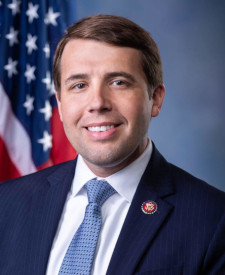

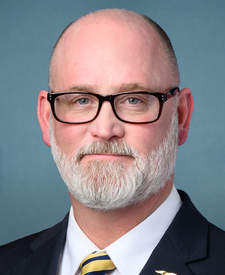
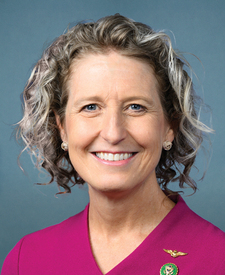
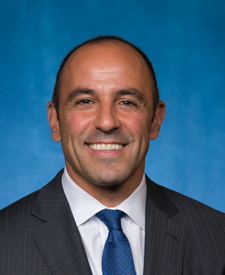
Legislative Progress
In CommitteeReferred to the Subcommittee on Economic Development, Public Buildings, and …
Mr. Pappas (for himself, Ms. Letlow, and Mr. Kean) introduced …
Referred to the Committee on the Judiciary, and in addition …
Introduced in House
Stakeholder Effects
cui bono?How this legislation distributes effects. Mention counts reflect frequency, not effect magnitude.
Career fire departments, Residents in small jurisdictions, Volunteer fire departments
Bill Structure & Actor Mappings
Who is "The Secretary" in each section?
We use a combination of our own taxonomy and classification in addition to large language models to assess meaning and potential beneficiaries. High confidence means strong textual evidence. Always verify with the original bill text.
Learn more about our methodology