To allow the Secretary of the Interior to enter into memoranda of understanding for the purpose of scientific and technical cooperation in the mapping of critical minerals and rare earth elements, and for other purposes.
Sponsors
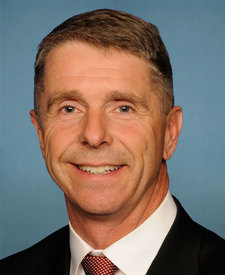
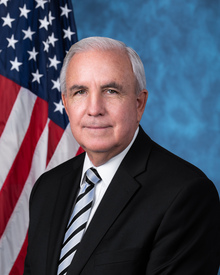



Legislative Progress
IntroducedMr. Wittman (for himself, Ms. Castor of Florida, Mr. Moolenaar, …
Summary
What This Bill Does
The Finding ORE Act (H.R. 2969) allows the U.S. Geological Survey to partner with foreign countries to help them map where critical minerals and rare earth elements are located underground. These minerals are essential for batteries, electronics, defense technology, and renewable energy. In exchange for this mapping assistance, U.S. and allied companies get the first opportunity to develop and extract these minerals.
Who Benefits and How
U.S. mining companies benefit most directly by receiving preferential access to newly discovered mineral deposits in foreign countries before Chinese or other non-allied competitors can bid on them. The U.S. Geological Survey gains expanded authority and funding to conduct international mapping programs. U.S. minerals processing companies benefit from priority access to raw materials that would be processed in the United States or allied countries. American universities with geology programs can participate in training and research partnerships. Federal financing agencies like the U.S. International Development Finance Corporation and Export-Import Bank gain new lending opportunities for minerals projects.
Who Bears the Burden and How
Chinese mining companies face the most significant burden, as they are explicitly excluded from accessing mapping data and denied development rights in countries that partner with the U.S. under this program. Other non-allied foreign mining companies also face barriers to competing for mineral rights in partner countries. U.S. taxpayers fund the USGS technical assistance programs, though the bill does not specify the cost. Partner foreign countries receive free mapping assistance but must grant preferential development rights to U.S. and allied companies rather than selecting developers through open competition.
Key Provisions
- Authorizes the Secretary of the Interior (through USGS) to sign agreements with foreign governments to provide geological mapping services for critical minerals and rare earth elements
- Requires partner countries to offer U.S. and allied companies "right of first refusal" for developing newly mapped mineral deposits
- Prioritizes U.S. development finance for projects that commit to processing minerals in the United States or allied countries, not in China or other non-allied nations
- Protects mapping data from disclosure to countries that are not parties to the agreements or U.S. allies, effectively blocking China from accessing the information
- Requires USGS to notify Congress 30 days before entering any agreement and to work with the State Department on selecting partner countries
- Includes training for partner country officials on environmental and workplace safety standards as part of the technical cooperation
Evidence Chain:
This summary is derived from the structured analysis below. See "Detailed Analysis" for per-title beneficiaries/burden bearers with clause-level evidence links.
Primary Purpose
Authorizes the Secretary of the Interior to enter into memoranda of understanding with foreign countries for scientific cooperation in mapping critical minerals and rare earth elements to strengthen U.S. supply chains
Policy Domains
Legislative Strategy
"Establish international partnerships to map and develop critical mineral resources abroad while ensuring U.S. and allied companies have preferential access to development rights"
Likely Beneficiaries
- U.S. mining companies
- U.S. Geological Survey (increased authority and funding)
- U.S. minerals processing companies
- Allied country mining companies
- U.S. International Development Finance Corporation
- Export-Import Bank of the United States
- Partner foreign countries (technical assistance)
Likely Burden Bearers
- Chinese mining and minerals companies (excluded from data access and development rights)
- Non-allied foreign mining companies
- U.S. taxpayers (funding for USGS activities)
Bill Structure & Actor Mappings
Who is "The Secretary" in each section?
- "the_secretary"
- → Secretary of the Interior, acting through the Director of the United States Geological Survey
- "the_secretary"
- → Secretary of the Interior, acting through the Director of the United States Geological Survey
- "secretary_of_state"
- → Secretary of State
Key Definitions
Terms defined in this bill
A country with which the United States has entered into a mutual defense treaty or other mutual defense agreement
Has the meaning given in section 7002(a) of the Energy Act of 2020 (30 U.S.C. 1606(a))
Has the meaning given in section 101 of the Higher Education Act of 1965 (20 U.S.C. 1001)
A country that is a source of a critical mineral or rare earth element
Means cerium, dysprosium, erbium, europium, gadolinium, holmium, lanthanum, lutetium, neodymium, praseodymium, promethium, samarium, scandium, terbium, thulium, ytterbium, or yttrium
The Secretary of the Interior, acting through the Director of the United States Geological Survey
We use a combination of our own taxonomy and classification in addition to large language models to assess meaning and potential beneficiaries. High confidence means strong textual evidence. Always verify with the original bill text.
Learn more about our methodology