PREPARE Act of 2025
Summary
What This Bill Does
The PREPARE Act does not legalize cannabis directly. It creates a Commission on the Federal Regulation of Cannabis inside the Department of Justice to prepare the federal government for a possible end to federal marijuana prohibition. The commission must study a pathway to cannabis regulation modeled on alcohol regulation and recommend ways to address criminalization harms, access to financial services for cannabis entrepreneurs, research barriers, medical cannabis access, product safety and labeling, youth protection, revenue collection, crop production, interstate and international trade, and coexistence of hemp and cannabis industries. It must solicit public comment within 60 days, convene witness hearings within 180 days including state-licensed cannabis operators and people incarcerated for nonviolent cannabis offenses, publish initial recommendations at 120 days, and publish a final report within one year.
Who Benefits and How
State cannabis regulators benefit because the commission is designed to learn from state regulatory systems and identify federal-state coordination barriers. Cannabis entrepreneurs benefit because access to banking, revenue reporting, product rules, and interstate trade barriers are explicit study topics. Medical cannabis patients benefit because the commission must examine medical access, research, medical training, and affordable treatment options. Minority communities affected by cannabis criminalization benefit because the bill requires attention to criminalization impacts and appoints members with that expertise.
Who Bears the Burden and How
The Department of Justice must establish and staff the commission, handle missed appointments, collect comments, and publish recommendations. Federal agencies named for membership must supply senior officials or experts from health, tax, agriculture, labor, education, housing, commerce, and drug-control offices. Commission members must attend quarterly meetings and can face review after two absences in a year. Cannabis opponents may face a formal federal planning process premised on eventual post-prohibition regulation.
Key Provisions
- Creates the Commission on the Federal Regulation of Cannabis within the Department of Justice.
- Requires study of banking, research, medical access, product safety, youth protection, revenue, crop, trade, hemp, and equity barriers.
- Requires public comment, witness hearings, initial recommendations after 120 days, and a final report within one year.
- Establishes commission membership across Congress, DOJ, ATF, NHTSA, Education, OSHA, USDA, FDA, IRS, USTR, Commerce, HHS, NIH, VA, SBA, NIST, HUD, Labor, Treasury, ONDCP, OMH, IHS, industry, and state regulators.
Evidence Chain:
This summary is generated from the full bill text using AI analysis. Expand "Detailed Analysis" below for identified beneficiaries/burden bearers with clause-level evidence links.
At a Glance
What This Bill Does
Establishes a Department of Justice Commission on the Federal Regulation of Cannabis to recommend an alcohol-modeled federal cannabis regulatory framework, solicit public input, hold industry and criminal-justice hearings, and publish initial and final recommendations within one year.
Key Policy Areas
Cannabis, Criminal Justice, Public Health, Regulation
Primary Purpose
Establishes a Department of Justice Commission on the Federal Regulation of Cannabis to recommend an alcohol-modeled federal cannabis regulatory framework, solicit public input, hold industry and criminal-justice hearings, and publish initial and final recommendations within one year.
Policy Domains
Resolution provisions
Identified Gains
- State cannabis regulators
- Cannabis entrepreneurs
- Medical cannabis patients
- Minority communities affected by cannabis criminalization
- Veteran cannabis patients
Identified Costs
- Department of Justice
- Federal agency commission members
- Commission members
- Cannabis opponents
Sponsors
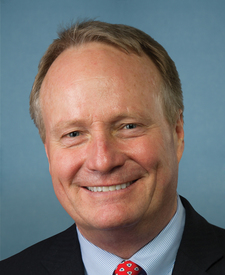


Legislative Progress
In CommitteeMr. Joyce of Ohio (for himself, Mr. Jeffries, and Mr. …
Referred to the Committee on Energy and Commerce, and in …
Introduced in House
Stakeholder Effects
cui bono?How this legislation distributes effects. Mention counts reflect frequency, not effect magnitude.
Department of Justice, Federal agency commission members, State cannabis regulators
Positive-direction: State cannabis regulators
Negative-direction: Department of Justice, Federal agency commission members
Minority communities affected by cannabis criminalization
Bill Structure & Actor Mappings
Who is "The Secretary" in each section?
We use a combination of our own taxonomy and classification in addition to large language models to assess meaning and potential beneficiaries. High confidence means strong textual evidence. Always verify with the original bill text.
Learn more about our methodology