Ukraine Support Act
Summary
What This Bill Does
The Ukraine Support Act combines political support for Ukraine with operational tools. It expands war-risk insurance eligibility for vessels moving cargo to or from Ukraine, creates a State Department Insurance for Ukraine Initiative, codifies a Special Coordinator for Ukrainian Reconstruction, supports Radio Free Europe/Radio Liberty with 250,000,000 dollars for fiscal year 2026, and uses the Countering Russian Influence Fund for Ukraine-focused disinformation work. It creates a Ukraine Reconstruction Trust Fund, extends lend-lease and direct loan or foreign military financing authority for Ukraine and NATO allies, supports Baltic countries, and requires reports on allied contributions and intelligence cooperation. The sanctions titles require trigger determinations and then sanctions or controls against Russian financial institutions, oil and mining sectors, Russia-supporting persons, Crimea tunnel participants, Zaporizhzhia and Rosatom actors, price-cap vessels, SWIFT access, sovereign debt, Russia-North Korea cooperation, forced transfer of Ukrainian children, dual-use exports, Russian duties, and Russian energy import loopholes, while requiring congressional review before sanctions relief.
Who Benefits and How
The Government of Ukraine benefits from reconstruction coordination, war-risk insurance diplomacy, DFC support, a reconstruction trust fund, and continued security financing tools. Ukrainian exporters and grain shippers benefit because covered vessels moving cargo to or from Ukraine become eligible for federal war-risk insurance or reinsurance. Radio Free Europe/Liberty benefits from authorized fiscal year 2026 funding and direction to restore capacity, expand bureaus, and counter Russian disinformation. NATO allies and Baltic countries benefit from lend-lease, loan, foreign military financing, and security-support provisions aimed at sustaining Ukraine and eastern flank defense. Ukraine reconstruction contractors and war-risk insurance providers benefit from new coordination, capital-mobilization, and insurance-support channels.
Who Bears the Burden and How
Russian financial institutions face sanctions after the statutory trigger, including restrictions on correspondent accounts and other financial access. Russian oil companies and Russian mining companies face sectoral sanctions, duties, import restrictions, and pressure on price-cap shipping networks. Rosatom-linked nuclear actors and Zaporizhzhia-related actors face sanctions tied to Russia's nuclear sector and occupation conduct. The Department of State, Treasury Department, and Defense Department must stand up coordination offices, reports, waiver processes, sanctions implementation, and congressional-review materials.
Key Provisions
- Creates State Department reconstruction and insurance structures for Ukraine, including the Insurance for Ukraine Initiative and a Special Coordinator.
- Authorizes 250,000,000 dollars for Radio Free Europe/Radio Liberty in fiscal year 2026 and directs Ukraine-focused disinformation support.
- Extends lend-lease, direct loan, and foreign military financing tools for Ukraine and NATO allies through fiscal year 2026.
- Requires sanctions on Russian banks, oil firms, mining firms, Rosatom actors, SWIFT access, price-cap vessels, sovereign debt, and Russia-North Korea cooperation after trigger determinations.
- Restricts Russian energy imports and duties while requiring congressional review before major Russia sanctions relief.
Evidence Chain:
This summary is generated from the full bill text using AI analysis. Expand "Detailed Analysis" below for identified beneficiaries/burden bearers with clause-level evidence links.
At a Glance
What This Bill Does
Creates a broad Ukraine support package covering reconstruction finance, war-risk insurance, a State Department reconstruction coordinator, Radio Free Europe/Liberty funding, security assistance, sanctions on Russia-linked sectors, import restrictions, duties, and congressional review of Russia sanctions relief.
Key Policy Areas
Foreign Affairs, Defense, Sanctions, International Development, Trade
Primary Purpose
Creates a broad Ukraine support package covering reconstruction finance, war-risk insurance, a State Department reconstruction coordinator, Radio Free Europe/Liberty funding, security assistance, sanctions on Russia-linked sectors, import restrictions, duties, and congressional review of Russia sanctions relief.
Policy Domains
Resolution provisions
Identified Gains
- Ukrainian government agencies
- Ukrainian exporters
- Radio Free Europe Liberty
- NATO member states
- Baltic countries
- Ukraine reconstruction contractors
- War-risk insurance providers
Identified Costs
- Russian financial institutions
- Russian oil companies
- Russian mining companies
- Rosatom-linked nuclear actors
- Department of State
- Treasury Department
- Defense Department
- Federal taxpayers
Sponsors
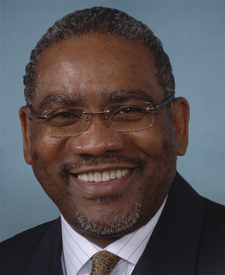

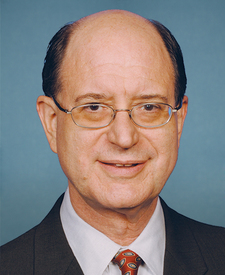
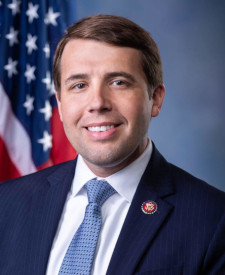

Legislative Progress
In CommitteeReceived in the Senate.
Motion to reconsider laid on the table Agreed to without …
On passage Passed by the Yeas and Nays: 226 - …
The previous question was ordered pursuant to the rule.
DEBATE - The House proceeded with one hour of debate …
Motion to reconsider laid on the table Agreed to without …
On passage Passed by the Yeas and Nays: 226 - …
Introduced in House
Referred to the Committee on Foreign Affairs, and in addition …
Mr. Meeks (for himself, Mr. Hoyer, Mr. Connolly, Mr. Doggett, …
Stakeholder Effects
cui bono?How this legislation distributes effects. Mention counts reflect frequency, not effect magnitude.
Department of State, Government of Ukraine, Treasury Department
Positive-direction: Government of Ukraine
Negative-direction: Department of State, Treasury Department
Russian financial institutions, War-risk insurance providers
Positive-direction: War-risk insurance providers
Negative-direction: Russian financial institutions
Rosatom-linked nuclear actors, Russian oil companies
Bill Structure & Actor Mappings
Who is "The Secretary" in each section?
We use a combination of our own taxonomy and classification in addition to large language models to assess meaning and potential beneficiaries. High confidence means strong textual evidence. Always verify with the original bill text.
Learn more about our methodology