Save BRIC Act
Summary
What This Bill Does
The Save BRIC Act responds to the cancellation of the Building Resilient Infrastructure and Communities program and the clawback of more than 4 billion dollars in predisaster mitigation grants. It amends Stafford Act section 203 by changing 'may' to 'shall' in the mitigation authority, making FEMA predisaster mitigation a required activity rather than optional authority. The findings emphasize that predisaster mitigation reduces loss of life and property, that the United States had 27 billion-dollar weather and climate disasters in 2024, and that research shows each dollar invested in predisaster mitigation can save up to 13 dollars in disaster recovery costs.
Who Benefits and How
Disaster-prone communities benefit because FEMA would be required to support predisaster mitigation rather than leaving the program discretionary. State, local, Tribal, and territorial governments benefit if BRIC-style mitigation grants remain available for planning and hardening projects. Property owners in high-risk areas benefit from elevation, relocation, hardening, heat-risk, flood-risk, hurricane, and earthquake mitigation projects. Federal disaster recovery taxpayers benefit if mitigation reduces later recovery spending.
Who Bears the Burden and How
FEMA mitigation administrators must operate section 203 mitigation as a mandatory responsibility. Federal taxpayers bear upfront mitigation costs even if later disaster recovery costs fall. Communities whose grants were clawed back must still navigate federal application and compliance requirements to restore funding. Budget officials must account for mandatory predisaster mitigation obligations.
Key Provisions
- Requires FEMA to carry out predisaster mitigation under Stafford Act section 203.
- Changes section 203 language from discretionary 'may' authority to mandatory 'shall' authority.
- Responds to cancellation of BRIC and clawback of more than 4 billion dollars in mitigation grants.
- Uses findings that each mitigation dollar can save up to 13 dollars in disaster recovery costs.
Evidence Chain:
This summary is generated from the full bill text using AI analysis. Expand "Detailed Analysis" below for identified beneficiaries/burden bearers with clause-level evidence links.
At a Glance
What This Bill Does
Makes FEMA predisaster mitigation under Stafford Act section 203 mandatory by changing the mitigation authority from discretionary to required.
Key Policy Areas
Disaster Mitigation, Infrastructure, Emergency Management
Primary Purpose
Makes FEMA predisaster mitigation under Stafford Act section 203 mandatory by changing the mitigation authority from discretionary to required.
Policy Domains
Resolution provisions
Identified Gains
- Disaster-prone communities
- State, local, Tribal, and territorial governments
- Property owners in high-risk areas
- Federal disaster recovery taxpayers
Identified Costs
- FEMA mitigation administrators
- Federal taxpayers
- Communities with clawed-back grants
- Budget officials
Sponsors


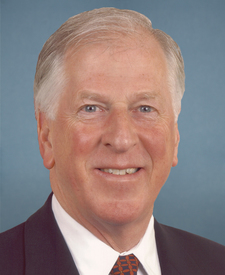


Legislative Progress
In CommitteeMr. Stanton (for himself and Mr. Bresnahan) introduced the following …
Referred to the Subcommittee on Economic Development, Public Buildings, and …
Referred to the House Committee on Transportation and Infrastructure.
Introduced in House
Stakeholder Effects
cui bono?How this legislation distributes effects. Mention counts reflect frequency, not effect magnitude.
FEMA mitigation administrators, State mitigation grant applicants
Positive-direction: State mitigation grant applicants
Negative-direction: FEMA mitigation administrators
Bill Structure & Actor Mappings
Who is "The Secretary" in each section?
We use a combination of our own taxonomy and classification in addition to large language models to assess meaning and potential beneficiaries. High confidence means strong textual evidence. Always verify with the original bill text.
Learn more about our methodology