PACE Act
Summary
What This Bill Does
The PACE Act expands federal child care tax support. It redesignates the Child and Dependent Care Tax Credit from section 21 to new refundable section 36C, moves it to the refundable-credit subpart, adds it to the permanent appropriation payment rules, and applies the refundability structure to taxable years beginning after 2025. It increases the credit formula from 35 percent reduced to a 20 percent floor to 50 percent reduced to a 35 percent floor, and it adds inflation adjustment for the credit's dollar amounts after 2025. It also raises the employer-provided dependent care assistance exclusion from 5,000 dollars to 7,500 dollars, with half that amount for married filing separately, and indexes the 7,500 dollar amount for taxable years beginning after 2026.
Who Benefits and How
Working parents with low or moderate tax liability benefit because the child and dependent care credit becomes refundable. Families paying for child care benefit from a higher 50 percent maximum credit rate and 35 percent minimum rate. Employees with dependent care assistance benefits benefit because the exclusion rises to 7,500 dollars and is indexed after 2026. Child care providers benefit indirectly if larger tax support and dependent care assistance make care more affordable for families.
Who Bears the Burden and How
The Internal Revenue Service must administer a refundable section 36C credit and update cross-references, forms, and payment systems. Employers offering dependent care assistance programs must update plan limits and payroll administration. Federal taxpayers bear the revenue cost of a refundable and larger child care credit and higher exclusion. Treasury Department tax administrators must maintain inflation adjustments for both the credit amounts and the dependent-care exclusion.
Key Provisions
- Amends the Internal Revenue Code to move the Child and Dependent Care Tax Credit to refundable section 36C for taxable years after 2025.
- Expands the credit rate formula to 50 percent with a 35 percent floor.
- Provides inflation indexing for the credit dollar amounts after 2025.
- Modifies the employer-provided dependent care assistance exclusion by increasing the limit from 5,000 dollars to 7,500 dollars.
- Provides inflation indexing for the dependent care assistance exclusion after 2026 and rounds increases to the nearest 100 dollars.
Evidence Chain:
This summary is generated from the full bill text using AI analysis. Expand "Detailed Analysis" below for identified beneficiaries/burden bearers with clause-level evidence links.
At a Glance
What This Bill Does
Makes the Child and Dependent Care Tax Credit refundable, raises the credit rate to 50 percent with a 35 percent floor, inflation-indexes credit amounts, and raises the employer-provided dependent care exclusion to 7,500 dollars with indexing.
Key Policy Areas
Tax, Child Care, Families
Primary Purpose
Makes the Child and Dependent Care Tax Credit refundable, raises the credit rate to 50 percent with a 35 percent floor, inflation-indexes credit amounts, and raises the employer-provided dependent care exclusion to 7,500 dollars with indexing.
Policy Domains
Resolution provisions
Identified Gains
- Working parents with low or moderate tax liability
- Families paying for child care
- Employees with dependent care assistance benefits
- Child care providers
Identified Costs
- Internal Revenue Service
- Employers offering dependent care assistance programs
- Federal taxpayers
- Treasury Department tax administrators
Sponsors
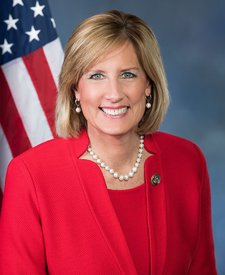


Legislative Progress
In CommitteeMs. Tenney (for herself and Mr. Schneider) introduced the following …
Referred to the House Committee on Ways and Means.
Introduced in House
Stakeholder Effects
cui bono?How this legislation distributes effects. Mention counts reflect frequency, not effect magnitude.
Working parents with low or moderate tax liability
Employers offering dependent care assistance programs
Bill Structure & Actor Mappings
Who is "The Secretary" in each section?
We use a combination of our own taxonomy and classification in addition to large language models to assess meaning and potential beneficiaries. High confidence means strong textual evidence. Always verify with the original bill text.
Learn more about our methodology