PROTECT Students Act of 2025
Summary
What This Bill Does
The PROTECT Students Act is a broad Higher Education Act enforcement bill aimed at risky programs and institutions. It adds debt-to-earnings and earnings-premium standards for gainful-employment programs and graduate or professional programs, using IRS, Social Security, Census, and Education data; programs fail if debt-to-earnings rates are too high or earnings premiums are zero or negative in 2 of 3 years, and ineligible gainful-employment programs cannot receive title IV funds for at least 3 years. It strengthens borrower defense, substantial misrepresentation, closed-school discharge, student legal-action protections, incentive compensation rules, third-party servicer oversight, job-placement-rate reporting, tuition and fee revenue allocation disclosure, past-performance standards, and recoupment of federal losses. It creates or strengthens Federal Student Aid enforcement capacity, a For-Profit Education Oversight Coordination Committee, complaint tracking, certification and eligibility procedures, state oversight, accreditor oversight, mandatory administrative funding for student aid operations, and public reporting on oversight activities.
Who Benefits and How
Federal student loan borrowers benefit because the bill strengthens borrower defense, closed-school discharge, legal-action rights, complaint tracking, and warnings for low-value programs. Students considering career programs benefit because the Department of Education must publish debt-to-earnings and earnings-premium measures and warn about failing programs. State authorizing agencies benefit from stronger federal standards and information for oversight of risky institutions. The Office of Federal Student Aid benefits from clearer enforcement authority, recoupment tools, complaint data, and dedicated administrative funding.
Who Bears the Burden and How
For-profit colleges must meet gainful-employment and earnings-value tests, disclose revenue use, face recoupment, and satisfy stricter certification and past-performance reviews. Career training programs can lose title IV eligibility for at least 3 years if they fail debt-to-earnings or earnings-premium standards. Third-party servicers must operate under updated federal oversight and reporting expectations. Accrediting agencies must account for stronger Department of Education oversight of institutional quality and consumer-protection risks.
Key Provisions
- Establishes debt-to-earnings and earnings-premium standards for gainful-employment programs and graduate or professional programs.
- Prohibits title IV disbursements to failing gainful-employment programs and bars substantially similar reentry for 3 years.
- Expands borrower defense, substantial misrepresentation, closed-school discharge, and student legal-action protections.
- Strengthens oversight of third-party servicers, job-placement rates, tuition and fee revenue allocation, past performance, and recoupment.
- Creates federal enforcement, for-profit oversight coordination, complaint tracking, certification, state-oversight, accreditor-oversight, and transparency provisions.
Evidence Chain:
This summary is generated from the full bill text using AI analysis. Expand "Detailed Analysis" below for identified beneficiaries/burden bearers with clause-level evidence links.
At a Glance
What This Bill Does
Tightens federal oversight of higher-education programs by restoring gainful-employment and earnings-value tests, expanding borrower defenses and discharges, banning limits on student legal action, regulating third-party servicers, strengthening FSA enforcement, and increasing institutional disclosures.
Key Policy Areas
Higher Education, Student Loans, Consumer Protection
Primary Purpose
Tightens federal oversight of higher-education programs by restoring gainful-employment and earnings-value tests, expanding borrower defenses and discharges, banning limits on student legal action, regulating third-party servicers, strengthening FSA enforcement, and increasing institutional disclosures.
Policy Domains
Resolution provisions
Identified Gains
- Federal student loan borrowers
- Students considering career programs
- State authorizing agencies
- Office of Federal Student Aid
Identified Costs
- For-profit colleges
- Career training programs
- Third-party servicers
- Accrediting agencies
Sponsors
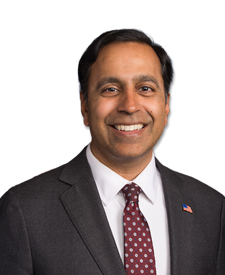
Legislative Progress
In CommitteeMr. Takano (for himself, Ms. Lee of Nevada, Mr. Krishnamoorthi, …
Referred to the Committee on Education and Workforce, and in …
Introduced in House
Stakeholder Effects
cui bono?How this legislation distributes effects. Mention counts reflect frequency, not effect magnitude.
Accrediting agencies, Career training programs, Federal student loan borrowers
Positive-direction: Federal student loan borrowers, Students considering career programs
Negative-direction: Accrediting agencies, Career training programs, For-profit colleges, Third-party servicers
Bill Structure & Actor Mappings
Who is "The Secretary" in each section?
We use a combination of our own taxonomy and classification in addition to large language models to assess meaning and potential beneficiaries. High confidence means strong textual evidence. Always verify with the original bill text.
Learn more about our methodology