PROSPECT Act
Summary
What This Bill Does
The PROSPECT Act is a detailed student-parent child care and workforce bill. It authorizes 9 billion dollars for fiscal years 2026 through 2030 for Education Department grants to community colleges, minority-serving institutions, and consortia. The grant structure includes one-year planning grants, access grants for free high-quality infant and toddler care for as many as 500,000 children of student parents, impact grants for community child care supply and quality, and pipeline grants for early-childhood educator preparation programs. It also amends Child Care and Development Block Grant eligibility so higher-education, secondary-education, and equivalency programs count, bars states from using more restrictive eligibility standards, and changes Social Security Act child care matching so states meeting a 75 percent market-rate payment threshold for infants and toddlers can receive a 90 percent federal match for that assistance.
Who Benefits and How
Community college student parents benefit because access grants can provide free high-quality infant and toddler care that reduces barriers to graduation and debt. Minority-serving institutions benefit because the bill prioritizes them for grant funding and lets them build child care centers, lab schools, and educator pipelines. Infants and toddlers of student parents benefit from expanded licensed or registered care, including nontraditional-hours care and supports for disabilities or dual-language learning. Early childhood educator students benefit from new certificates, associate-degree pathways, articulation agreements, apprenticeships, and microgrants.
Who Bears the Burden and How
The Department of Education must run competitive grant competitions, evaluate outcomes, and submit annual reports to Congress. Community colleges and minority-serving institutions must perform needs assessments, convene infant and toddler child care committees, pay living wages for staff, and file detailed reports. State child care lead agencies must adjust eligibility and matching-plan rules if they want the enhanced federal child care match. Federal taxpayers bear the cost of the 9 billion dollar authorization and higher federal matching payments.
Key Provisions
- Appropriates a 9 billion dollar authorization for fiscal years 2026 through 2030.
- Creates planning, access, impact, and pipeline grants for community colleges, minority-serving institutions, and consortia.
- Funds free high-quality infant and toddler child care for up to 500,000 children of student parents.
- Expands Child Care and Development Block Grant eligibility for education and job-training programs.
- Provides a 90 percent federal child care match for infant and toddler assistance when states pay at least 75 percent of market rates.
Evidence Chain:
This summary is generated from the full bill text using AI analysis. Expand "Detailed Analysis" below for identified beneficiaries/burden bearers with clause-level evidence links.
At a Glance
What This Bill Does
Creates a 9 billion dollar Education Department grant framework to expand infant and toddler child care for community college and minority-serving institution student parents and strengthen the early-childhood educator pipeline.
Key Policy Areas
Education, Child Care, Higher Education, Social Welfare
Primary Purpose
Creates a 9 billion dollar Education Department grant framework to expand infant and toddler child care for community college and minority-serving institution student parents and strengthen the early-childhood educator pipeline.
Policy Domains
Resolution provisions
Identified Gains
- Community college student parents
- Minority-serving institutions
- Infants and toddlers of student parents
- Early childhood educator students
Identified Costs
- Department of Education
- Community colleges
- State child care lead agencies
- Federal taxpayers
Sponsors
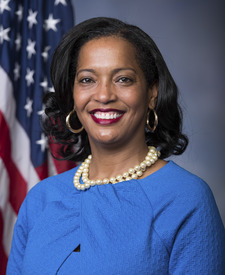
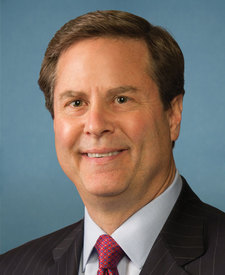
Legislative Progress
In CommitteeMrs. Hayes (for herself and Mr. Norcross) introduced the following …
Referred to the Committee on Education and Workforce, and in …
Introduced in House
Stakeholder Effects
cui bono?How this legislation distributes effects. Mention counts reflect frequency, not effect magnitude.
Community college student parents, Early childhood educator students, Minority-serving institutions
Department of Education, State child care lead agencies
Bill Structure & Actor Mappings
Who is "The Secretary" in each section?
We use a combination of our own taxonomy and classification in addition to large language models to assess meaning and potential beneficiaries. High confidence means strong textual evidence. Always verify with the original bill text.
Learn more about our methodology