GLRI Act of 2025
Summary
What This Bill Does
The GLRI Act extends the Great Lakes Restoration Initiative funding authorization in the Federal Water Pollution Control Act. It adds 500 million dollars for each fiscal year from 2027 through 2031. The money supports the federal-state restoration framework for the Great Lakes, including cleanup, habitat work, invasive-species response, water-quality projects, and community restoration partnerships. The bill does not create a new program design; it preserves a large five-year authorization stream for the existing Great Lakes restoration structure.
Who Benefits and How
Great Lakes states benefit because the initiative remains authorized as a major federal restoration funding source. Local governments near the Great Lakes benefit from continued eligibility for cleanup, habitat, and water-quality projects. Tribal and community restoration partners benefit from predictable federal support for regional ecosystem work. Environmental contractors and nonprofit restoration groups benefit from a continued project pipeline.
Who Bears the Burden and How
Federal taxpayers bear the cost of the 500 million dollar annual authorization if Congress appropriates the funds. EPA Great Lakes program staff must continue administering grants, interagency coordination, and project oversight. Federal budget committees must account for the renewed five-year authorization window. Grant recipients must meet federal reporting, procurement, and performance requirements.
Key Provisions
- Authorizes 500 million dollars for the Great Lakes Restoration Initiative in each fiscal year from 2027 through 2031.
- Extends the existing Federal Water Pollution Control Act restoration framework instead of creating a separate program.
- Funds restoration, cleanup, habitat, invasive-species, and water-quality work around the Great Lakes.
- Requires EPA and regional partners to continue grant oversight and performance reporting.
Evidence Chain:
This summary is generated from the full bill text using AI analysis. Expand "Detailed Analysis" below for identified beneficiaries/burden bearers.
At a Glance
What This Bill Does
Reauthorizes the Great Lakes Restoration Initiative at 500 million dollars per year for fiscal years 2027 through 2031.
Key Policy Areas
Environment, Water, Great Lakes
Primary Purpose
Reauthorizes the Great Lakes Restoration Initiative at 500 million dollars per year for fiscal years 2027 through 2031.
Policy Domains
Resolution provisions
Identified Gains
Contextual inference, no direct clause citation- Great Lakes states
- Local governments near the Great Lakes
- Tribal and community restoration partners
- Environmental contractors
Contextual inference, no direct clause citation
Identified Costs
Contextual inference, no direct clause citation- Federal taxpayers
- EPA Great Lakes program staff
- Federal budget committees
- Grant recipients
Contextual inference, no direct clause citation
Sponsors

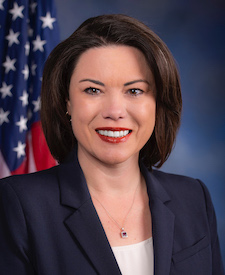

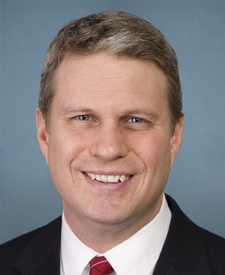
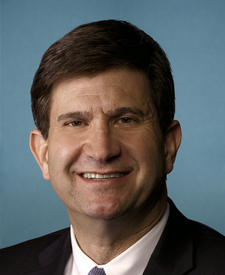
Legislative Progress
In CommitteeReferred to the Subcommittee on Water Resources and Environment.
Mr. Joyce of Ohio (for himself, Mr. Huizenga, Mrs. Dingell, …
Referred to the House Committee on Transportation and Infrastructure.
Introduced in House
Bill Structure & Actor Mappings
Who is "The Secretary" in each section?
We use a combination of our own taxonomy and classification in addition to large language models to assess meaning and potential beneficiaries. High confidence means strong textual evidence. Always verify with the original bill text.
Learn more about our methodology