Small Modular Reactor Commercialization Act of 2025
Summary
What This Bill Does
The Small Modular Reactor Commercialization Act updates federal SMR definitions and commercialization policy. It amends the Atomic Energy Act Price-Anderson modular reactor reference from 300,000 electrical kilowatts and 1,300,000 combined electrical kilowatts to 500,000 and 1,500,000, respectively, and changes the Infrastructure Investment and Jobs Act small modular reactor output reference from 300 to 500 megawatts. NRC and DOE must revise guidance to match the bill's definitions: microreactors are advanced nuclear reactors under 50 electrical megawatts, and small modular reactors are advanced reactors under 500 electrical megawatts that can be constructed and operated with similar reactors at one site. DOE may not exclude grid-scale SMR projects from funding solely because a unit exceeds a threshold between 50 and 500 megawatts. The bill also creates a DOE-chaired working group with DOE, Defense, State, Commerce, Interior, Treasury, NRC, national labs as appropriate, and other members to identify SMR designs, improve U.S. commercialization, attract manufacturing investment, assess workforce readiness, set research objectives, and report annually by December 1 through 2030.
Who Benefits and How
Small modular reactor developers benefit because projects up to 500 megawatts are protected from exclusion based only on output thresholds. Advanced nuclear manufacturers benefit from a working group focused on U.S. fabrication, industrial-base investment, and cost-reduction research. DOE nuclear programs benefit from clearer authority to fund grid-scale SMR development, demonstration, and deployment. Communities seeking nuclear industrial investment benefit if the working group helps attract long-term SMR manufacturing in the United States.
Who Bears the Burden and How
The Department of Energy must revise guidance, administer funding eligibility, chair the working group, and submit annual reports through 2030. The Nuclear Regulatory Commission must align guidance and participate in commercialization assessments. Competing energy technologies may face more federal attention and funding eligibility for larger SMR projects. Federal taxpayers bear the cost of expanded DOE assistance eligibility and interagency working group operations.
Key Provisions
- Modifies modular reactor thresholds from 300 to 500 megawatts and combined capacity from 1,300 to 1,500 megawatts.
- Requires NRC and DOE guidance to align with microreactor and small modular reactor definitions.
- Prohibits DOE from excluding SMR projects from funding solely because a reactor unit is between 50 and 500 megawatts.
- Establishes a DOE-chaired SMR Commercialization and Industrialization Competitiveness Working Group.
- Requires annual working group reports to House and Senate committees by December 1 through 2030.
Evidence Chain:
This summary is generated from the full bill text using AI analysis. Expand "Detailed Analysis" below for identified beneficiaries/burden bearers with clause-level evidence links.
At a Glance
What This Bill Does
Raises federal small modular reactor size thresholds from 300 to 500 megawatts, aligns NRC and DOE guidance, protects DOE funding eligibility for reactors between 50 and 500 megawatts, and creates an interagency SMR commercialization and industrialization working group reporting annually through 2030.
Key Policy Areas
Nuclear Energy, Energy, Industrial Policy
Primary Purpose
Raises federal small modular reactor size thresholds from 300 to 500 megawatts, aligns NRC and DOE guidance, protects DOE funding eligibility for reactors between 50 and 500 megawatts, and creates an interagency SMR commercialization and industrialization working group reporting annually through 2030.
Policy Domains
Resolution provisions
Identified Gains
- Small modular reactor developers
- Advanced nuclear manufacturers
- DOE nuclear programs
- Communities seeking nuclear industrial investment
Identified Costs
- Department of Energy
- Nuclear Regulatory Commission
- Competing energy technologies
- Federal taxpayers
Sponsors
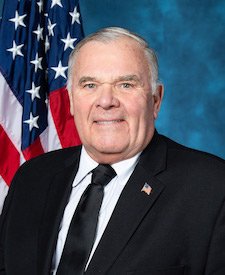
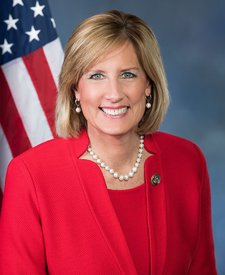

Legislative Progress
In CommitteeMr. Baird (for himself, Ms. Tenney, and Mr. Harrigan) introduced …
Referred to the Committee on Energy and Commerce, and in …
Introduced in House
Stakeholder Effects
cui bono?How this legislation distributes effects. Mention counts reflect frequency, not effect magnitude.
DOE nuclear programs, Department of Energy, Nuclear Regulatory Commission
Bill Structure & Actor Mappings
Who is "The Secretary" in each section?
We use a combination of our own taxonomy and classification in addition to large language models to assess meaning and potential beneficiaries. High confidence means strong textual evidence. Always verify with the original bill text.
Learn more about our methodology