High-Quality Charter Schools Act
Summary
What This Bill Does
The High-Quality Charter Schools Act creates section 25F of the Internal Revenue Code. Individual U.S. citizens or residents would receive a tax credit equal to 75 percent of cash or marketable-securities contributions made to eligible charter school organizations for creating or expanding charter schools. The credit is capped each year at the greater of 10 percent of adjusted gross income or $5,000, cannot also be treated as a charitable deduction, and can be carried forward for up to five taxable years. Eligible organizations must be 501(c)(3) non-private foundations that are charter management organizations or charter schools receiving replication or expansion grants, or selected by States as in the top 10 percent for student performance; they must separately account for contributions, obtain annual independent CPA financial and compliance audits, and certify completion. Organizations that fail to spend required receipts by the first day of the fifth taxable year after receipt lose qualified-contribution status for the next year; reasonable administration is safe-harbored at 10 percent, and up to 15 percent can carry over one year. The annual credit volume cap is $5 billion beginning in 2026, with $10 million allocated to each State and the remainder first-come, first-served, tracked in real time by Treasury. Participation does not make charter organizations governmental actors and is to be construed to preserve organizational and parental autonomy.
Who Benefits and How
Eligible charter school organizations benefit because the 75 percent credit can attract private contributions for creating or expanding charter schools. Charter school students benefit if new credit-supported funding expands seats in high-performing charter schools. Individual charter donors benefit because qualifying contributions produce a larger tax benefit than an ordinary charitable deduction. State-selected top-performing charter schools benefit because States can qualify organizations in the highest 10 percent for student performance.
Who Bears the Burden and How
The Treasury Department must administer the $5 billion volume cap, real-time tracking system, State allocations, and first-come credit ordering. Eligible charter school organizations must separately account for contributions, obtain annual independent CPA audits, certify compliance, and meet expenditure deadlines. Federal taxpayers bear the revenue cost of the new tax credit. Public school districts may face increased competition for students if charter expansion accelerates.
Key Provisions
- Creates a 75 percent income-tax credit for qualified contributions to eligible charter school organizations.
- Limits each taxpayer's annual credit to the greater of 10 percent of adjusted gross income or $5,000.
- Establishes a $5 billion annual volume cap beginning in 2026, including $10 million for each State.
- Requires eligible charter organizations to spend required receipts by the fifth taxable year, with 10 percent administrative and 15 percent carryover rules.
- Protects organizational and parental autonomy by stating participation does not make charter organizations governmental actors.
Evidence Chain:
This summary is generated from the full bill text using AI analysis. Expand "Detailed Analysis" below for identified beneficiaries/burden bearers with clause-level evidence links.
At a Glance
What This Bill Does
Creates a federal 75 percent tax credit for qualified contributions to eligible high-performing charter school organizations, subject to per-taxpayer limits, a $5 billion annual volume cap, expenditure rules, audit requirements, and charter autonomy protections.
Key Policy Areas
Tax, Education, Charter Schools
Primary Purpose
Creates a federal 75 percent tax credit for qualified contributions to eligible high-performing charter school organizations, subject to per-taxpayer limits, a $5 billion annual volume cap, expenditure rules, audit requirements, and charter autonomy protections.
Policy Domains
Resolution provisions
Identified Gains
- Eligible charter school organizations
- Charter school students
- Individual charter donors
- State-selected top-performing charter schools
Identified Costs
- Treasury Department
- Eligible charter school finance offices
- Federal taxpayers
- Public school districts
Sponsors
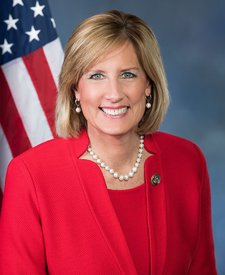
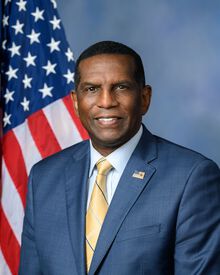

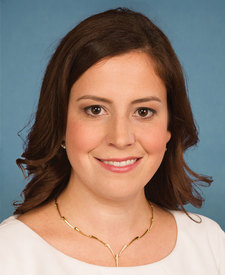
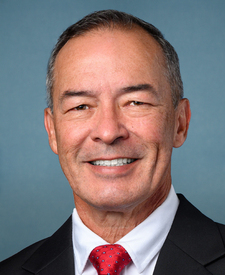
Legislative Progress
In CommitteeMs. Tenney (for herself, Mr. Kiley of California, Ms. Malliotakis, …
Referred to the House Committee on Ways and Means.
Introduced in House
Stakeholder Effects
cui bono?How this legislation distributes effects. Mention counts reflect frequency, not effect magnitude.
Charter school students, Eligible charter school organizations, Public school districts
Bill Structure & Actor Mappings
Who is "The Secretary" in each section?
We use a combination of our own taxonomy and classification in addition to large language models to assess meaning and potential beneficiaries. High confidence means strong textual evidence. Always verify with the original bill text.
Learn more about our methodology