TAME Extreme Weather and Wildfires Act
Summary
What This Bill Does
The TAME Extreme Weather and Wildfires Act gives NOAA a structured AI-weather mandate. Within two years, the NOAA Under Secretary must develop and curate comprehensive weather-forecasting training datasets with Earth-system data, quality information, and metadata, while building on existing federal datasets and continuing numerical weather modeling. NOAA may develop an AI global weather model, use AI to improve information delivery, report annually, fund cooperative institutes or contracts, and develop best practices to minimize AI environmental impacts. The bill also requires technical assistance on nonfederal AI weather models, a common framework for reforecast analysis, support through NOAA weather forecast offices, an assessment of AI impacts on the weather enterprise, a fire-environment modeling program coordinated with Interior, Agriculture, Homeland Security, NASA, DOE, and NSF, public-private innovation partnerships, workforce development, and open-license release of data or code subject to national-security, intellectual-property, trade-secret, contractual, and life-safety limits.
Who Benefits and How
At-risk wildfire communities benefit because NOAA must use AI to warn communities, firefighters, and responders and forecast fire propagation, smoke, and hazards. Emergency managers benefit from technical assistance and support for decisions based on AI and numerical weather model outputs. NOAA forecasters benefit from testbeds, reforecast frameworks, workforce training, and AI tools that complement traditional numerical models. Private weather AI firms benefit from NOAA inventories, evaluation frameworks, partnerships, and potential co-investment structures.
Who Bears the Burden and How
NOAA AI program staff must curate datasets, run reports, support testbeds, manage partnerships, and protect sensitive data releases. Federal environmental agencies must coordinate fire modeling, observational data, synthetic data, and hazard forecasting across departments. Environmental data rightsholders may face pressure to share data while still protecting intellectual property and trade secrets. Federal taxpayers bear the cost of contracts, cooperative institutes, workforce development, and data infrastructure.
Key Provisions
- Directs NOAA to curate AI-ready Earth-system weather forecasting training datasets within two years.
- Authorizes development and testing of AI weather models while preserving numerical weather-model work.
- Requires technical assistance and best practices for using AI weather models through NOAA weather forecast offices.
- Creates an AI fire-environment modeling program for wildfire prediction, detection, smoke, hazards, and responder warnings.
- Provides open-license data and code access when release does not compromise security, intellectual property, trade secrets, contracts, or NOAA's life-safety mission.
Evidence Chain:
This summary is generated from the full bill text using AI analysis. Expand "Detailed Analysis" below for identified beneficiaries/burden bearers with clause-level evidence links.
At a Glance
What This Bill Does
Directs NOAA to build AI-ready Earth-system and fire-environment datasets, test AI weather models, support emergency managers and forecasters, develop wildfire modeling, partner with private and academic innovators, train a federal AI weather workforce, and release data or code under open licenses when appropriate.
Key Policy Areas
Weather, Artificial Intelligence, Wildfire, NOAA
Primary Purpose
Directs NOAA to build AI-ready Earth-system and fire-environment datasets, test AI weather models, support emergency managers and forecasters, develop wildfire modeling, partner with private and academic innovators, train a federal AI weather workforce, and release data or code under open licenses when appropriate.
Policy Domains
Resolution provisions
Identified Gains
- At-risk wildfire communities
- Emergency managers
- NOAA forecasters
- Private weather AI firms
Identified Costs
- NOAA AI program staff
- Federal environmental agencies
- Environmental data rightsholders
- Federal taxpayers
Legislative Progress
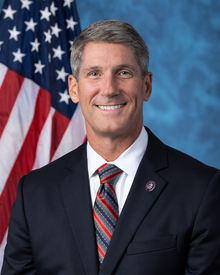
In CommitteeMr. Scott Franklin of Florida introduced the following bill; which …
Referred to the House Committee on Science, Space, and Technology.
Introduced in House
Stakeholder Effects
cui bono?How this legislation distributes effects. Mention counts reflect frequency, not effect magnitude.
At-risk wildfire communities, Emergency managers
Environmental data rightsholders, Private weather AI firms
Positive-direction: Private weather AI firms
Negative-direction: Environmental data rightsholders
Bill Structure & Actor Mappings
Who is "The Secretary" in each section?
We use a combination of our own taxonomy and classification in addition to large language models to assess meaning and potential beneficiaries. High confidence means strong textual evidence. Always verify with the original bill text.
Learn more about our methodology