Special District Fairness and Accessibility Act
Sponsors
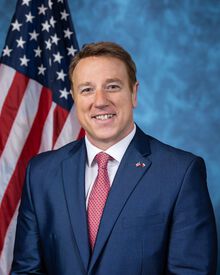


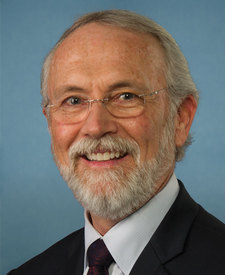
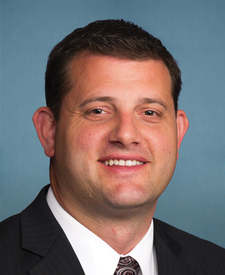
Legislative Progress
In CommitteeMr. Fallon (for himself, Ms. Pettersen, Mr. Valadao, Mrs. Kim, …
Summary
What This Bill Does
The Special District Fairness and Accessibility Act requires the federal Office of Management and Budget (OMB) to issue clear guidance within 180 days to help special districts access federal funding. Special districts are local government entities like water districts, fire districts, library districts, and sanitation districts that serve specific communities but often don't qualify for federal grants because agencies don't recognize them as "local governments." This bill standardizes eligibility rules across all federal agencies.
Who Benefits and How
Special district governments across the country benefit most directly. Water districts, fire districts, sanitation districts, park districts, library districts, and similar entities gain clarified eligibility for federal grants, loans, cooperative agreements, and other financial assistance programs. This opens up new revenue opportunities to fund infrastructure projects, service improvements, and programs without raising local taxes or fees. The communities served by these districts, particularly rural and unincorporated areas, also benefit indirectly through improved services funded by federal dollars rather than local taxes.
Who Bears the Burden and How
Federal agencies administering financial assistance programs face new compliance requirements. Within one year of OMB's guidance, every agency must review and revise all of its policies, procedures, and guidelines related to federal financial assistance to ensure special districts are properly recognized. The Office of Management and Budget itself must issue comprehensive guidance within 180 days and prepare a detailed evaluation report to Congress within 2 years documenting how well agencies implemented the new rules.
Key Provisions
- OMB must issue guidance within 180 days clarifying that special districts qualify as units of local government for federal financial assistance eligibility
- Federal agencies must implement the guidance within 1 year, updating all related policies and procedures
- OMB must report to Congress within 2 years evaluating agency compliance with the guidance
- Defines "special district" as a political subdivision of a State with budgetary autonomy created to perform specific governmental functions distinct from other local government units
- Defines "federal financial assistance" broadly to include grants, loans, loan guarantees, cooperative agreements, subsidies, insurance, commodities, and direct appropriations
Evidence Chain:
This summary is derived from the structured analysis below. See "Detailed Analysis" for per-title beneficiaries/burden bearers with clause-level evidence links.
Primary Purpose
Requires OMB Director to issue guidance clarifying that special districts (like water districts, fire districts) should be recognized as local governments eligible for federal financial assistance
Policy Domains
Legislative Strategy
"Address barriers preventing special districts from accessing federal grants and assistance programs by standardizing eligibility criteria across federal agencies"
Likely Beneficiaries
- Special district governments (water districts, fire districts, sanitation districts, library districts, etc.)
- State and local governments that rely on special districts for service delivery
- Communities served by special districts
Likely Burden Bearers
- Federal agencies (must revise guidance, policies, and procedures within 1 year)
- Office of Management and Budget (must issue guidance within 180 days and evaluate implementation within 2 years)
Bill Structure & Actor Mappings
Who is "The Secretary" in each section?
- "agency"
- → Federal executive agencies as defined in 5 U.S.C. 552
- "the_director"
- → Director of the Office of Management and Budget
- "head_of_each_agency"
- → Heads of federal executive agencies
Key Definitions
Terms defined in this bill
Has the meaning given in section 552 of title 5, United States Code (Freedom of Information Act definition - covers most executive branch agencies)
The Director of the Office of Management and Budget
Assistance that a non-Federal entity receives or administers in the form of a grant, loan, loan guarantee, property, cooperative agreement, interest subsidy, insurance, food commodity, direct appropriation, or other assistance; excludes reimbursements for services rendered to individuals
A political subdivision of a State, with specified boundaries and significant budgetary autonomy or control, created by or pursuant to State laws, for performing limited and specific governmental or proprietary functions that distinguish it as a significantly separate entity from other local government units
Each of the several States, the District of Columbia, each commonwealth, territory, or possession of the United States, and each federally recognized Indian Tribe
We use a combination of our own taxonomy and classification in addition to large language models to assess meaning and potential beneficiaries. High confidence means strong textual evidence. Always verify with the original bill text.
Learn more about our methodology