National Biotechnology Initiative Act of 2025
Summary
What This Bill Does
The National Biotechnology Initiative Act turns biotechnology coordination into a standing federal initiative. It names participating agencies including Agriculture, Commerce, Defense, Energy, HHS, Homeland Security, Interior, State, EPA, NASA, NSF, ODNI, and USTR. It creates a National Biotechnology Coordination Office in the Executive Office of the President within 180 days, led by a presidentially appointed director, and uses an interagency committee of Assistant Secretary-level agency representatives. The Office must coordinate strategy, spending, biological data policy, biosecurity, regulatory pathways, workforce development, commercialization, international partnerships, a public website, annual reports, five-year national strategies, and GAO reviews. NSF is authorized $22 million for FY2026, $35 million for FY2027, and $25 million for each of FY2028 through FY2030 to support the Office.
Who Benefits and How
Biotechnology companies benefit from coordinated regulatory pathways, commercialization support, testbeds, and market-access diplomacy. Biotechnology researchers benefit from sustained federal R&D support, biological-data infrastructure, joint solicitations, and public-private research centers. National security agencies benefit from a coordinated framework for biosecurity threats, adversary investments, biological data risks, and supply-chain vulnerabilities. Biotechnology workers benefit from a national workforce framework, training programs, fellowships, and curriculum support.
Who Bears the Burden and How
Participating federal agencies must designate biotechnology leads, join subcommittees, share information, and implement national strategy duties. The National Science Foundation must provide staffing, compensation authority, and administrative support for the coordination office. The National Biotechnology Coordination Office must maintain the website, annual reporting, strategies, regulatory-pathway work, and interagency coordination. Biotechnology regulators must negotiate clearer pathways and resolve overlaps, gaps, and ambiguities across agencies.
Key Provisions
- Establishes a National Biotechnology Initiative across named federal agencies.
- Creates a National Biotechnology Coordination Office in the Executive Office of the President within 180 days.
- Authorizes NSF support of $22 million in FY2026, $35 million in FY2027, and $25 million in each of FY2028 through FY2030.
- Requires a public biotechnology website, annual reports, five-year national strategies, and recurring GAO reviews.
- Directs participating agencies to act on national security, data, commercialization, regulatory streamlining, biosafety, workforce, bioliteracy, and international partnerships.
Evidence Chain:
This summary is generated from the full bill text using AI analysis. Expand "Detailed Analysis" below for identified beneficiaries/burden bearers with clause-level evidence links.
At a Glance
What This Bill Does
Establishes a National Biotechnology Initiative, a National Biotechnology Coordination Office in the Executive Office of the President, an interagency committee, public biotechnology website, strategies, reports, GAO reviews, and agency duties across security, data, commercialization, regulation, workforce, and international engagement.
Key Policy Areas
Science, Biotechnology, National Security, Industrial Policy
Primary Purpose
Establishes a National Biotechnology Initiative, a National Biotechnology Coordination Office in the Executive Office of the President, an interagency committee, public biotechnology website, strategies, reports, GAO reviews, and agency duties across security, data, commercialization, regulation, workforce, and international engagement.
Policy Domains
Resolution provisions
Identified Gains
- Biotechnology companies
- Biotechnology researchers
- National security agencies
- Biotechnology workers
Identified Costs
- Participating federal agencies
- National Science Foundation
- National Biotechnology Coordination Office
- Biotechnology regulators
Sponsors




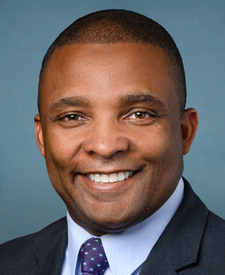
Legislative Progress
In CommitteeMrs. Bice (for herself and Mr. Khanna) introduced the following …
Referred to the Committee on Science, Space, and Technology, and …
Introduced in House
Stakeholder Effects
cui bono?How this legislation distributes effects. Mention counts reflect frequency, not effect magnitude.
National Biotechnology Coordination Office, National Science Foundation
Bill Structure & Actor Mappings
Who is "The Secretary" in each section?
We use a combination of our own taxonomy and classification in addition to large language models to assess meaning and potential beneficiaries. High confidence means strong textual evidence. Always verify with the original bill text.
Learn more about our methodology