Invest to Protect Act of 2025
Summary
What This Bill Does
The Invest to Protect Act creates a Department of Justice grant program inside the COPS Office for local governments and Tribal governments that employ fewer than 175 law enforcement officers. The grants support de-escalation training, victim-centered domestic violence training, safety training for active shooter, illicit drug, rescue, ambush, mental health, substance use, veteran, disability, youth, domestic violence, trafficking, homelessness, and poverty calls, overtime connected to training, signing bonuses, retention bonuses capped at 20 percent of salary for officers with at least five years of service and clean serious-misconduct records, graduate education stipends up to $10,000 in mental health, public health, or social work, officer behavioral health services, lethal and nonlethal force best practices, duty-to-intervene training, and data collection. The Attorney General must plan a streamlined application process that can be completed in no more than two hours, with technical assistance. Grants are subject to reporting, public bonus disclosures, annual evaluation, DOJ Inspector General audits, exclusions for unresolved audit findings, duplicate-grant review, and annual certifications. The bill authorizes not more than $50 million annually for fiscal years 2027 through 2031.
Who Benefits and How
Small police departments benefit because agencies with fewer than 175 officers can receive grants for training, recruitment, retention, and behavioral health supports. Tribal law enforcement agencies benefit because eligible Tribal governments are included in the grant program. Local law enforcement officers benefit from de-escalation training, graduate education stipends, mental health services, and retention bonuses. Domestic violence survivors and other vulnerable people benefit if grant-funded training improves officer responses to high-risk calls.
Who Bears the Burden and How
The COPS Office must run a streamlined grant process, award grants, set reporting requirements, and evaluate program efficacy. The Attorney General must submit application-streamlining reports, review duplicate grants, analyze outcomes, and report multiple awards. DOJ Inspector General staff must audit recipients to prevent waste, fraud, and abuse. Grant recipients must disclose signing and retention bonuses, report performance data, and risk three-year exclusion for unresolved audit findings.
Key Provisions
- Creates a COPS Office grant program for local and Tribal governments with fewer than 175 law enforcement officers.
- Authorizes uses for de-escalation, domestic violence, safety, vulnerable-population response, overtime, bonuses, graduate education, behavioral health, force, intervention, and data collection.
- Requires a streamlined application process designed to be completed in no more than two hours.
- Authorizes up to $50 million annually for fiscal years 2027 through 2031 with audits, reporting, bonus disclosures, and duplicate-grant review.
Evidence Chain:
This summary is generated from the full bill text using AI analysis. Expand "Detailed Analysis" below for identified beneficiaries/burden bearers with clause-level evidence links.
At a Glance
What This Bill Does
Creates a COPS Office grant program of up to $50 million per year from fiscal years 2027 through 2031 for small local and Tribal law enforcement agencies to fund training, recruitment, retention, behavioral health, and data collection.
Key Policy Areas
Law Enforcement, Federal Grants, Public Safety
Primary Purpose
Creates a COPS Office grant program of up to $50 million per year from fiscal years 2027 through 2031 for small local and Tribal law enforcement agencies to fund training, recruitment, retention, behavioral health, and data collection.
Policy Domains
Resolution provisions
Identified Gains
- Small police departments
- Tribal law enforcement agencies
- Local law enforcement officers
- Domestic violence survivors
Identified Costs
- COPS Office
- Attorney General
- DOJ Inspector General staff
- Grant recipients
Sponsors

Legislative Progress
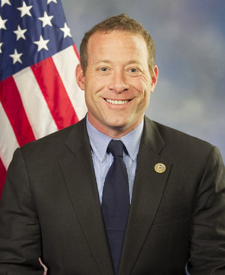
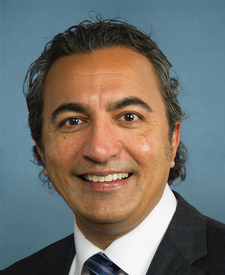
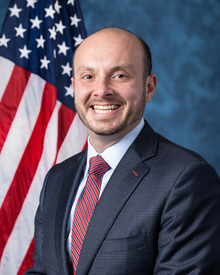
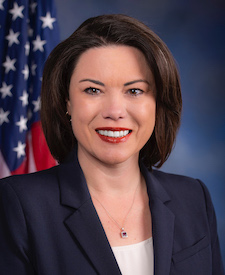
In CommitteeMr. Gottheimer (for himself, Mr. Rutherford, Mr. Horsford, Mr. Sorensen, …
Referred to the House Committee on the Judiciary.
Introduced in House
Stakeholder Effects
cui bono?How this legislation distributes effects. Mention counts reflect frequency, not effect magnitude.
Local law enforcement officers, Small police departments, Tribal law enforcement agencies
COPS Office, DOJ Inspector General staff, Grant recipients
Bill Structure & Actor Mappings
Who is "The Secretary" in each section?
We use a combination of our own taxonomy and classification in addition to large language models to assess meaning and potential beneficiaries. High confidence means strong textual evidence. Always verify with the original bill text.
Learn more about our methodology