Expanding Access to School Meals Act of 2025
Summary
What This Bill Does
The Expanding Access to School Meals Act broadens free school meal certification under the Richard B. Russell National School Lunch Act. Local educational agencies may certify children for free lunches and breakfasts without a separate application by communicating with State or local agencies to verify Medicaid-connected eligibility. Covered children include Medicaid recipients in families with income not above 224 percent of poverty, children eligible for Medicaid because of SSI or State supplementary benefits, children receiving adoption assistance, children receiving kinship guardianship assistance, and children in households with those children. State child nutrition agencies must enter agreements with Medicaid eligibility agencies to establish procedures. The bill also requires a local educational agency to revise previously submitted meal claims when a child is approved for free meals, retroactive to the first day of the current school year.
Who Benefits and How
Low-income children receiving Medicaid benefit because they can be certified for free school meals without a separate school meal application. Children receiving SSI, adoption assistance, or kinship guardianship assistance benefit from express eligibility routes tied to Medicaid status. Families with eligible children benefit because retroactive reimbursement can cover meals served earlier in the school year. School food authorities benefit because direct certification can reduce unpaid meal debt and paperwork for families.
Who Bears the Burden and How
State child nutrition agencies must enter agreements with Medicaid eligibility agencies and establish direct-certification procedures. Local educational agencies must revise meal claims retroactively when a child is approved for free meals. State Medicaid agencies must share eligibility documentation in a way that supports school meal certification. Federal taxpayers bear the cost of additional free meal reimbursements and retroactive claims.
Key Provisions
- Expands direct certification for free lunches and breakfasts to Medicaid-connected eligible children.
- Adds SSI, adoption assistance, kinship guardianship assistance, and household-linked eligibility routes.
- Requires State agency agreements with Medicaid eligibility agencies for certification procedures.
- Requires retroactive meal-claim revisions back to the first day of the current school year.
Evidence Chain:
This summary is generated from the full bill text using AI analysis. Expand "Detailed Analysis" below for identified beneficiaries/burden bearers with clause-level evidence links.
At a Glance
What This Bill Does
Expands direct certification for free school meals to Medicaid-connected children, including certain SSI, adoption-assistance, kinship guardianship, and household-linked children, and requires retroactive meal-claim reimbursement to the start of the school year.
Key Policy Areas
Child Nutrition, Medicaid, Education
Primary Purpose
Expands direct certification for free school meals to Medicaid-connected children, including certain SSI, adoption-assistance, kinship guardianship, and household-linked children, and requires retroactive meal-claim reimbursement to the start of the school year.
Policy Domains
Resolution provisions
Identified Gains
- Low-income children receiving Medicaid
- Children receiving SSI
- Families with eligible children
- School food authorities
Identified Costs
- State child nutrition agencies
- Local educational agencies
- State Medicaid agencies
- Federal taxpayers
Sponsors
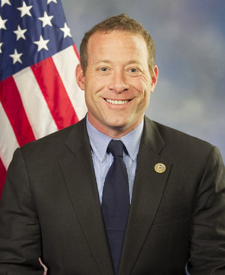
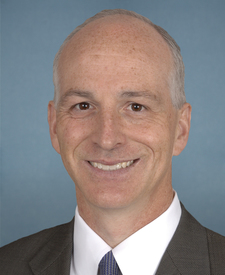


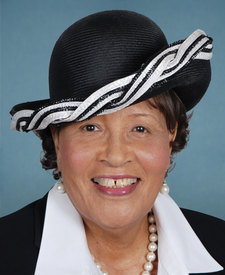
Legislative Progress
In CommitteeMr. Gottheimer (for himself, Mrs. Dingell, Ms. Adams, Mr. DeSaulnier, …
Referred to the House Committee on Education and Workforce.
Introduced in House
Stakeholder Effects
cui bono?How this legislation distributes effects. Mention counts reflect frequency, not effect magnitude.
Families with eligible children, Low-income children receiving Medicaid, School food authorities
State Medicaid agencies, State child nutrition agencies
Bill Structure & Actor Mappings
Who is "The Secretary" in each section?
We use a combination of our own taxonomy and classification in addition to large language models to assess meaning and potential beneficiaries. High confidence means strong textual evidence. Always verify with the original bill text.
Learn more about our methodology