Sammy’s Law
Summary
What This Bill Does
Sammy's Law creates a federal access framework for child-safety software on very large social media platforms. A covered platform is an internet or mobile service that allows child users to share images, text, or video with users they know only through the service and that exceeds 100 million monthly global active users or $1 billion in annual gross revenue. Within 30 days after coverage begins, the platform provider must create and maintain real-time APIs so a child age 13 or older, or a parent or legal guardian, can delegate permission to a registered third-party safety software provider to manage the child's interactions, content, account settings, and hourly machine-readable data transfers. The FTC registers and audits safety providers, issues guidance, educates consumers, enforces violations as unfair or deceptive acts, and operates a complaint process. The bill gives compliant platforms a liability shield for data transfers and creates one national standard preempting State API-access mandates while preserving State consumer protection, trespass, contract, tort, fraud, and data-breach laws.
Who Benefits and How
Parents of child users benefit because they can authorize safety tools to manage content, settings, and online interactions on large platforms. Child users benefit because registered safety tools can detect risks such as bullying, trafficking, self-harm, substance abuse, sexual exploitation, or violence. Third-party safety software providers benefit from mandatory API access to large platforms once they satisfy FTC registration, security, and audit conditions. Federal Trade Commission enforcement staff benefit from a clear federal registration and complaint framework for child-safety software access.
Who Bears the Burden and How
Large social media platform providers must build real-time APIs, transfer user data at least hourly, disclose delegations, and implement secure-transfer practices. Third-party safety software providers must satisfy U.S.-control, domestic processing, deletion, security-review, annual audit, disclosure, and limited-use rules. The Federal Trade Commission must register providers, review audits, issue guidance, educate consumers, conduct biannual compliance assessments, and enforce violations. State legislatures bear preemption limits because they may not maintain separate API-access mandates for large social media platforms.
Key Provisions
- Requires covered large social media platforms to provide real-time APIs for delegated child-safety software access.
- Creates FTC registration, security-review, annual audit, and adverse-action rules for third-party safety software providers.
- Limits safety-provider use, disclosure, storage, and deletion of child user data.
- Provides a compliant-platform liability shield and preempts State API-access mandates while preserving other State laws.
Evidence Chain:
This summary is generated from the full bill text using AI analysis. Expand "Detailed Analysis" below for identified beneficiaries/burden bearers with clause-level evidence links.
At a Glance
What This Bill Does
Requires very large social media platforms to provide real-time API access for registered child-safety software providers, under Federal Trade Commission registration, audit, privacy, enforcement, liability, and preemption rules.
Key Policy Areas
Technology, Child Safety, Consumer Protection
Primary Purpose
Requires very large social media platforms to provide real-time API access for registered child-safety software providers, under Federal Trade Commission registration, audit, privacy, enforcement, liability, and preemption rules.
Policy Domains
Resolution provisions
Identified Gains
- Parents of child users
- Child users
- Third-party safety software providers
- Federal Trade Commission enforcement staff
Identified Costs
- Large social media platform providers
- Third-party safety software providers
- Federal Trade Commission
- State legislatures
Sponsors



Legislative Progress
In CommitteeForwarded by Subcommittee to Full Committee by Voice Vote.
Subcommittee Consideration and Mark-up Session Held
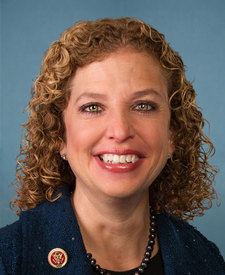
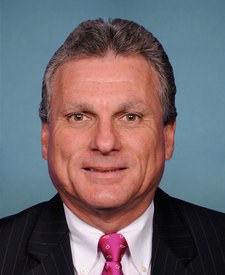
Ms. Wasserman Schultz (for herself, Mr. Carter of Georgia, Ms. …
Referred to the Subcommittee on Commerce, Manufacturing, and Trade.
Referred to the House Committee on Energy and Commerce.
Introduced in House
Stakeholder Effects
cui bono?How this legislation distributes effects. Mention counts reflect frequency, not effect magnitude.
Child users, Large social media platform providers, Parents of child users
Positive-direction: Child users, Parents of child users, Third-party safety software providers
Negative-direction: Large social media platform providers
Bill Structure & Actor Mappings
Who is "The Secretary" in each section?
We use a combination of our own taxonomy and classification in addition to large language models to assess meaning and potential beneficiaries. High confidence means strong textual evidence. Always verify with the original bill text.
Learn more about our methodology