One Door to Work Act
Summary
What This Bill Does
The One Door to Work Act replaces WIOA section 190 with a large demonstration-project framework. It lets States apply for a whole-State, local-area, or local-area consortium demonstration that consolidates youth, adult, and dislocated worker workforce funds for five years. Approved projects receive broad waivers from WIOA subtitle A and B requirements, but they must keep performance accountability, board-membership rules where boards remain in use, priority of service, reporting, participant service levels, administrative cost caps, and annual outcome reports. The Secretary must approve or initially disapprove complete applications within 60 days, contract for third-party evaluations within 180 days after the first approval, limit approvals to eight State projects and eight local or consortium projects per five-year period, and allow renewal only when projects meet performance levels and improve key employment and earnings indicators by at least five percent.
Who Benefits and How
States seeking workforce-system flexibility benefit because they can consolidate WIOA funding and waive many statutory and regulatory requirements. Local workforce areas benefit when a State selects them for a five-year demonstration with consolidated youth, adult, and dislocated-worker funds. Jobseekers may benefit if demonstrations produce better employment, earnings, and service access outcomes than the existing WIOA structure. Employers benefit if demonstrations integrate workforce, education, social-service, and training activities around local labor-market needs.
Who Bears the Burden and How
The Department of Labor must review applications, administer waivers, distribute consolidated grants, monitor reports, and contract evaluations. State workforce agencies must prepare detailed applications, consult employers and boards, serve required participant numbers, and meet performance levels. Local workforce boards in demonstrations must agree to project roles, fiscal-agent arrangements, and consolidated-fund accountability. Programs not selected for demonstration status may face comparison pressure as evaluations measure participant outcomes and promising practices.
Key Provisions
- Creates five-year WIOA demonstration authority for States, local areas, and local-area consortia.
- Authorizes consolidated grants from youth, adult, and dislocated-worker funding streams during approved demonstrations.
- Requires third-party rigorous evaluations comparing employment and earnings outcomes over each demonstration period.
- Limits approvals and renewals through project caps, annual reporting, priority of service, administrative cost limits, and performance-improvement tests.
Evidence Chain:
This summary is generated from the full bill text using AI analysis. Expand "Detailed Analysis" below for identified beneficiaries/burden bearers with clause-level evidence links.
At a Glance
What This Bill Does
Rewrites Workforce Innovation and Opportunity Act demonstration authority so selected States, local areas, or local-area consortia can receive consolidated five-year workforce grants under broad waivers tied to rigorous evaluation and performance gains.
Key Policy Areas
Labor, Workforce Development, Federal Grants
Primary Purpose
Rewrites Workforce Innovation and Opportunity Act demonstration authority so selected States, local areas, or local-area consortia can receive consolidated five-year workforce grants under broad waivers tied to rigorous evaluation and performance gains.
Policy Domains
Resolution provisions
Identified Gains
- States seeking workforce flexibility
- Local workforce areas
- Jobseekers
- Employers
Identified Costs
- Department of Labor
- State workforce agencies
- Local workforce boards
- Unselected workforce programs
Sponsors
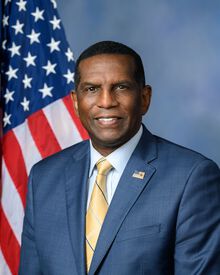
Burgess Owens
R-UT | Primary Sponsor

Legislative Progress
In CommitteeMr. Owens introduced the following bill; which was referred to …
Referred to the House Committee on Education and Workforce.
Introduced in House
Stakeholder Effects
cui bono?How this legislation distributes effects. Mention counts reflect frequency, not effect magnitude.
Department of Labor, Local workforce areas, Local workforce boards
Positive-direction: Local workforce areas, States seeking workforce flexibility
Negative-direction: Department of Labor, Local workforce boards, State workforce agencies
Bill Structure & Actor Mappings
Who is "The Secretary" in each section?
We use a combination of our own taxonomy and classification in addition to large language models to assess meaning and potential beneficiaries. High confidence means strong textual evidence. Always verify with the original bill text.
Learn more about our methodology