To amend the Illegal Immigration Reform and Immigrant Responsibility Act of 1996 to require all Federal contractors to participate in the E-verify program.
Summary
What This Bill Does
This bill extends E-Verify participation to the federal contracting chain. It amends section 402(e)(1) of the Illegal Immigration Reform and Immigrant Responsibility Act so each contractor of an executive-branch or legislative-branch federal agency, and each subcontractor at any tier, must elect to participate in the E-Verify program and comply with the program's terms and conditions.
Who Benefits and How
E-Verify system operators benefit because federal contractors and subcontractors become mandatory users. Employment eligibility compliance consultants benefit from new demand for enrollment, training, and verification-process support. Workers authorized to work in the United States may benefit if covered federal contractors screen unauthorized employment more consistently. Federal agencies buying goods or services benefit from clearer eligibility-screening obligations in their contractor base.
Who Bears the Burden and How
Federal government contractors must enroll in E-Verify, verify covered workers, and comply with program conditions. Subcontractors of federal contractors at all tiers face the same requirement. Small businesses in federal supply chains bear compliance costs if they previously did not use E-Verify. Unauthorized workers seeking jobs on federal contracts face a higher barrier to employment through covered contractors.
Key Provisions
- Requires executive-branch and legislative-branch federal contractors to participate in E-Verify.
- Requires subcontractors of federal contractors at every tier to participate in E-Verify.
- Requires covered contractors and subcontractors to comply with the terms and conditions of the E-Verify election.
Evidence Chain:
This summary is generated from the full bill text using AI analysis. Expand "Detailed Analysis" below for identified beneficiaries/burden bearers with clause-level evidence links.
At a Glance
What This Bill Does
Amends the Illegal Immigration Reform and Immigrant Responsibility Act of 1996 to require every executive-branch and legislative-branch federal contractor, and every subcontractor at any tier, to participate in E-Verify and comply with the terms and conditions of that election.
Key Policy Areas
Immigration, Federal Procurement, Labor Compliance
Primary Purpose
Amends the Illegal Immigration Reform and Immigrant Responsibility Act of 1996 to require every executive-branch and legislative-branch federal contractor, and every subcontractor at any tier, to participate in E-Verify and comply with the terms and conditions of that election.
Policy Domains
House resolution provisions
Identified Gains
- E-Verify system operators
- Employment eligibility compliance consultants
- Workers authorized to work in the United States
- Federal agencies buying goods or services
Identified Costs
- Federal government contractors
- Subcontractors of federal contractors
- Small businesses in federal supply chains
- Unauthorized workers seeking jobs on federal contracts
Sponsors

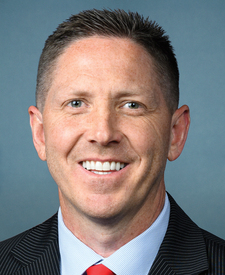


Legislative Progress
ReportedOrdered to be Reported (Amended) by the Yeas and Nays: …
Committee Consideration and Mark-up Session Held
Mr. Mackenzie introduced the following bill; which was referred to …
Referred to the Committee on the Judiciary, and in addition …
Introduced in House
Stakeholder Effects
cui bono?How this legislation distributes effects. Mention counts reflect frequency, not effect magnitude.
Federal government contractors, Subcontractors of federal contractors
Unauthorized workers seeking jobs on federal contracts, Workers authorized to work in the United States
Positive-direction: Workers authorized to work in the United States
Negative-direction: Unauthorized workers seeking jobs on federal contracts
Employment eligibility compliance consultants
Bill Structure & Actor Mappings
Who is "The Secretary" in each section?
- "everify"
- → E-Verify program
We use a combination of our own taxonomy and classification in addition to large language models to assess meaning and potential beneficiaries. High confidence means strong textual evidence. Always verify with the original bill text.
Learn more about our methodology