Save Our Seas 2.0 Amendments Act
Summary
What This Bill Does
The Save Our Seas 2.0 Amendments Act reorganizes NOAA marine debris provisions and updates the Marine Debris Foundation. It redesignates Marine Debris Act sections, changes NOAA program language so the Under Secretary may use contracts and other agreements as well as grants and cooperative agreements, and lets NOAA contribute in-kind costs for contract or other agreement projects based on NOAA's benefit. It transfers the Save Our Seas 2.0 marine debris foundation subtitle into the Marine Debris Act, changes the Foundation from organization to corporation, adds Indian Tribes to collaboration language, revises Board appointment recommendations and Secretary of Commerce approval, sets six-year director terms, adds the USAID Administrator to ex officio participation, clarifies initial officers and employees, gives the Board authority to appoint, review, and remove the chief executive officer, and lets the CEO manage officers and employees. It requires the Foundation's principal office to be in the National Capital Region or a coastal shoreline community, requires Tribal outreach best practices that support technical assistance, capacity building, and awareness of programs and grants, preserves government-to-government consultation and treaty rights, adds $2 million for fiscal year 2025 for the Foundation, expands eligible recipients to regional organizations, Indian Tribes, Tribal organizations, and foreign governments, extends Marine Debris Act authorization through fiscal year 2029, and adds definitions for circular economy, coastal shoreline community, EPA Administrator, Indian Tribe, nonprofit organization, post-consumer materials management, Tribal Government, Tribal organization, and Under Secretary.
Who Benefits and How
NOAA marine debris programs benefit from more flexible contracts, other agreements, and in-kind contribution authority. Marine Debris Foundation staff benefit from clearer corporation status, CEO authority, board processes, principal office rules, and fiscal year 2025 funding. Indian Tribes and Tribal organizations benefit from explicit eligibility language and Foundation outreach best practices for technical assistance and grant awareness. Coastal shoreline communities benefit because the Foundation may locate its principal office in a coastal shoreline community and support marine debris projects.
Who Bears the Burden and How
NOAA Under Secretary staff must apply new contract, agreement, in-kind contribution, authorization, and definition rules. Marine Debris Foundation board members must manage new appointment recommendations, Commerce approval, CEO oversight, Tribal outreach, and office-location duties. Commerce Department officials must approve certain Board appointments and coordinate with the EPA Administrator and USAID Administrator. Federal taxpayers bear the added $2 million fiscal year 2025 Foundation authorization and extended marine debris authorization through 2029.
Key Provisions
- Amends NOAA marine debris program authority to include contracts, other agreements, and in-kind NOAA contributions.
- Modifies Marine Debris Foundation governance, board appointments, CEO authority, office location, and ex officio participation.
- Requires Tribal outreach best practices while preserving consultation requirements and treaty rights.
- Adds fiscal year 2025 Foundation funding, expands eligible partners, and extends Marine Debris Act authorization through fiscal year 2029.
Evidence Chain:
This summary is generated from the full bill text using AI analysis. Expand "Detailed Analysis" below for identified beneficiaries/burden bearers with clause-level evidence links.
At a Glance
What This Bill Does
Reorganizes and amends the Marine Debris Act and Save Our Seas 2.0 Foundation provisions by expanding NOAA agreement tools, allowing in-kind NOAA contributions, changing Marine Debris Foundation governance, adding Tribal outreach best practices, broadening eligible partners, adding fiscal year 2025 foundation funding, and extending marine debris authorization through fiscal year 2029.
Key Policy Areas
Environment, Oceans, Tribal Affairs
Primary Purpose
Reorganizes and amends the Marine Debris Act and Save Our Seas 2.0 Foundation provisions by expanding NOAA agreement tools, allowing in-kind NOAA contributions, changing Marine Debris Foundation governance, adding Tribal outreach best practices, broadening eligible partners, adding fiscal year 2025 foundation funding, and extending marine debris authorization through fiscal year 2029.
Policy Domains
Resolution provisions
Identified Gains
- NOAA marine debris programs
- Marine Debris Foundation staff
- Indian Tribes
- Coastal shoreline communities
Identified Costs
- NOAA Under Secretary staff
- Marine Debris Foundation board members
- Commerce Department officials
- Federal taxpayers
Sponsors
Legislative Progress
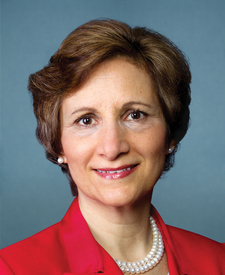
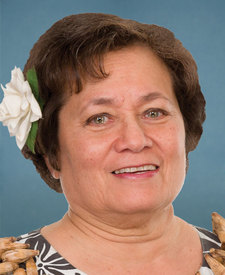
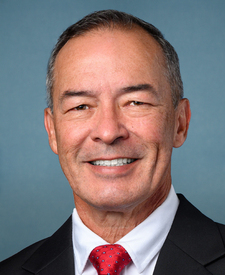
In CommitteeMs. Bonamici (for herself, Mrs. Radewagen, and Mr. Moylan) introduced …
Referred to the Subcommittee on Coast Guard and Maritime Transportation.
Referred to the Committee on Transportation and Infrastructure, and in …
Introduced in House
Stakeholder Effects
cui bono?How this legislation distributes effects. Mention counts reflect frequency, not effect magnitude.
Commerce Department officials, Indian Tribes, NOAA marine debris programs
Positive-direction: Indian Tribes, NOAA marine debris programs
Negative-direction: Commerce Department officials
Bill Structure & Actor Mappings
Who is "The Secretary" in each section?
We use a combination of our own taxonomy and classification in addition to large language models to assess meaning and potential beneficiaries. High confidence means strong textual evidence. Always verify with the original bill text.
Learn more about our methodology