No Paydays for Hostage-Takers Act
Summary
What This Bill Does
The No Paydays for Hostage-Takers Act focuses on Iran-linked hostage-taking and wrongful detention of United States nationals. It requires the President to report every 180 days for six years on the $6 billion transferred from restricted Iranian accounts in South Korea to restricted accounts in Qatar, including transaction details, financial institutions, goods purchased, end users, account balances, and whether credible evidence shows non-humanitarian use or increased Iranian defense, intelligence, or malign foreign spending. It also requires annual sanctions reviews under the Robert Levinson Hostage Recovery and Hostage-Taking Accountability Act, travel limits for Iranian diplomats at the United Nations, reports on blocked Iranian assets over $100,000, international asset-freeze coordination, a passport-risk determination for travel to Iran, and a strategy to deter hostage-taking without ransom payments.
Who Benefits and How
United States nationals at risk of wrongful detention benefit from stronger deterrence tools, recurring sanctions reviews, a no-ransom strategy, and passport-risk assessment for Iran travel. Families of wrongfully detained Americans benefit from more congressional oversight of hostage-taking cases and related sanctions determinations. Congressional foreign affairs, financial services, banking, and judiciary committees benefit from recurring reports on restricted Iranian funds, blocked assets, sanctions determinations, asset-seizure coordination, and deterrence strategy. U.S. national security agencies benefit from a clearer policy direction to identify penalties, coordinate with allies, and restrict travel by sanctioned Iranian representatives.
Who Bears the Burden and How
The Government of Iran, Iranian officials, sanctioned Iranian individuals, and foreign persons supporting hostage-taking face sanctions review, asset-freeze pressure, travel restrictions, and scrutiny of restricted funds. Iranian diplomats at the United Nations face visa denial rules tied to existing terrorism and weapons-proliferation executive orders. U.S. travelers to Iran could face passport invalidation or special-validation requirements if the Secretary of State makes the risk determination. The President, State Department, Treasury Department, Attorney General, and other executive officials must prepare recurring reports, certifications, asset reviews, international coordination updates, and a deterrence strategy over multi-year periods.
Key Provisions
- Requires recurring reports and certifications on the $6 billion transferred from restricted Iranian accounts in South Korea to Qatar.
- Requires annual sanctions reviews and reports for Iran-linked hostage-taking or wrongful detention cases under the Robert Levinson Act.
- Restricts U.N.-related travel for Iranian diplomats covered by terrorism or weapons-proliferation sanctions authorities.
- Requires reports on identifiable blocked Iranian assets valued above $100,000 and any unblocking, unfreezing, transfer, or U.S. waiver action.
- Directs reporting on international efforts to restrain, freeze, seize, confiscate, or forfeit sanctioned Iranian assets.
- Requires a State Department determination and report on invalidating U.S. passports for travel to Iran.
- Requires a whole-of-government strategy to deter hostage-taking while identifying policies barring ransom payments.
Evidence Chain:
This summary is generated from the full bill text using AI analysis. Expand "Detailed Analysis" below for identified beneficiaries/burden bearers with clause-level evidence links.
At a Glance
What This Bill Does
Adds reporting, sanctions-review, visa-restriction, asset-freeze, passport, and strategy requirements aimed at deterring Iran-linked hostage-taking and wrongful detention of United States nationals, including recurring oversight of the $6 billion in restricted Iranian funds transferred to Qatar.
Key Policy Areas
Foreign Policy, National Security, Sanctions
Primary Purpose
Adds reporting, sanctions-review, visa-restriction, asset-freeze, passport, and strategy requirements aimed at deterring Iran-linked hostage-taking and wrongful detention of United States nationals, including recurring oversight of the $6 billion in restricted Iranian funds transferred to Qatar.
Policy Domains
House resolution provisions
Identified Gains
- United States nationals at risk of detention
- Families of wrongfully detained Americans
- Congressional oversight committees
- U.S. national security agencies
Identified Costs
- Government of Iran
- Sanctioned Iranian individuals
- Iranian diplomats at the United Nations
- U.S. travelers to Iran
- Executive Branch agencies
Sponsors


Legislative Progress
ReportedOrdered to be Reported by the Yeas and Nays: 45 …
Committee Consideration and Mark-up Session Held
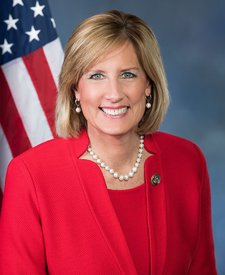
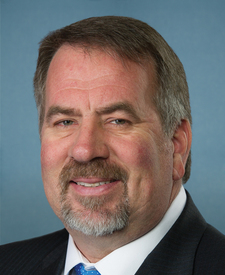
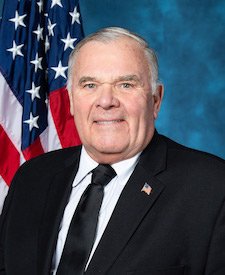
Mr. Baumgartner (for himself, Mr. Moskowitz, Ms. Tenney, Mr. Amodei …
Referred to the Committee on Foreign Affairs, and in addition …
Introduced in House
Stakeholder Effects
cui bono?How this legislation distributes effects. Mention counts reflect frequency, not effect magnitude.
Executive Branch agencies, Government of Iran, U.S. State Department
Positive-direction: U.S. national security agencies
Negative-direction: Executive Branch agencies, Government of Iran, U.S. State Department, U.S. Treasury Department
Foreign hostage-taking actors, Hostile hostage-taking actors, Sanctioned Iranian asset holders
United States nationals abroad, United States nationals at risk of detention, United States nationals detained in Iran
Financial institutions processing restricted funds
Bill Structure & Actor Mappings
Who is "The Secretary" in each section?
- "state"
- → Secretary of State
- "treasury"
- → Secretary of the Treasury
- "president"
- → President of the United States
- "committees"
- → House and Senate foreign affairs, financial services, banking, and judiciary committees
- "attorney_general"
- → Attorney General
We use a combination of our own taxonomy and classification in addition to large language models to assess meaning and potential beneficiaries. High confidence means strong textual evidence. Always verify with the original bill text.
Learn more about our methodology