To establish a program and strategy to support internet freedom and counter censorship efforts in Iran, and for other purposes.
Analysis under review: This bill has generated analysis that may be too generic or incomplete. Clause-level evidence remains available below.
Summary
What This Bill Does
The Maximum Support Act establishes a comprehensive U.S. strategy to support internet freedom in Iran, counter regime censorship, and assist the Iranian people in pursuing democratic governance. It creates an interagency task force (State, Treasury, and the U.S. Agency for Global Media) to develop VPN services, satellite internet access via direct-to-cell and eSIM technology, and countermeasures against regime-built surveillance VPNs. The bill authorizes confiscation of Iranian government assets held in U.S. jurisdiction and redirects those funds to support democracy programs, a strikers' fund for nonviolent opposition, humanitarian aid, and human rights documentation. It requires a strategy ensuring U.S. sanctions do not block Iranian civilians from accessing internet freedom tools, mandates a whole-of-government approach (State, Treasury, Intelligence Community, USAGM) to support democratic transition, directs the Secretary of State to determine whether to designate Iran's Ministry of Intelligence and Security (MOIS) as a Foreign Terrorist Organization, establishes programs to encourage defections from the Iranian regime, and creates a cybersecurity support program for Iranian dissidents, journalists, and civil society.
Who Benefits and How
- Iranian civilians and internet users benefit from VPN services, satellite internet access, eSIM distribution, and sanctions waivers designed to ensure they can access uncensored internet despite regime shutdowns and content blocking.
- Iranian dissidents, activists, and journalists benefit from dedicated cybersecurity tools, encryption technology, training against regime cyberattacks, and rapid-response technical support.
- Iranian pro-democracy movements and strikers benefit from a funded strikers' fund for those engaged in nonviolent opposition and from diplomatic and intelligence support for democratic transition efforts.
- Iranian officials and security forces considering defection benefit from safe communication channels, safety assurances, financial and housing assistance, and international protection coordination.
- Technology companies providing internet freedom tools benefit from clear sanctions guidelines, streamlined license/waiver processes, and government partnerships to expand censorship-resistant services in Iran.
- U.S. satellite internet and VPN providers benefit from government contracts and partnerships to deploy direct-to-cell technology and secure VPN infrastructure for Iran.
- USAGM and Voice of America-type broadcasters benefit from an expanded mandate and resources for broadcasting into Iran and utilizing social media platforms.
Who Bears the Burden and How
- The Iranian regime (Government of Iran, IRGC, MOIS, Iranian judiciary) faces asset confiscation, potential FTO designation of MOIS, programs designed to encourage defections from its ranks, and technology deployments intended to circumvent its censorship apparatus.
- Department of State bears significant coordination and strategy development burdens: leading the interagency task force, developing multiple strategies within 180 days, establishing a Special Representative for Maximum Support, and coordinating with international partners.
- Department of the Treasury must develop sanctions exemption strategies, issue licenses and waivers, and help disrupt Iranian financial networks while not impeding civilian internet access.
- Intelligence Community must monitor regime suppression, support civil society actors, counter disinformation, and assist the defection program.
- Comptroller General and Inspectors General must conduct annual audits of confiscated fund expenditures and immediately terminate any expenditures that materially benefit the Iranian regime.
Key Provisions
- Creates interagency task force (State, Treasury, USAGM) for internet freedom in Iran with 180-day strategy deadline
- Requires VPN service, satellite direct-to-cell technology, and eSIM distribution programs for Iranian users
- Mandates vetting of technology partners to exclude regime affiliates
- Authorizes confiscation of all Iranian government assets in U.S. jurisdiction, deposited in Treasury general fund
- Establishes strikers' fund, humanitarian aid channel, and human rights documentation fund from confiscated assets
- Requires strategy ensuring sanctions do not block civilian internet freedom tools
- Directs determination on FTO designation of MOIS within 90 days
- Creates defection encouragement program with financial incentives and safety assurances
- Establishes cybersecurity support program for dissidents with secure tools, training, and rapid response
- Mandates annual audits with immediate termination of any spending that benefits the regime
Evidence Chain:
This summary is generated from the full bill text using AI analysis. Expand "Detailed Analysis" below for identified beneficiaries/burden bearers.
At a Glance
What This Bill Does
Establishes a comprehensive U.S. strategy to support internet freedom in Iran, counter regime censorship through VPN and satellite technology, confiscate Iranian government assets to fund pro-democracy programs, ensure sanctions do not impede civilian internet access, and support the Iranian people in pursuing a democratic political transition.
Key Policy Areas
Foreign Policy, Technology, National Security, Human Rights, Telecommunications, Sanctions
Primary Purpose
Establishes a comprehensive U.S. strategy to support internet freedom in Iran, counter regime censorship through VPN and satellite technology, confiscate Iranian government assets to fund pro-democracy programs, ensure sanctions do not impede civilian internet access, and support the Iranian people in pursuing a democratic political transition.
Policy Domains
Internet Freedom, Iran Regime Change, and Democracy Support
Identified Gains
Contextual inference, no direct clause citation- Iranian civilians and internet users (VPN, satellite, eSIM access)
- Iranian dissidents, activists, and journalists (cybersecurity tools, training)
- Iranian pro-democracy movements (strikers' fund, diplomatic support)
- Technology companies providing internet freedom tools (sanctions clarity, licenses)
- U.S. satellite internet and VPN providers (government partnerships)
- USAGM broadcasters (expanded Iran mandate)
Contextual inference, no direct clause citation
Identified Costs
Contextual inference, no direct clause citation- Iranian regime (IRGC, MOIS, Iranian judiciary) -- asset confiscation, FTO designation, defection programs
- Department of State -- task force leadership, strategy development, Special Representative
- Department of the Treasury -- sanctions exemptions, financial network disruption
- Intelligence Community -- monitoring, civil society support, counter-disinformation
- Comptroller General and IGs -- annual audits of confiscated fund expenditures
Contextual inference, no direct clause citation
Sponsors
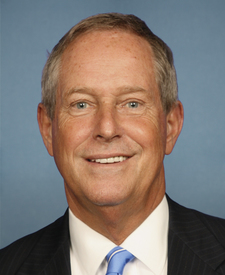
Joe Wilson
R-SC | Primary Sponsor

Legislative Progress
IntroducedMr. Wilson of South Carolina (for himself and Mr. Panetta) …
Impact analysis is available but no clear stakeholder effects identified. View clause-level analysis →
Bill Structure & Actor Mappings
Who is "The Secretary" in each section?
- "usagm_ceo"
- → CEO of the U.S. Agency for Global Media
- "the_president"
- → President of the United States
- "comptroller_general"
- → Comptroller General of the United States
- "the_secretary_of_state"
- → Secretary of State
- "the_secretary_of_treasury"
- → Secretary of the Treasury
- "director_of_national_intelligence"
- → Director of National Intelligence
Key Definitions
Terms defined in this bill
Short title of the bill (HR 2614-119).
We use a combination of our own taxonomy and classification in addition to large language models to assess meaning and potential beneficiaries. High confidence means strong textual evidence. Always verify with the original bill text.
Learn more about our methodology