Expanding Partnerships for Innovation and Competitiveness Act
Summary
What This Bill Does
The Expanding Partnerships for Innovation and Competitiveness Act establishes the Foundation for Standards and Metrology as a nonprofit corporation supporting the National Institute of Standards and Technology. Its mission is to advance measurement science, technical standards, technology, economic security, and collaboration with researchers, higher education, industry, nonprofit, philanthropic, state, Tribal, and local partners. The Foundation can support international metrology and standards engagement, studies, benchmarks, research infrastructure, emerging-technology facilities, commercialization of federally funded research, education, outreach, and direct support for NIST associates through fellowships, grants, stipends, travel, health insurance, professional development, housing, technical assistance, awards, and safety training. It is not a federal agency, can solicit and accept donations, is governed by an 11-member voting board plus nonvoting NIST representation, must have bylaws, ethics, conflict-of-interest, intellectual-property, audit, and transparency rules, must publish strategic and annual reports, must undergo annual financial audits and a GAO review within five years, and may receive annual transfers of $500,000 to $1.25 million from Commerce beginning in fiscal year 2026.
Who Benefits and How
NIST researchers benefit because the Foundation can support facilities, research infrastructure, technical standards, commercialization, and direct associate support. NIST associates benefit from fellowships, grants, stipends, travel, health insurance, professional development, housing, assistance, awards, and safety training. Industry standards bodies benefit from a dedicated public-private partner for measurement science, benchmarks, and technical standards infrastructure. Universities and nonprofit research organizations benefit from new collaboration channels around emerging technologies and federally funded research commercialization.
Who Bears the Burden and How
The Foundation board must establish bylaws, ethics rules, conflict standards, donor limits, intellectual-property policies, strategic plans, reports, audits, and transparency procedures. Commerce Department officials must establish the Foundation through NIST, appoint initial board members, designate liaisons, and manage annual transfers. Foundation donors face public reporting of support sources, restrictions, and audit visibility. The Government Accountability Office must evaluate the Foundation within five years and report recommendations to science and commerce committees.
Key Provisions
- Creates the nonprofit Foundation for Standards and Metrology to support NIST measurement science, technical standards, and technology commercialization.
- Authorizes fellowships, grants, stipends, travel, health insurance, housing, professional development, and other support for NIST associates.
- Requires board governance, bylaws, conflict-of-interest controls, donor transparency, strategic plans, annual reports, audits, and GAO review.
- Authorizes NIST transfers of $500,000 to $1,250,000 per fiscal year beginning in fiscal year 2026.
Evidence Chain:
This summary is generated from the full bill text using AI analysis. Expand "Detailed Analysis" below for identified beneficiaries/burden bearers with clause-level evidence links.
At a Glance
What This Bill Does
Creates a nonprofit Foundation for Standards and Metrology to support NIST measurement science, technical standards, research facilities, commercialization, education, NIST associates, and public-private collaboration, with board, conflict-of-interest, reporting, audit, GAO review, and annual Commerce transfer rules.
Key Policy Areas
Science, Technology, Standards, Research
Primary Purpose
Creates a nonprofit Foundation for Standards and Metrology to support NIST measurement science, technical standards, research facilities, commercialization, education, NIST associates, and public-private collaboration, with board, conflict-of-interest, reporting, audit, GAO review, and annual Commerce transfer rules.
Policy Domains
Resolution provisions
Identified Gains
- NIST researchers
- NIST associates
- Industry standards bodies
- Universities
Identified Costs
- Foundation board members
- Commerce Department officials
- Foundation donors
- Government Accountability Office
Sponsors




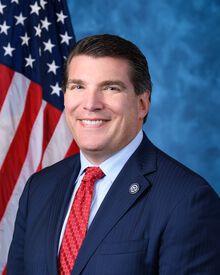
Legislative Progress
In CommitteeMs. Stevens (for herself and Mr. Obernolte) introduced the following …
Referred to the House Committee on Science, Space, and Technology.
Introduced in House
Stakeholder Effects
cui bono?How this legislation distributes effects. Mention counts reflect frequency, not effect magnitude.
Industry standards bodies, NIST associates, NIST researchers
Bill Structure & Actor Mappings
Who is "The Secretary" in each section?
We use a combination of our own taxonomy and classification in addition to large language models to assess meaning and potential beneficiaries. High confidence means strong textual evidence. Always verify with the original bill text.
Learn more about our methodology