Worker Enfranchisement Act
Summary
What This Bill Does
The Worker Enfranchisement Act amends National Labor Relations Act section 9 to change the voting threshold for exclusive representation. A union or other representative could not serve as the exclusive representative of employees in a bargaining unit unless it was selected by a majority of voters in a secret ballot election where at least two-thirds of eligible employees voted. The bill also conforms section 9(c)(3) language and applies the amendments to elections occurring on or after the date six months after enactment. The practical effect is to make exclusive bargaining representation depend not only on majority support among voters, but also on a high turnout threshold among eligible employees.
Who Benefits and How
Employees in bargaining units benefit from a guaranteed secret ballot and a two-thirds turnout requirement before exclusive representation attaches. Workers skeptical of union representation benefit because low-turnout elections would not be enough to impose an exclusive representative. Employers benefit from a higher procedural threshold before they must bargain with a newly certified exclusive representative. Decertification advocates benefit from a statutory argument that representation should reflect broad employee participation.
Who Bears the Burden and How
Labor unions bear the burden because organizing campaigns must produce both majority support among voters and turnout by at least two-thirds of eligible employees. The National Labor Relations Board must revise election procedures, notices, vote counting, and certification standards. Union supporters in low-participation workplaces may lose representation elections even when a majority of ballots favor representation. Workplace election administrators must manage the six-month transition and apply the new threshold to later elections.
Key Provisions
- Amends National Labor Relations Act section 9 to require secret ballot selection of exclusive representatives.
- Requires participation by at least two-thirds of eligible employees before an exclusive representative may be certified.
- Provides that a majority of voters must select the representative in the qualifying election.
- Applies the new election rule six months after enactment.
Evidence Chain:
This summary is generated from the full bill text using AI analysis. Expand "Detailed Analysis" below for identified beneficiaries/burden bearers.
At a Glance
What This Bill Does
Requires exclusive representatives under the National Labor Relations Act to be selected by secret ballot in elections where at least two-thirds of eligible employees vote, with the new election standard applying six months after enactment.
Key Policy Areas
Labor, Unions, Workplace Democracy
Primary Purpose
Requires exclusive representatives under the National Labor Relations Act to be selected by secret ballot in elections where at least two-thirds of eligible employees vote, with the new election standard applying six months after enactment.
Policy Domains
Resolution provisions
Identified Gains
Contextual inference, no direct clause citation- Employees in bargaining units
- Workers skeptical of union representation
- Employers
- Decertification advocates
Contextual inference, no direct clause citation
Identified Costs
Contextual inference, no direct clause citation- Labor unions
- National Labor Relations Board
- Union supporters
- Workplace election administrators
Contextual inference, no direct clause citation
Sponsors

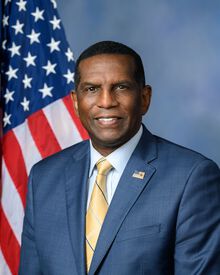
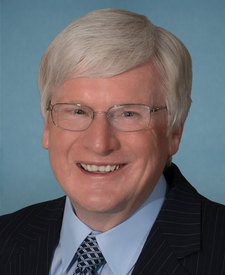


Legislative Progress
In CommitteeMr. Onder (for himself and Mr. Messmer) introduced the following …
Referred to the House Committee on Education and Workforce.
Introduced in House
Bill Structure & Actor Mappings
Who is "The Secretary" in each section?
We use a combination of our own taxonomy and classification in addition to large language models to assess meaning and potential beneficiaries. High confidence means strong textual evidence. Always verify with the original bill text.
Learn more about our methodology