SAFETY Act of 2025
Summary
What This Bill Does
The SAFETY Act amends the Agricultural Trade Act of 1978 to protect common names used by U.S. agricultural producers, processors, and exporters in foreign markets. It defines common name to include ordinarily or customarily used names on agricultural commodity or food-product packaging, wine grape varietal names and traditional wine descriptors that are not federally listed wine appellations of origin, and uses consistent with Codex Alimentarius standards. The bill names examples such as asiago, basmati, feta, gruyere, parmesan, ricotta, Swiss, pale ale, porter, stout, pilsener, kolsch, sherry, and lager. It lets USDA consider dictionaries, newspapers, professional literature, reliable market websites, domestic or international standards, and customary use in production or marketing. It also treats foreign prohibitions on U.S. common-name use as an unfair trade barrier and requires the Secretary of Agriculture to coordinate with the U.S. Trade Representative to secure the right to use common names through trade agreements, memoranda, or exchanges of letters, with semiannual briefings to House and Senate agriculture, finance, and trade committees.
Who Benefits and How
U.S. dairy farmers benefit because names such as asiago, feta, parmesan, ricotta, and Swiss are listed as common names that negotiators must defend. U.S. wine manufacturers benefit because grape varietal terms and traditional descriptors can be protected when they are not appellations of origin. U.S. beer manufacturers benefit because product names such as pale ale, porter, stout, pilsener, kolsch, and lager are listed as common names. Food exporters benefit because foreign restrictions on common-name use become a trade-barrier issue for USDA and USTR negotiations.
Who Bears the Burden and How
Foreign government agencies using geographic-indication restrictions face U.S. trade pressure when they prohibit common names for American products. The Department of Agriculture must evaluate common-name evidence and coordinate negotiations with the U.S. Trade Representative. The U.S. Trade Representative must seek bilateral, plurilateral, or multilateral assurances and brief Congress semiannually. Import competitor manufacturers relying on exclusive naming claims may lose leverage in foreign markets if U.S. common-name rights are secured.
Key Provisions
- Adds common-name definitions for agricultural commodities, food products, wine terms, beer styles, and listed examples.
- Expands Agricultural Trade Act trade-barrier coverage to foreign prohibitions on common names for U.S. products.
- Directs USDA and USTR to negotiate agreements, memoranda, or letters preserving U.S. common-name use abroad.
- Requires semiannual congressional briefings on common-name negotiation efforts and results.
Evidence Chain:
This summary is generated from the full bill text using AI analysis. Expand "Detailed Analysis" below for identified beneficiaries/burden bearers with clause-level evidence links.
At a Glance
What This Bill Does
Defends U.S. agricultural, food, wine, and beer common names in foreign markets by defining protected common names, treating foreign restrictions as trade barriers, directing USDA-USTR negotiations, and requiring semiannual congressional briefings.
Key Policy Areas
Agriculture, Trade, Food Manufacturing
Primary Purpose
Defends U.S. agricultural, food, wine, and beer common names in foreign markets by defining protected common names, treating foreign restrictions as trade barriers, directing USDA-USTR negotiations, and requiring semiannual congressional briefings.
Policy Domains
Resolution provisions
Identified Gains
- U.S. dairy farmers
- U.S. wine manufacturers
- U.S. beer manufacturers
- Food exporters
Identified Costs
- Foreign government agencies
- Department of Agriculture
- U.S. trade attorneys
- Import competitor manufacturers
Sponsors

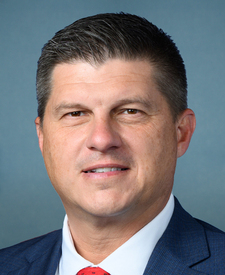



Legislative Progress
In CommitteeMr. Johnson of South Dakota (for himself, Mr. Costa, Mrs. …
Referred to the Committee on Agriculture, and in addition to …
Introduced in House
Stakeholder Effects
cui bono?How this legislation distributes effects. Mention counts reflect frequency, not effect magnitude.
Department of Agriculture, U.S. Trade Representative
Bill Structure & Actor Mappings
Who is "The Secretary" in each section?
We use a combination of our own taxonomy and classification in addition to large language models to assess meaning and potential beneficiaries. High confidence means strong textual evidence. Always verify with the original bill text.
Learn more about our methodology