Capping Prescription Costs Act of 2025
Summary
What This Bill Does
The Capping Prescription Costs Act adds a prescription-drug cost-sharing limit across several health coverage statutes. For plan years beginning in 2026, covered health plans may not impose more than $2,000 per year in prescription drug cost-sharing on each enrolled individual or more than $4,000 per year on each family. In later years, the caps rise with the medical care component of CPI-U and any increase is rounded down to the next lowest multiple of $5. The bill inserts parallel requirements into the Affordable Care Act essential health benefits out-of-pocket framework, the Public Health Service Act for group health plans and issuers, ERISA, and the Internal Revenue Code. The amendments apply to plan years beginning on or after January 1, 2026.
Who Benefits and How
Patients with high prescription costs benefit because annual drug cost-sharing is capped at $2,000 for an individual. Families with covered prescriptions benefit because family prescription drug cost-sharing is capped at $4,000 per year. Workers in employer-sponsored plans benefit because the cap is copied into ERISA and Internal Revenue Code group plan rules. Consumer health advocates benefit from a clear national ceiling on insured prescription drug out-of-pocket exposure.
Who Bears the Burden and How
Group health plans must redesign benefits so covered prescription drug cost-sharing stays within the new annual caps. Health insurance issuers must administer the individual and family limits and apply future medical-CPI adjustments. Employer plan sponsors may bear higher premium or plan-cost exposure if prescription cost-sharing above the caps shifts to the plan. Federal health and labor regulators must update compliance guidance across ACA, PHSA, ERISA, and tax-code provisions.
Key Provisions
- Limits covered prescription drug cost-sharing to $2,000 per enrolled individual for plan years beginning in 2026.
- Limits covered prescription drug cost-sharing to $4,000 per family for plan years beginning in 2026.
- Indexes later caps to the medical care component of CPI-U and rounds increases down to the nearest $5.
- Applies the cap through ACA, Public Health Service Act, ERISA, and Internal Revenue Code group health plan rules.
Evidence Chain:
This summary is generated from the full bill text using AI analysis. Expand "Detailed Analysis" below for identified beneficiaries/burden bearers.
At a Glance
What This Bill Does
Caps annual prescription drug cost-sharing in individual, family, group, ERISA, and employer health plans at $2,000 per enrolled individual and $4,000 per family starting in 2026, with later medical-CPI indexing rounded down to the nearest $5.
Key Policy Areas
Health Insurance, Prescription Drugs, Consumer Protection
Primary Purpose
Caps annual prescription drug cost-sharing in individual, family, group, ERISA, and employer health plans at $2,000 per enrolled individual and $4,000 per family starting in 2026, with later medical-CPI indexing rounded down to the nearest $5.
Policy Domains
Resolution provisions
Identified Gains
Contextual inference, no direct clause citation- Patients with high prescription costs
- Families with covered prescriptions
- Workers in employer-sponsored plans
- Consumer health advocates
Contextual inference, no direct clause citation
Identified Costs
Contextual inference, no direct clause citation- Group health plans
- Health insurance issuers
- Employer plan sponsors
- Federal health regulators
Contextual inference, no direct clause citation
Sponsors




Legislative Progress
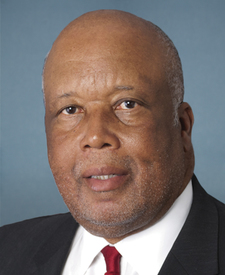
In CommitteeMr. Horsford (for himself, Mr. Figures, Ms. Stansbury, Mr. Johnson …
Referred to the Committee on Energy and Commerce, and in …
Introduced in House
Bill Structure & Actor Mappings
Who is "The Secretary" in each section?
We use a combination of our own taxonomy and classification in addition to large language models to assess meaning and potential beneficiaries. High confidence means strong textual evidence. Always verify with the original bill text.
Learn more about our methodology