Secure Family Futures Act of 2025
Summary
What This Bill Does
The Secure Family Futures Act changes two Internal Revenue Code rules for insurance-company investment portfolios. First, it adds notes, bonds, debentures, and other evidence of indebtedness held by an applicable insurance company to the list of assets that are not capital assets. The definition covers many domestic insurance companies and face-amount certificate companies while excluding small electing insurers, certain foreign insurers, and Blue Cross-style section 833 organizations. Second, it allows capital losses incurred by applicable insurance companies to be carried forward for 10 succeeding taxable years, parallel to the treatment already available for foreign expropriation losses. The debt rule applies to instruments acquired after December 31, 2025, and the carryover rule applies to net capital losses in taxable years beginning after December 31, 2025.
Who Benefits and How
Applicable insurance companies benefit because debt instruments in their portfolios would receive ordinary tax treatment rather than capital-asset treatment. Life insurers and other covered domestic insurers benefit because losses on debt holdings can be matched more flexibly against taxable income. Face-amount certificate companies benefit because they are included in the applicable-insurance-company definition for the new debt rule. Insurance tax planners benefit from a clearer statutory rule for debt holdings and a 10-year capital loss carryover window.
Who Bears the Burden and How
The Internal Revenue Service must administer a new section 1221 debt exception and police which insurance companies qualify. Federal taxpayers bear the revenue cost if covered insurers use ordinary loss treatment or longer loss carryovers to reduce tax liability. Excluded insurers, including small electing insurers and certain foreign insurers, do not receive the new tax treatment. Treasury tax rule writers must update guidance for debt classification and capital loss carryovers after 2025.
Key Provisions
- Amends section 1221 to exclude certain insurance-company debt instruments from capital-asset treatment.
- Defines applicable insurance company while excluding small electing insurers, certain foreign insurers, and section 833 organizations.
- Extends a 10-year capital loss carryover rule to losses incurred by applicable insurance companies.
- Applies the debt rule to instruments acquired after December 31, 2025, and the loss rule to taxable years after 2025.
Evidence Chain:
This summary is generated from the full bill text using AI analysis. Expand "Detailed Analysis" below for identified beneficiaries/burden bearers with clause-level evidence links.
At a Glance
What This Bill Does
Changes federal tax treatment for applicable insurance companies by excluding their debt instruments from capital-asset treatment and allowing certain insurance-company capital losses to be carried forward for 10 succeeding taxable years.
Key Policy Areas
Tax, Insurance, Financial Services
Primary Purpose
Changes federal tax treatment for applicable insurance companies by excluding their debt instruments from capital-asset treatment and allowing certain insurance-company capital losses to be carried forward for 10 succeeding taxable years.
Policy Domains
Resolution provisions
Identified Gains
- Applicable insurance companies
- Life insurers
- Face-amount certificate companies
- Insurance tax planners
Identified Costs
- Internal Revenue Service
- Federal taxpayers
- Excluded insurers
- Treasury tax rule writers
Sponsors


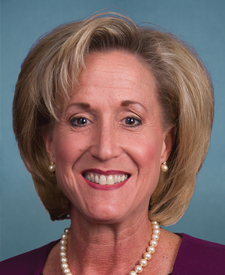


Legislative Progress
In CommitteeMr. Feenstra (for himself, Ms. Sewell, and Mr. Flood) introduced …
Referred to the House Committee on Ways and Means.
Introduced in House
Stakeholder Effects
cui bono?How this legislation distributes effects. Mention counts reflect frequency, not effect magnitude.
Applicable insurance companies, Face-amount certificate companies
Bill Structure & Actor Mappings
Who is "The Secretary" in each section?
We use a combination of our own taxonomy and classification in addition to large language models to assess meaning and potential beneficiaries. High confidence means strong textual evidence. Always verify with the original bill text.
Learn more about our methodology