CARE Act of 2025
Summary
What This Bill Does
The CARE Act directs the Center for Medicare and Medicaid Innovation to include a Comprehensive Alternative Response for Emergencies model within two years. Under the five-year model, Medicare Part B pays ground ambulance providers or arranged entities for treatment services furnished in response to an emergency medical call when a ground ambulance is dispatched but the beneficiary is not transported for a payable ambulance trip. Payment rates must generally align with what would have been paid had transport occurred. If telehealth is furnished with those emergency treatment services, the beneficiary's location is treated as a telehealth originating site. State and local licensure requirements and protocols still apply and may include online medical direction through audiovisual telecommunications. GAO must report within four years on beneficiary access, outcomes, resource use, comparisons with traditional emergency transport, regional and demographic variation, best practices, challenges, and recommendations.
Who Benefits and How
Medicare beneficiaries needing emergency care benefit if ambulance teams can treat them on scene without forcing transport for payment. Ground ambulance suppliers benefit because Medicare would pay for qualifying emergency treatment even when no transport occurs. Telehealth clinicians benefit because the beneficiary's emergency location is treated as an originating site when telehealth supports the model. Emergency medical systems benefit from evidence on whether treat-in-place models improve outcomes and reduce unnecessary transport.
Who Bears the Burden and How
CMS Innovation Center staff must design, implement, pay, and evaluate the five-year model. Ground ambulance providers must follow state and local licensure rules, protocols, and medical-direction requirements for non-transport treatment. Federal taxpayers may bear new Part B costs for treatment episodes that previously did not produce ambulance transport payment. GAO must collect stakeholder input and report on outcomes, resource utilization, regional variation, challenges, and best practices.
Key Provisions
- Requires CMMI to test a Comprehensive Alternative Response for Emergencies model within two years.
- Provides Medicare Part B payment for qualifying ground ambulance emergency treatment without corresponding transport.
- Aligns model payment rates generally with ambulance transport payments and treats related telehealth locations as originating sites.
- Requires a GAO report within four years on access, outcomes, utilization, variation, best practices, challenges, and recommendations.
Evidence Chain:
This summary is generated from the full bill text using AI analysis. Expand "Detailed Analysis" below for identified beneficiaries/burden bearers with clause-level evidence links.
At a Glance
What This Bill Does
Requires CMMI to test a five-year Medicare Part B Comprehensive Alternative Response for Emergencies model paying ground ambulance providers for emergency treatment without transport, aligned with ambulance transport payment and paired with telehealth originating-site treatment.
Key Policy Areas
Medicare, Emergency Medical Services, Telehealth
Primary Purpose
Requires CMMI to test a five-year Medicare Part B Comprehensive Alternative Response for Emergencies model paying ground ambulance providers for emergency treatment without transport, aligned with ambulance transport payment and paired with telehealth originating-site treatment.
Policy Domains
Resolution provisions
Identified Gains
- Medicare emergency patients
- Ground ambulance suppliers
- Telehealth clinicians
- Emergency medical systems
Identified Costs
- CMS Innovation Center
- Ground ambulance providers
- Federal taxpayers
- Government Accountability Office
Sponsors


Legislative Progress
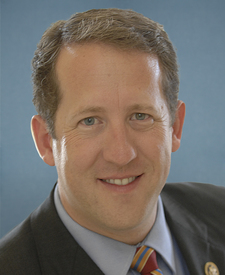
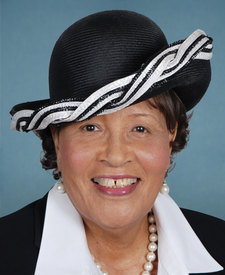
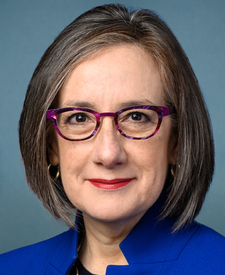
In CommitteeMr. Carey (for himself, Mr. Doggett, Mrs. Miller of West …
Referred to the Committee on Energy and Commerce, and in …
Introduced in House
Stakeholder Effects
cui bono?How this legislation distributes effects. Mention counts reflect frequency, not effect magnitude.
Bill Structure & Actor Mappings
Who is "The Secretary" in each section?
We use a combination of our own taxonomy and classification in addition to large language models to assess meaning and potential beneficiaries. High confidence means strong textual evidence. Always verify with the original bill text.
Learn more about our methodology