FEMA Temporary Housing Assistance Improvement Act
Summary
What This Bill Does
The FEMA Temporary Housing Assistance Improvement Act changes one Stafford Act eligibility rule. When determining temporary housing assistance under section 408(c)(1), the President may not consider insurance to be a duplication of benefits for purposes of Stafford Act section 312. In practice, disaster survivors with insurance would not be denied or reduced for temporary FEMA housing assistance merely because they have insurance coverage that might otherwise be treated as duplicative. The bill is aimed at the gap between having insurance and still needing temporary housing after a disaster.
Who Benefits and How
Insured disaster survivors benefit because insurance coverage could not by itself be treated as a duplication that blocks FEMA temporary housing assistance. Homeowners displaced by disasters benefit if they can obtain temporary housing help while insurance claims, repairs, or replacement housing remain unresolved. Renters with insurance benefit from a clearer path to temporary housing assistance after a qualifying disaster. Local recovery organizations benefit when FEMA housing eligibility is less likely to leave insured households without temporary shelter.
Who Bears the Burden and How
FEMA administrators must change section 408 temporary housing eligibility reviews so insurance is not counted as a duplication of benefits. Federal taxpayers may bear higher temporary housing assistance costs for households that also have insurance. Disaster assistance caseworkers must distinguish insurance coverage from actual duplicate payment for the same temporary housing need. Budget officials must account for broader temporary housing eligibility after disasters.
Key Provisions
- Amends Stafford Act section 408(c)(1) on temporary housing assistance.
- Prohibits treating insurance as a duplication of benefits for section 312 purposes when determining temporary housing eligibility.
- Protects insured disaster survivors who still need temporary housing after a disaster.
- Expands practical FEMA housing eligibility without creating a new disaster assistance category.
Evidence Chain:
This summary is generated from the full bill text using AI analysis. Expand "Detailed Analysis" below for identified beneficiaries/burden bearers.
At a Glance
What This Bill Does
Bars FEMA from treating insurance as a duplication of benefits when determining eligibility for temporary housing assistance under Stafford Act section 408.
Key Policy Areas
Disaster Relief, Housing, FEMA
Primary Purpose
Bars FEMA from treating insurance as a duplication of benefits when determining eligibility for temporary housing assistance under Stafford Act section 408.
Policy Domains
Resolution provisions
Identified Gains
Contextual inference, no direct clause citation- Insured disaster survivors
- Displaced homeowners
- Renters with insurance
- Local recovery organizations
Contextual inference, no direct clause citation
Identified Costs
Contextual inference, no direct clause citation- Federal Emergency Management Agency
- Federal taxpayers
- Disaster assistance caseworkers
- Federal budget officials
Contextual inference, no direct clause citation
Sponsors
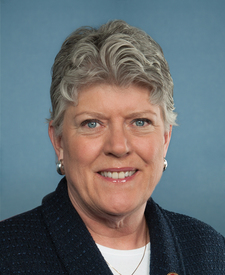
Julia Brownley
D-CA | Primary Sponsor

Legislative Progress
In CommitteeMs. Brownley (for herself and Ms. Chu) introduced the following …
Referred to the Subcommittee on Economic Development, Public Buildings, and …
Referred to the House Committee on Transportation and Infrastructure.
Introduced in House
Bill Structure & Actor Mappings
Who is "The Secretary" in each section?
We use a combination of our own taxonomy and classification in addition to large language models to assess meaning and potential beneficiaries. High confidence means strong textual evidence. Always verify with the original bill text.
Learn more about our methodology