Workplace Violence Prevention for Health Care and Social Service Workers Act
Summary
What This Bill Does
The Workplace Violence Prevention for Health Care and Social Service Workers Act directs the Secretary of Labor to issue an interim final OSHA standard within one year and a permanent standard later for workplace violence prevention in health care, social service, and similar settings. Covered facilities include hospitals, residential treatment facilities, nursing homes, skilled nursing facilities, hospices, memory care, long-term care, outpatient settings, correctional medical clinics, community care settings, psychiatric facilities, substance-use treatment centers, freestanding emergency centers, federal facilities, and similar places. Employers must create written facility-specific violence prevention plans within six months of the standard, with direct-care employee participation, hazard assessments, controls, staffing and security measures, reporting procedures, post-incident investigations, training, recordkeeping for at least five years, violent incident logs, annual summaries, electronic submission, and anti-retaliation rules. The bill preserves other federal, state, collective bargaining, domestic violence, stalking, dating violence, and sexual assault protections. It also amends Medicare provider agreements so hospitals and skilled nursing facilities not otherwise covered by OSHA or state plans must comply with the standard as a Medicare condition.
Who Benefits and How
Hospital workers benefit from enforceable workplace violence prevention plans, training, incident logs, and anti-retaliation protections. Social service workers benefit because covered services outside traditional hospitals must address workplace violence hazards and post-incident response. Nursing home and skilled nursing facility staff benefit when facilities must assess patient-specific risks, staffing, security, and environmental hazards. Employee representatives benefit from meaningful participation rights in plan development, annual evaluation, and access to records.
Who Bears the Burden and How
Health care employers must develop written plans, conduct risk assessments, train employees, investigate incidents, maintain logs, submit annual summaries, and update controls. Social service employers must comply with OSHA violence-prevention requirements tailored to covered services and facilities. The Department of Labor must issue standards, provide technical assistance, create templates and electronic submission systems, and report to Congress. Hospitals and skilled nursing facilities receiving Medicare funds must comply even if they are not otherwise subject to OSHA or a state occupational safety plan.
Key Provisions
- Requires OSHA to issue an interim final workplace violence prevention standard within one year.
- Directs covered employers to create written violence-prevention plans with direct-care employee participation, hazard assessment, controls, training, and post-incident response.
- Requires violent incident logs, five-year recordkeeping, annual summaries, electronic reporting, annual evaluations, and anti-retaliation protections.
- Applies the standard through Medicare participation rules to certain hospitals and skilled nursing facilities not otherwise covered by OSHA.
Evidence Chain:
This summary is generated from the full bill text using AI analysis. Expand "Detailed Analysis" below for identified beneficiaries/burden bearers with clause-level evidence links.
At a Glance
What This Bill Does
Requires OSHA to issue a workplace violence prevention standard for health care and social service employers, mandating facility-specific plans, hazard assessments, training, incident logs, anti-retaliation protections, annual reporting, and Medicare participation compliance for certain hospitals and skilled nursing facilities.
Key Policy Areas
Labor, Health Care, Workplace Safety
Primary Purpose
Requires OSHA to issue a workplace violence prevention standard for health care and social service employers, mandating facility-specific plans, hazard assessments, training, incident logs, anti-retaliation protections, annual reporting, and Medicare participation compliance for certain hospitals and skilled nursing facilities.
Policy Domains
Resolution provisions
Identified Gains
- Hospital workers
- Social service workers
- Skilled nursing facility staff
- Employee representatives
Identified Costs
- Health care employers
- Social service employers
- Department of Labor
- Medicare-funded hospitals
Sponsors


Legislative Progress
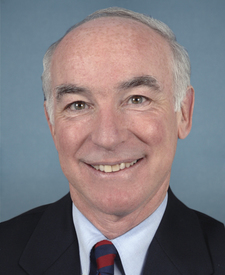
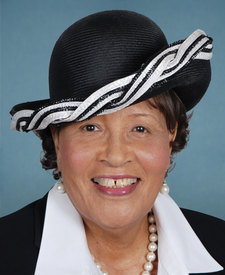
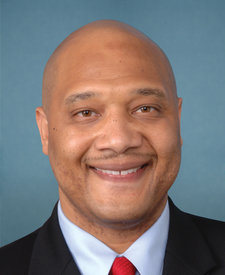
In CommitteeMr. Courtney (for himself, Mr. Bacon, Mr. Scott of Virginia, …
Referred to the Committee on Education and Workforce, and in …
Introduced in House
Stakeholder Effects
cui bono?How this legislation distributes effects. Mention counts reflect frequency, not effect magnitude.
Health care employers, Hospital workers
Positive-direction: Hospital workers
Negative-direction: Health care employers
Bill Structure & Actor Mappings
Who is "The Secretary" in each section?
We use a combination of our own taxonomy and classification in addition to large language models to assess meaning and potential beneficiaries. High confidence means strong textual evidence. Always verify with the original bill text.
Learn more about our methodology