Association Health Plans Act
Summary
What This Bill Does
The Association Health Plans Act changes ERISA so a group or association of employers can be treated as an employer for the limited purpose of sponsoring a group health plan even when its member employers are not in the same industry, trade, or profession. To qualify, the association must have existed for at least two years, have a substantial non-health-plan business purpose, avoid health-status-based membership conditions, make coverage available to employer members and their employees regardless of health status, and satisfy employee-count and governance rules. The bill also adds association-health-plan rules allowing actuarially sound modified community rating, employer-specific contribution adjustments, aggregation of self-employed members, and nondiscrimination protections for eligibility and premium rates.
Who Benefits and How
Small employers benefit because cross-industry trade associations and business groups could sponsor group health plans and pool employees across member firms. Self-employed workers benefit because groups made solely of self-employed individuals can qualify as an employer member group if they aggregate at least 20 self-employed members. Trade associations sponsoring health plans benefit from new authority to offer coverage as an ERISA employer plan. Small businesses joining AHPs may gain lower premiums or more plan options if pooled purchasing and employer-specific contribution rates reduce costs. Plan participants with pre-existing conditions benefit from rules barring eligibility or contribution differences based on health status.
Who Bears the Burden and How
Association health plan sponsors must maintain governance, nondiscrimination, rating, employee-count, and ERISA Part 7 compliance systems. The Department of Labor must interpret and enforce the new ERISA employer definition and association-plan rules. Health insurance carriers in individual and small-group markets could lose revenue opportunities if healthier small employers or self-employed workers shift into association plans. State insurance regulators retain authority where State law applies but must account for federally protected association plan structures. AHP administrators and third-party administrators must implement premium-rating and employer-member aggregation rules.
Key Provisions
- Expands ERISA's employer definition to include qualifying groups or associations of employers solely for sponsoring group health plans.
- Requires associations to exist for at least two years, maintain a substantial non-health-plan business purpose, and avoid health-status membership conditions.
- Authorizes AHPs to establish actuarially sound modified community base premium rates and adjust employer-member contribution rates by risk profile.
- Establishes aggregation rules for groups of at least 20 self-employed individuals as a single employer member group.
- Prohibits eligibility and contribution-rate discrimination based on health status factors.
- Provides that association health plans remain subject to ERISA Part 7 and incorporated Public Health Service Act protections.
Evidence Chain:
This summary is generated from the full bill text using AI analysis. Expand "Detailed Analysis" below for identified beneficiaries/burden bearers with clause-level evidence links.
At a Glance
What This Bill Does
Expands ERISA's employer definition so qualifying cross-industry employer associations may sponsor association health plans, then adds premium-rating, eligibility, nondiscrimination, and ERISA-compliance rules for those plans.
Key Policy Areas
Health Care, Labor, Insurance, Small Business
Primary Purpose
Expands ERISA's employer definition so qualifying cross-industry employer associations may sponsor association health plans, then adds premium-rating, eligibility, nondiscrimination, and ERISA-compliance rules for those plans.
Policy Domains
House resolution provisions
Identified Gains
- Small business employers seeking group coverage
- Self-employed workers
- Trade association plan administrators
- Small businesses joining AHPs
- Plan beneficiaries with pre-existing conditions
- Employee welfare plan participants
Identified Costs
- Association health plan administrators
- Department of Labor
- Health insurance providers in small-group markets
- State insurance agencies
- Employee welfare plan administrators
- AHP compliance officers
Sponsors



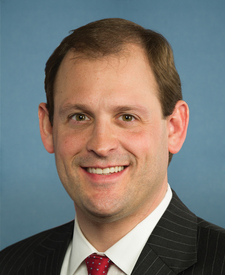

Legislative Progress
ReportedAdditional sponsors: Mr. Owens, Mr. Harris of North Carolina, Mr. …
Reported with an amendment, committed to the Committee of the …
Placed on the Union Calendar, Calendar No. 357.
Reported (Amended) by the Committee on Education and Workforce. H. …
Ordered to be Reported (Amended) by the Yeas and Nays: …
Committee Consideration and Mark-up Session Held
Mr. Walberg (for himself, Mr. Allen, Mr. Onder, Mr. Crenshaw, …
Referred to the House Committee on Education and Workforce.
Introduced in House
Stakeholder Effects
cui bono?How this legislation distributes effects. Mention counts reflect frequency, not effect magnitude.
Association health plan sponsors, Trade associations sponsoring health plans
Positive-direction: Trade associations sponsoring health plans
Negative-direction: Association health plan sponsors
Plan participants with pre-existing conditions
Small businesses joining AHPs, Small employers seeking group coverage
Bill Structure & Actor Mappings
Who is "The Secretary" in each section?
- "association"
- → Group or association of employers sponsoring a group health plan
- "employer_member"
- → Employer member of an association health plan
- "department_labor"
- → Department of Labor
We use a combination of our own taxonomy and classification in addition to large language models to assess meaning and potential beneficiaries. High confidence means strong textual evidence. Always verify with the original bill text.
Learn more about our methodology