Early Detection of Vision Impairments for Children Act of 2025
Summary
What This Bill Does
The Early Detection of Vision Impairments for Children Act adds a Public Health Service Act program for children's vision and eye health. HRSA may award grants or cooperative agreements to states, territories, Indian Tribes, Tribal organizations, Urban Indian organizations, child and family departments, health departments, public health departments, and state educational agencies to build statewide early detection and intervention systems. Awardees must use funds for at least three activities such as vision screening, referrals to eye care, state data systems, disparity reduction for rural and underserved children, culturally and linguistically competent family information, coordinated public health systems, and wrap-around vision services. Awardees must consult Maternal and Child Health, Medicaid EPSDT, CHIP, IDEA parts B and C, Indian Health Service, and consumer groups, submit annual public reports, and evaluate outcomes after four years. CDC technical-assistance grants fund data systems, dissemination, applied research, quality monitoring, and national goals. The bill authorizes $5 million annually for fiscal years 2026 through 2030 for the main program and $5 million annually for technical assistance.
Who Benefits and How
Children with vision problems benefit from earlier screening, referral, diagnosis, intervention, follow-up, and wrap-around vision services. Rural and underserved children benefit because awardees must identify strategies to expand access and reduce disparities in eye disease and condition detection. State health departments benefit from grants to build statewide children's vision systems and data infrastructure. Tribal health organizations benefit from eligibility for grants and required federal consultation on vision and eye health programs.
Who Bears the Burden and How
HRSA and CDC must administer grants, technical assistance, coordination, reporting, and evaluation requirements. State and Tribal awardees must consult multiple health and education programs, submit annual reports, evaluate outcomes, and make reports public. Federal taxpayers bear $10 million per year in authorized spending for fiscal years 2026 through 2030. Participating public health agencies must coordinate data, screening standards, referrals, and performance improvement across jurisdictions.
Key Provisions
- Authorizes HRSA grants or cooperative agreements for statewide early detection and intervention systems for children's vision and eye health.
- Requires funded programs to perform at least three activities covering screening, referrals, data systems, disparity reduction, public education, coordinated systems, and wrap-around services.
- Requires consultation with Maternal and Child Health, Medicaid EPSDT, CHIP, IDEA, Indian Health Service, and consumer groups plus annual public reports.
- Authorizes CDC technical assistance and $5 million annually for each program component from fiscal years 2026 through 2030.
Evidence Chain:
This summary is generated from the full bill text using AI analysis. Expand "Detailed Analysis" below for identified beneficiaries/burden bearers with clause-level evidence links.
At a Glance
What This Bill Does
Authorizes HRSA and CDC grant and cooperative-agreement programs for statewide children's vision screening, referral, intervention, data systems, public education, technical assistance, evaluation, and federal coordination from fiscal years 2026 through 2030.
Key Policy Areas
Health Care, Children, Public Health
Primary Purpose
Authorizes HRSA and CDC grant and cooperative-agreement programs for statewide children's vision screening, referral, intervention, data systems, public education, technical assistance, evaluation, and federal coordination from fiscal years 2026 through 2030.
Policy Domains
Resolution provisions
Identified Gains
- Children with vision problems
- Rural children needing eye care
- State health departments
- Tribal health organizations
Identified Costs
- Health Resources and Services Administration
- Centers for Disease Control and Prevention
- State vision program awardees
- Federal taxpayers
Sponsors
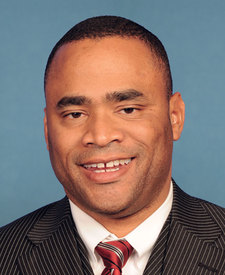
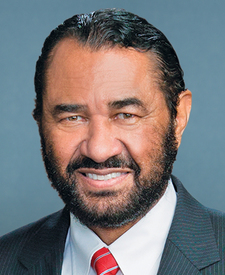
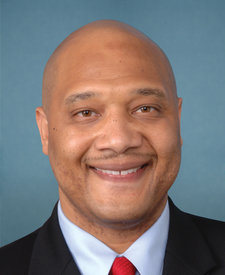
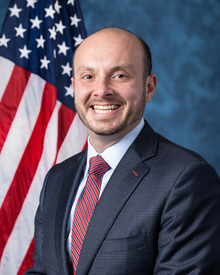
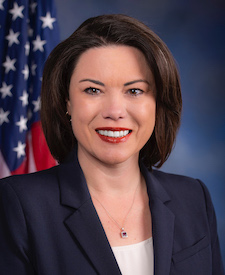
Legislative Progress
In CommitteeMr. Veasey (for himself and Mr. Bilirakis) introduced the following …
Referred to the House Committee on Energy and Commerce.
Introduced in House
Stakeholder Effects
cui bono?How this legislation distributes effects. Mention counts reflect frequency, not effect magnitude.
Health Resources and Services Administration, State health departments
Positive-direction: State health departments
Negative-direction: Health Resources and Services Administration
Bill Structure & Actor Mappings
Who is "The Secretary" in each section?
We use a combination of our own taxonomy and classification in addition to large language models to assess meaning and potential beneficiaries. High confidence means strong textual evidence. Always verify with the original bill text.
Learn more about our methodology