American Tank Car Modernization Act of 2025
Summary
What This Bill Does
The American Tank Car Modernization Act creates two Federal Railroad Administration technology programs. The main grant program funds freight railcar owners to buy and install onboard telematics systems or gateway devices that provide near real-time location, asset-health, commodity-safety, maintenance, and alert data. FRA must prioritize newly built railcars, certification events, and maintenance events in qualified facilities, then prioritize tank cars in toxic inhalation or poisonous inhalation hazard service, flammable service, hazardous-materials service, specialized service, other tank cars, and then other freight railcars. Qualified manufacturers and facilities cannot be owned or controlled by state-owned enterprises from countries of concern, and covered sensitive technology must comply with title 49 section 20171. A separate pilot assists railcar owners and manufacturers with onboard sensors for wheel and bearing temperature, hand brakes, hatches, internal temperature, and similar safety data. The bill authorizes $100 million per year for fiscal years 2026 through 2029 for telematics grants and $10 million per year for the sensor pilot, with reports to Congress.
Who Benefits and How
Freight railcar owners benefit from federal grants to install telematics and gateway devices on railcars. Tank car owners in hazardous-material service benefit first because the bill prioritizes TIH/PIH, flammable, hazardous-materials, and specialized tank cars. Railcar telematics manufacturers benefit from federally supported demand for GPS, gateway, diagnostics, and sensor systems. Shippers of hazardous commodities benefit if real-time asset health alerts reduce the chance that railcars become safety hazards.
Who Bears the Burden and How
FRA must create grant and pilot programs, apply priority rules, enforce qualified manufacturer and facility limits, and report implementation results. Federal taxpayers bear $110 million per year in authorized spending from fiscal years 2026 through 2029. State-owned enterprise manufacturers and facilities from countries of concern are excluded from eligible grant expenditures. Grant recipients must comply with sensitive-technology rules and provide data for reports on railcars equipped, costs, incidents, and deployment experience.
Key Provisions
- Authorizes $100 million annually for fiscal years 2026 through 2029 for freight railcar telematics and gateway-device grants.
- Prioritizes installations on newly built cars, certification events, maintenance events, and hazardous-material tank cars.
- Creates a $10 million annual pilot for onboard sensor development covering temperature, brakes, hatches, and railcar hazard indicators.
- Requires qualified non-state-owned manufacturers and facilities, sensitive-technology compliance, and congressional reports.
Evidence Chain:
This summary is generated from the full bill text using AI analysis. Expand "Detailed Analysis" below for identified beneficiaries/burden bearers with clause-level evidence links.
At a Glance
What This Bill Does
Authorizes $100 million annually for fiscal years 2026 through 2029 for FRA freight railcar telematics grants and $10 million annually for a freight railcar onboard sensor pilot, prioritizing hazardous-material tank cars and qualified non-state-owned facilities.
Key Policy Areas
Transportation, Rail Safety, Manufacturing
Primary Purpose
Authorizes $100 million annually for fiscal years 2026 through 2029 for FRA freight railcar telematics grants and $10 million annually for a freight railcar onboard sensor pilot, prioritizing hazardous-material tank cars and qualified non-state-owned facilities.
Policy Domains
Resolution provisions
Identified Gains
- Freight railcar owners
- Hazardous-material tank car owners
- Railcar telematics manufacturers
- Hazardous commodity shippers
Identified Costs
- Federal Railroad Administration
- Federal taxpayers
- State-owned railcar manufacturers
- Railcar grant recipients
Sponsors
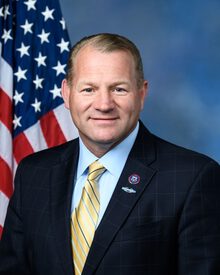
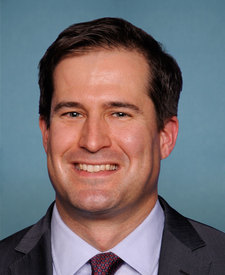
Legislative Progress
In CommitteeMr. Nehls (for himself and Mr. Moulton) introduced the following …
Referred to the Subcommittee on Railroads, Pipelines, and Hazardous Materials.
Referred to the Committee on Transportation and Infrastructure, and in …
Introduced in House
Stakeholder Effects
cui bono?How this legislation distributes effects. Mention counts reflect frequency, not effect magnitude.
Bill Structure & Actor Mappings
Who is "The Secretary" in each section?
We use a combination of our own taxonomy and classification in addition to large language models to assess meaning and potential beneficiaries. High confidence means strong textual evidence. Always verify with the original bill text.
Learn more about our methodology