Legal Workforce Act
Summary
What This Bill Does
The Legal Workforce Act is a broad mandatory employment verification bill. It rewrites Immigration and Nationality Act section 274A so employers, recruiters, and referrers must verify work authorization through a DHS-administered system using Social Security, passport, or DHS authorization numbers, with confirmation or tentative nonconfirmation generally within three working days. It expands obligations to continued employment and referral, creates a good-faith defense for employers relying on the system, preempts state and local laws while allowing state business-licensing penalties and federally structured state enforcement, repeals the older IIRIRA verification subtitle after 30 months, raises civil penalties, expands document-fraud crimes to work-authorization documents, requires DHS to reimburse SSA for verification costs, creates programs to block misused Social Security numbers and allow victims, parents, or guardians to limit SSN use in the system, requires at least two identity-authentication pilot programs within 24 months, and directs SSA inspector general audits of disputed wage reports, child SSN use, and employers with many mismatches.
Who Benefits and How
Employers using the verification system benefit from a statutory good-faith defense against federal, state, local, applicant, or employee claims when they rely on system information. Authorized workers who are identity-fraud victims benefit from programs to lock, suspend, or limit Social Security number use in employment verification. States seeking worksite enforcement benefit because they may enforce federal rules and collect fines if they follow the federal penalty structure and guidance. DHS employment-verification offices benefit from a stronger national system, higher penalties, fraud-prevention tools, and authentication pilots.
Who Bears the Burden and How
Employers must use the electronic verification process, attest under penalty of perjury, retain records, handle tentative nonconfirmations, and comply before hiring or continuing employment. Unauthorized workers bear the central burden because the bill makes work authorization verification harder to evade and increases document-fraud enforcement. SSA must support verification, contest processes, SSN misuse controls, identity-fraud locks, parent or guardian locks for minors, and inspector general audits. DHS must administer the system, reimburse SSA, write regulations, manage pilots, set security procedures, and process state enforcement interactions.
Key Provisions
- Requires employers, recruiters, and referrers to verify employment eligibility through a DHS-administered system.
- Provides a good-faith defense for compliant employers relying on verification-system information.
- Raises penalties, expands work-authorization document fraud provisions, and allows state enforcement under federal rules.
- Requires SSA cost reimbursement, SSN fraud-prevention programs, identity-authentication pilots, and SSA inspector general audits.
Evidence Chain:
This summary is generated from the full bill text using AI analysis. Expand "Detailed Analysis" below for identified beneficiaries/burden bearers with clause-level evidence links.
At a Glance
What This Bill Does
Rewrites federal employment eligibility verification by making an electronic DHS verification system central to hiring, recruitment, referral, continued employment, good-faith defenses, state enforcement, penalties, Social Security cost protection, identity-fraud prevention, authentication pilots, and SSA inspector general audits.
Key Policy Areas
Immigration, Labor, Employment Verification
Primary Purpose
Rewrites federal employment eligibility verification by making an electronic DHS verification system central to hiring, recruitment, referral, continued employment, good-faith defenses, state enforcement, penalties, Social Security cost protection, identity-fraud prevention, authentication pilots, and SSA inspector general audits.
Policy Domains
Resolution provisions
Identified Gains
- Employers using verification
- Identity-fraud victims
- State worksite enforcement agencies
- DHS verification offices
Identified Costs
- Employers hiring workers
- Unauthorized workers
- Social Security Administration
- Department of Homeland Security
Sponsors



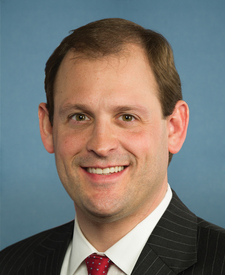

Legislative Progress
In CommitteeMr. Calvert (for himself and Mr. McClintock) introduced the following …
Referred to the Committee on the Judiciary, and in addition …
Introduced in House
Stakeholder Effects
cui bono?How this legislation distributes effects. Mention counts reflect frequency, not effect magnitude.
Employers hiring workers, Employers using verification
Positive-direction: Employers using verification
Negative-direction: Employers hiring workers
Bill Structure & Actor Mappings
Who is "The Secretary" in each section?
We use a combination of our own taxonomy and classification in addition to large language models to assess meaning and potential beneficiaries. High confidence means strong textual evidence. Always verify with the original bill text.
Learn more about our methodology